Your spending habits, the small, automatic decisions you make every day, shape your finances more than your salary does. A £4 coffee, an £11 lunch, a £6 subscription you forgot about: none of them feels like a decision, which is exactly why they add up to hundreds a month. The good news is that habits work both ways. Here are nine daily spending habits that quietly save real money, with realistic monthly figures for each.
👉 Spendaily builds your daily habits automatically. One number each morning. Rollover that rewards underspending. Download free on iOS →
Why Daily Habits Matter More Than Monthly Budgets
A YouGov survey from March 2026 found that 41% of UK adults are budgeting specifically to stop overspending, not to cover essentials, not to pay off debt, but to break the pattern of spending more than they intend to .
The problem is not income. It is the gap between intention and daily decision.
Monthly budgets set intentions. Daily habits are what execute them. If you only review your finances at the end of the month, you are managing consequences rather than decisions. Shifting your awareness to the daily level, what you can spend today, not what you spent last month, is where real change happens.
Here are nine daily spending habits, each with a realistic monthly saving estimate for a UK young adult on an average discretionary budget.
9 Daily Spending Habits That Actually Work
Habit 1, Check Your Daily Allowance Before You Leave Home
Monthly saving estimate: £40-£80
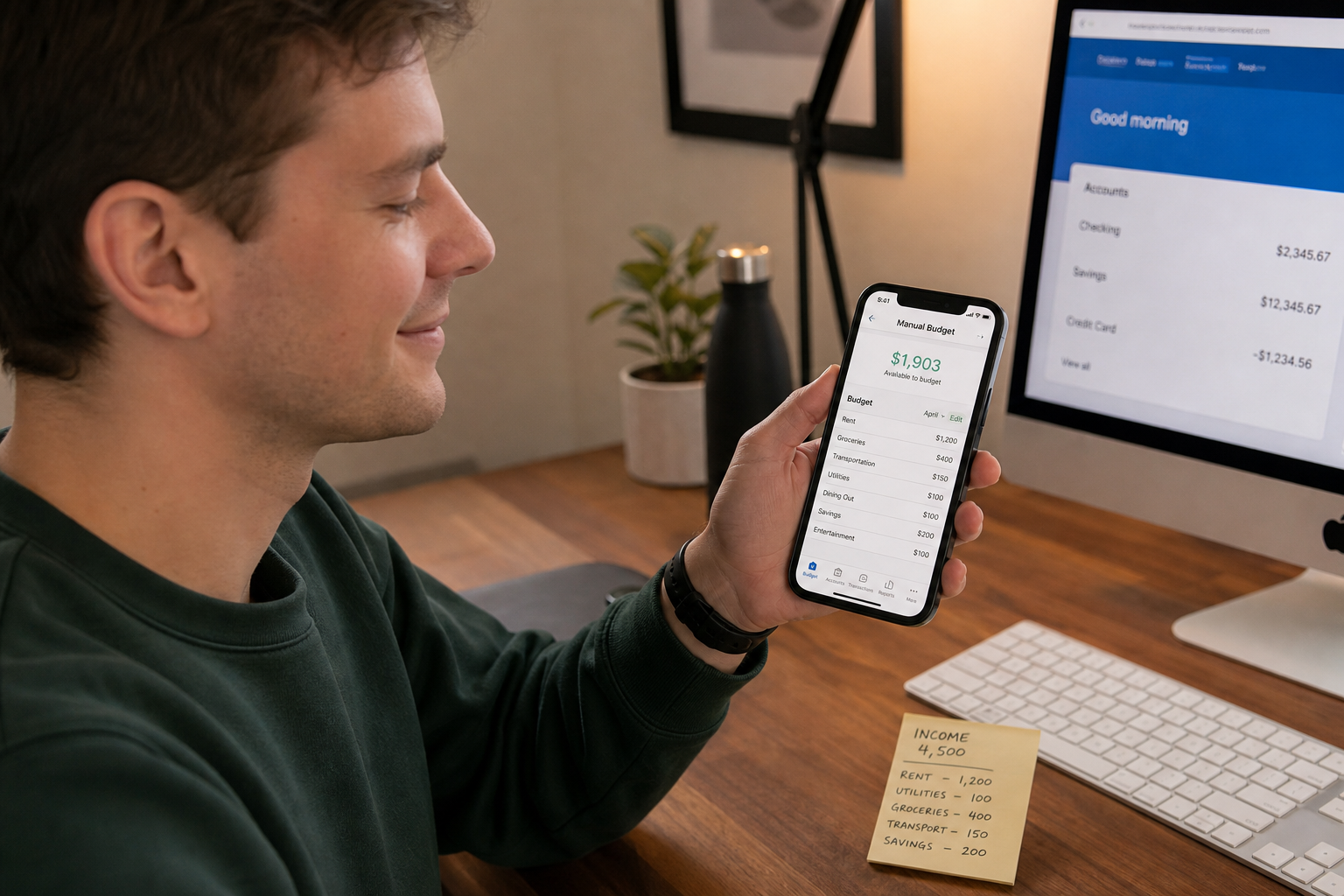
The single most effective spending habit is also the simplest: look at your daily number before you start spending.
This takes 10 seconds. Open your budget app, see today's allowance, and that number becomes your mental anchor for every decision that follows.
Research in behavioural economics shows that having a concrete limit in mind before making purchases significantly reduces impulse spending, not because you are restricted, but because you have a reference point. Without a reference, every purchase feels abstract. With one, it feels concrete.
People who check their daily allowance in the morning spend an average of 10-15% less on discretionary items than those who only check their balance at the end of the day.
💡 Build the habit: Stack this check onto an existing morning routine, after turning off your alarm, after making coffee, or with your first scroll of the day.
Habit 2, Log Every Purchase at the Moment You Make It
Monthly saving estimate: £30-£60
The most common reason budgets fail is not overspending, it is losing track. People who log expenses as they happen consistently outperform those who try to reconstruct spending at the end of the day or week.
The reason is twofold. First, same-moment logging is accurate, you cannot forget a transaction you are standing in front of. Second, the act of logging creates a brief pause between spending and moving on, which builds financial awareness over time.
The habit requires almost no effort when done at the point of purchase: tap, enter amount, done. 10-15 seconds. Far less friction than remembering six purchases at 10pm and trying to estimate which coffee was £3.20 versus £3.50.
💡 Build the habit: Open your tracking app immediately after tapping your card. Before you pick up your bag. Before you walk away from the till.
→ How to track expenses daily without burning out: full guide
Habit 3, Apply the 10-Minute Pause on Non-Essential Purchases
Monthly saving estimate: £25-£50
Impulse purchases under £20 are the primary driver of discretionary overspending for most people. A YouGov 2026 survey found that 47% of UK adults plan to cut back on "everyday conveniences", takeaway coffees, snacks, small impulse buys, as their primary spending reduction this year.
The 10-minute pause is the most researched impulse-control technique in behavioural finance: before any unplanned, non-essential purchase, wait 10 minutes. If you still want it after 10 minutes and it fits your daily allowance, buy it. Most of the time, the impulse passes.
For larger non-essentials (above £30), the pause extends to 24 hours, effectively turning it into a considered purchase rather than a reaction.
💡 Build the habit: Add the item to your phone notes with a price. Revisit it 10 minutes later. The act of writing it down often replaces the purchase itself.
Habit 4, Run a 2-Minute End-of-Day Check-In
Monthly saving estimate: £20-£40
A brief daily financial check-in, 2 minutes, at a consistent time, is significantly more effective than weekly or monthly reviews for changing spending behaviour.
The check-in has two steps:
- Confirm today's spending is logged. Add anything missed during the day.
- See tomorrow's starting number. With rollover, today's underspend increases tomorrow's allowance. Seeing that number go up is a direct, positive reward for staying within budget.
That reward loop, underspend today, start tomorrow with more, is the core habit mechanic that makes daily budgeting sustainable where monthly budgeting often fails.
💡 Build the habit: Set a phone reminder for the same time each evening, after dinner, before the next show, before you put your phone on charge.
Habit 5, Set a Weekly No-Spend Day
Monthly saving estimate: £20-£45
A no-spend day is exactly what it sounds like: one day per week (or fortnight) when you make zero discretionary purchases. No coffee shop, no lunch out, no snacks, no online orders.
The discipline is less important than the awareness it creates. On no-spend days, most people discover how many small, habitual purchases they make without thinking, and that they do not actually miss most of them.
The monthly saving from a weekly no-spend day is roughly equal to 4× your average daily discretionary spend on convenience items. For someone spending £10-£12/day on bought lunches and coffees, that is £40-£48/month without any other change.
💡 Build the habit: Start with one no-spend day per fortnight rather than weekly. Choose a day naturally low in social spending (for many people: Monday or Wednesday).
→ Full no-spend challenge guide: No-Spend Day Challenge
Habit 6, Batch Your Online Shopping Into One Weekly Session
Monthly saving estimate: £20-£50
Convenience purchasing, ordering one item at a time from Amazon, Deliveroo, or ASOS, typically costs 20-40% more per item than planned, batched purchasing. Delivery fees add up. Impulse additions at checkout add up. The convenience premium is real.
Batching purchases into one weekly session changes the dynamic: you see the basket total, you can remove items, and you are making a considered decision rather than a series of micro-impulses across the week.
💡 Build the habit: Create a "to order" list in your notes app. Add items throughout the week. Review and order once, on the same day each week.
Habit 7, Audit Your Subscriptions Once a Month
Monthly saving estimate: £15-£35
The average UK adult has 11 active subscriptions. A 2025 study found that the average monthly amount spent on subscriptions that are rarely or never used is £39. These are automatic outgoings that require zero decision-making to maintain, which is exactly why they persist.
A monthly subscription audit takes 5 minutes:
- Check your bank statement for recurring payments
- List every subscription by cost and last use date
- Cancel anything unused in the past 30 days
This habit does not require daily action, but it protects the budget that daily habits operate within.
💡 Build the habit: Run the audit on the same date each month (the 1st works well). Set a calendar reminder.
Habit 8, Use a Grocery List and Stick to It
Monthly saving estimate: £30-£70
UK food waste costs the average household £470 per year, roughly £39/month. The primary cause is unplanned grocery shopping: buying what looks good rather than what you need.
A written list (in notes or a dedicated app) before every grocery shop reduces both the total bill and food waste, because you are buying with intention rather than reaction. Coupling the list with a per-shop budget, derived from your daily allowance × days until next shop, gives you a hard number to work to.
💡 Build the habit: Write the list the night before, not at the shop entrance. Review what is already in the fridge before adding to the list.
Habit 9, Review Your Daily Number on Payday
Monthly saving estimate: variable, but foundational
Payday is the moment your daily budget resets. Taking 5 minutes on payday to:
- Update your income figure
- Check fixed costs have not changed
- Recalculate your daily allowance for the new cycle
...ensures your daily number stays accurate throughout the month. An out-of-date daily allowance is worse than no daily allowance, because it creates false confidence.
In Spendaily, this update takes under 2 minutes. In a manual setup, it is the same formula: (take-home − fixed costs) ÷ days.
💡 Build the habit: Set a calendar event on your usual payday: "Update budget, 5 mins."
→ How to calculate your daily allowance: Daily Budget Calculator
Monthly Saving Summary
| Habit | Effort per day | Estimated monthly saving |
|---|---|---|
| 1. Morning allowance check | 10 seconds | £40-£80 |
| 2. Log at point of purchase | 10-15 sec/purchase | £30-£60 |
| 3. 10-minute pause rule | As needed | £25-£50 |
| 4. 2-minute evening check-in | 2 minutes | £20-£40 |
| 5. Weekly no-spend day | 1 day/week | £20-£45 |
| 6. Batch online shopping | 1 session/week | £20-£50 |
| 7. Monthly subscription audit | 5 min/month | £15-£35 |
| 8. Grocery list discipline | 5 min before each shop | £30-£70 |
| 9. Payday budget reset | 5 min/month | Foundational |
| Realistic total (3-4 habits consistently) | £100-£200/month |
Starting with habits 1, 2, and 4 is enough to build a foundation. The others layer in over time without requiring a lifestyle overhaul.
How Daily Habits and Rollover Work Together
Daily spending habits are most powerful when they feed into a rollover system. Each time you underspend using habits 1-4, that surplus carries forward to tomorrow's allowance. Over a week, consistent habit use visibly compounds:
- Underspend by £8 on Monday → Tuesday's allowance increases
- Apply the pause rule Wednesday → £12 unspent adds to Thursday
- Friday's allowance is noticeably higher than Monday's
This is the mechanic Spendaily is built around: positive reinforcement through rollover, not punishment through restrictions.
→ How rollover saving builds toward goals: Micro-Savings Goals
FAQ
What are the most effective daily spending habits? The three highest-impact daily spending habits are: checking your daily allowance before you leave home, logging every purchase at the moment you make it, and running a 2-minute end-of-day check-in to see tomorrow's starting number. These three habits together can save £90-£180/month without any lifestyle restriction.
How much can better spending habits save per month? Adopting 3-4 consistent daily spending habits can realistically save £100-£200/month for most UK adults on average incomes. The biggest wins come from reducing impulse purchases, subscription audits, and batching online shopping.
How do I build spending habits that actually stick? Attach new habits to existing daily anchors, your morning alarm, your evening wind-down, your commute. Keep the action under 30 seconds where possible. Use a rollover-based daily budget to create a visible reward (a higher tomorrow's number) for staying within your limit today.
What is a daily spending check-in? A daily spending check-in is a 2-minute routine, usually in the evening, where you confirm all spending is logged and review your remaining daily allowance or tomorrow's starting number. It is one of the most consistently effective habits for improving budget adherence.
How does a no-spend day work? A no-spend day is a day when you make zero discretionary purchases. It works by creating awareness of habitual, unthinking spending rather than by restricting essential purchases. One no-spend day per week can save £20-£45/month depending on your typical convenience spending.