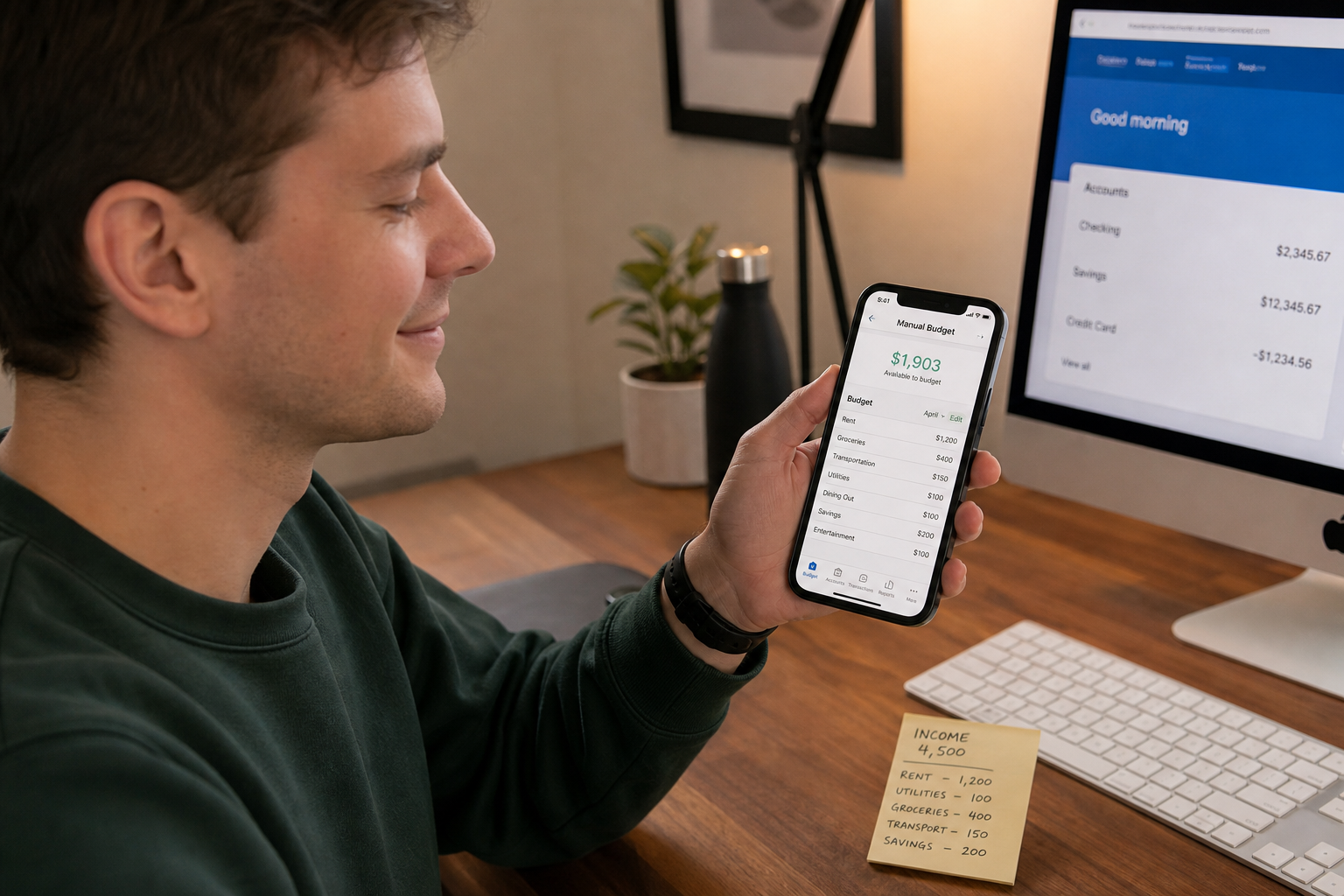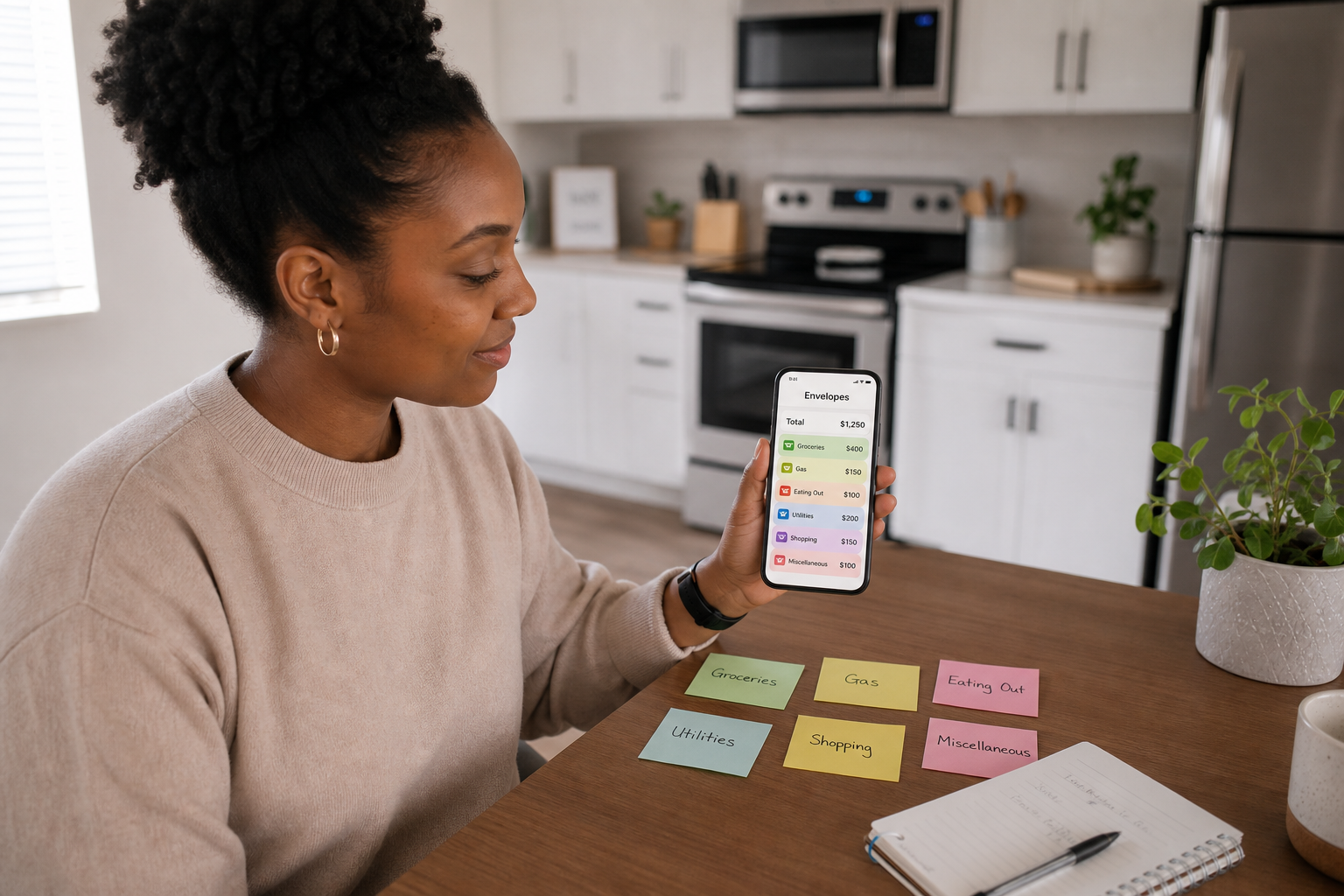
A daily budget calculator turns your monthly income into a daily spending limit by subtracting fixed costs and dividing the remainder by the days in your pay cycle. It works because it gives you a usable number for today, not a broad monthly total that is easy to ignore. You can calculate yours in under 3 minutes using the template below.
👉 Skip the maths entirely. Spendaily calculates your daily allowance automatically and updates it in real time as you spend. Download free on iOS →
How the Daily Budget Calculator Works
The calculation has one formula:
(Monthly take-home pay − Fixed monthly costs) ÷ Days in pay cycle = Daily allowance
The calculator below walks you through it in four steps. Copy the table into a Notes app, spreadsheet, or Notion page and fill in your own numbers.
Your Daily Budget Calculator, Copy-Paste Template
Copy this table and fill in column B with your numbers:
| Step | Item | Your Amount (£) |
|---|---|---|
| Income | Monthly take-home pay (after tax) | |
| Fixed Costs | Rent or mortgage | |
| Energy bills (gas + electricity) | ||
| Water bill | ||
| Council tax | ||
| Broadband | ||
| Mobile phone contract | ||
| Subscriptions (Netflix, Spotify, gym, etc.) | ||
| Insurance (car, contents, health) | ||
| Debt repayments (minimum payments + loans) | ||
| Regular savings transfer | ||
| Other fixed costs | ||
| Total Fixed Costs | Add all rows above | |
| Discretionary Budget | Take-home minus total fixed costs | |
| Days in pay cycle | (e.g. 30, 28, or 31) | |
| ✅ Daily Allowance | Discretionary ÷ Days |
Worked Calculation, Fill-In Example
Here is a completed example for someone earning £26,000/year in Birmingham:
| Step | Item | Amount (£) |
|---|---|---|
| Income | Monthly take-home pay | £1,733 |
| Fixed Costs | Rent (shared house) | £580 |
| Energy bills | £95 | |
| Water | £30 | |
| Council tax | £0 (full-time student exemption) | |
| Broadband | £25 | |
| Mobile phone | £18 | |
| Subscriptions | £25 | |
| Insurance | £28 | |
| Debt repayment | £50 | |
| Savings transfer | £100 | |
| Total Fixed Costs | £951 | |
| Discretionary Budget | £1,733 − £951 | £782 |
| Days in pay cycle | Calendar month | 30 |
| ✅ Daily Allowance | £782 ÷ 30 | £26.07 |
This person has £26/day for groceries, transport, eating out, clothes, and everything else. That is the number they would see in Spendaily every morning.
Three Scenarios: What Different Daily Budgets Look Like
Scenario A, Student in Manchester (low rent, maintenance loan)
- Take-home: £1,050/month (loan instalment + part-time)
- Fixed costs: £480
- Discretionary: £570
- Days: 30
- Daily allowance: £19.00
Scenario B, Graduate, entry-level London role
- Take-home: £2,100/month
- Fixed costs: £1,450 (London rent + higher bills)
- Discretionary: £650
- Days: 30
- Daily allowance: £21.67
Scenario C, Mid-career, shared flat outside London
- Take-home: £2,450/month
- Fixed costs: £1,100
- Discretionary: £1,350
- Days: 30
- Daily allowance: £45.00
These numbers are illustrative benchmarks. Your actual number depends entirely on your fixed costs, especially rent. The single biggest lever on your daily allowance is almost always housing cost.
→ Full breakdown with more UK salary examples: How to Work Out How Much You Can Spend per Day
How to Use Your Daily Allowance with Rollover
The daily number is not a hard reset at midnight. The most effective way to use it is with rollover:
| Day | Allowance | Spent | Surplus/Deficit | Next Day's Allowance |
|---|---|---|---|---|
| Monday | £26 | £18 | +£8 | £34 |
| Tuesday | £34 | £40 | −£6 | £20 |
| Wednesday | £20 | £12 | +£8 | £28 |
| Thursday | £28 | £28 | £0 | £26 |
| Friday | £26 | £55 (night out) | −£29 | then adjusts across remaining days |
Rollover means a big Friday does not break your budget, it just means Saturday through Sunday are slightly tighter. You can see this adjustment in real time. No guilt, no reset, just recalibration.
Spendaily handles this automatically. Enter what you spend; the app updates tomorrow's number instantly.
How to Build in Savings Goals
Your daily budget calculator can include savings as a fixed cost: which is the most reliable way to save consistently.
Method: Add a line to your fixed costs table for a regular savings transfer (e.g., £100/month). This money leaves your discretionary pot before you calculate your daily allowance, so it is protected.
Example:
- Without savings line: £782 discretionary ÷ 30 = £26.07/day
- With £100 savings: £682 discretionary ÷ 30 = £22.73/day
- Difference: £3.34/day, roughly the cost of a coffee
This is how small daily choices fund savings goals. £3/day × 30 days = £90/month toward anything specific.
→ How rollover saving works for small goals: Micro-Savings Goals
When to Recalculate Your Daily Budget
Recalculate your daily allowance at the start of every new pay cycle. Also update it immediately when:
- Your rent or mortgage payment changes
- You cancel or add a subscription
- A new debt repayment begins or ends
- Your income changes (pay rise, reduced hours, new job)
- You move to a new city or living arrangement
The more accurate your fixed costs, the more reliable your daily number is. An out-of-date calculator gives you a false sense of how much you can spend.
Daily Budget Calculator vs Budgeting Apps
| DIY Calculator (this template) | Spendaily | Category budget app | |
|---|---|---|---|
| -- | -- | -- | -- |
| Setup time | 10 minutes | 5 minutes | 20-30 minutes |
| Automatic rollover | ❌ Manual | ✅ Automatic | ❌ Usually not |
| Updates as you spend | ❌ Manual | ✅ Real-time | ✅ If bank-linked |
| Bank connection needed | ❌ No | ❌ No | Usually yes |
| Tracks categories | ❌ No | ❌ No (by design) | ✅ Yes |
| Best for | One-off calculation | Daily use, live tracking | Detailed category control |
The template on this page gives you the calculation. Spendaily gives you the live, updating version of it, every morning, without any maths.
→ Why one daily number beats monthly categories: Daily Budgeting Guide
FAQ
What is a daily budget calculator? A daily budget calculator is a tool that converts your monthly income into a daily spending allowance by subtracting fixed costs and dividing the remainder by the number of days in your pay cycle.
How do I calculate my daily budget? Use the formula: (monthly take-home pay − fixed monthly costs) ÷ days in pay cycle. The result is the amount you can spend each day on food, transport, entertainment, and other discretionary items.
What should I include in my fixed costs? Rent, energy bills, water, council tax, broadband, mobile phone contract, insurance, subscriptions, and debt repayments. Also include any regular savings transfers to protect that money before calculating your daily allowance.
Is there an app version of this daily budget calculator? Yes, Spendaily runs this calculation automatically. Enter your income and fixed costs once; the app shows your daily allowance and updates it in real time with rollover as you log spending throughout the day.
How often should I update my daily budget calculator? Recalculate at the start of every pay cycle and immediately when any fixed cost changes, such as new rent, a cancelled subscription, or a change in income.
What is a realistic daily budget in the UK? After fixed costs, most UK young adults have between £18 and £45 per day for discretionary spending. The biggest variable is rent, higher housing costs directly reduce your daily allowance.