Micro-savings goals let you fund specific short-term purchases, a weekend away, new headphones, a course, by setting aside small amounts from your daily budget surplus. The key mechanic is rollover: on days when you underspend, the surplus builds toward a named goal rather than disappearing into a general balance. Even £2-£5/day of consistent underspending accumulates into meaningful goals within 3-8 weeks.
👉 Spendaily has micro-savings goals built in. Underspend your daily allowance and the surplus automatically builds toward whatever you are saving for. Download free on iOS →
Why Micro-Savings Works When Traditional Saving Doesn't
Traditional saving advice, "put 20% of your income into savings every month", fails for most young adults because it assumes surplus income that many people do not have after rent, bills, and basic living costs.
Micro-savings works differently. Instead of saving from income before spending, it saves from the natural daily underspend that occurs whenever you spend less than your daily allowance. You are not creating new money, you are capturing the small surpluses that already exist in your daily budget and directing them toward something specific.
The psychology works too. Research on habit formation shows that people are significantly more motivated to save when saving is linked to a specific, named, near-term goal than when money goes into a generic "savings" pot. Naming the goal, "Glastonbury train ticket" or "new running shoes", turns saving from an abstract virtue into a concrete countdown.
Micro-Savings Goal Timelines
Here is what consistent daily underspending achieves at different saving rates:
| Daily saving rate | 30 days | 60 days | 90 days |
|---|---|---|---|
| £1/day | £30 | £60 | £90 |
| £2/day | £60 | £120 | £180 |
| £3/day | £90 | £180 | £270 |
| £5/day | £150 | £300 | £450 |
| £8/day | £240 | £480 | £720 |
At £2-£3/day underspend: which is achievable simply by choosing the home-made lunch twice a week and skipping one convenience stop, most common micro-goals are reachable within 45-90 days.
Real Goal Examples with Timelines
| Goal | Target | At £2/day | At £3/day | At £5/day |
|---|---|---|---|---|
| New running shoes | £80 | 40 days | 27 days | 16 days |
| Wireless headphones | £120 | 60 days | 40 days | 24 days |
| Weekend in Edinburgh | £180 | 90 days | 60 days | 36 days |
| New laptop (contribution) | £300 | 150 days | 100 days | 60 days |
| Festival ticket (Glastonbury) | £350 | 175 days | 117 days | 70 days |
| Short-haul flight + hotel | £400 | 200 days | 133 days | 80 days |
The key insight: At £5/day underspend, roughly one skipped meal deal and one fewer coffee per day, even a £350 festival ticket is funded in 10 weeks from daily budget surplus alone.
How Micro-Savings Goals Work in Spendaily
Spendaily builds micro-savings directly into the daily budgeting flow:
- Name your goal: "Glastonbury train," "new trainers," "weekend in Prague"
- Set a target amount: the total cost of the thing
- Choose a daily contribution: how much of your daily underspend goes toward the goal
- Watch the goal fill up: every day you spend under your allowance, the surplus contributes
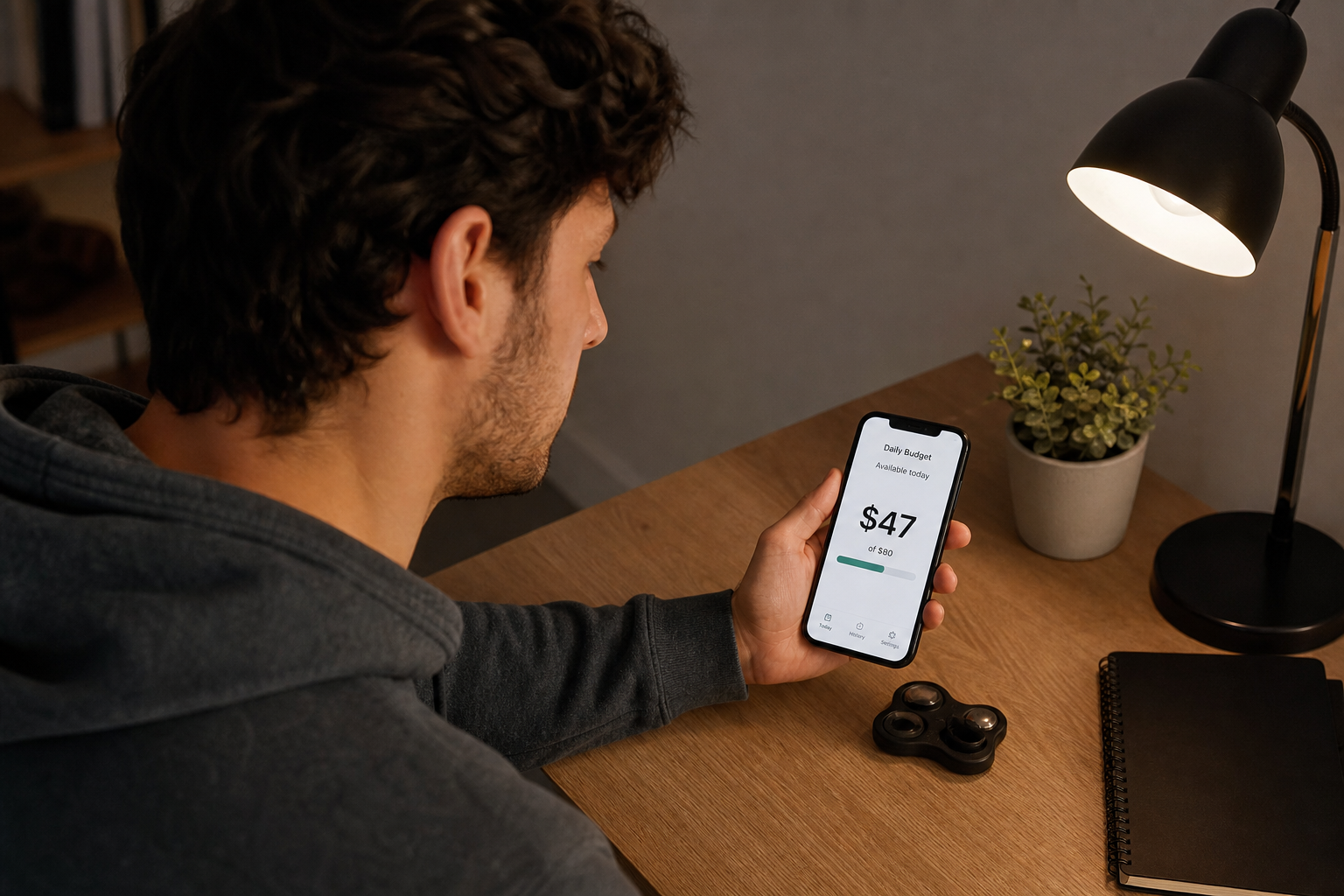
The goal counter is visible alongside your daily allowance. On days when you are deciding whether to buy something, you can see not just how it affects today's number, but how it affects your goal timeline.
This is the key motivational advantage of named goals: the purchase competes with a specific thing you want, not just an abstract budget.
The Psychology of Small Wins
Behavioural finance research consistently shows that small, visible progress toward a goal produces stronger sustained motivation than large, infrequent progress. This is the core mechanism behind micro-savings.
When you see your "weekend in Edinburgh" goal tick from £47 to £50 after a week of modest underspending, your brain registers a win. That win reinforces the daily behaviour that produced it. The habit strengthens. The goal gets closer.
Contrast this with a traditional savings account: you transfer £100 at the end of the month, it disappears into a balance, and the motivational signal is weak. Micro-savings keeps the signal immediate, visible, and linked to daily choices.
How to Set a Micro-Savings Goal Without an App
If you prefer a manual approach:
- Write your goal and target amount on a piece of paper or in your phone notes
- Give it a name: "Edinburgh weekend, £180"
- Set a daily savings rate: "I will underspend by £3/day"
- Count the days: 60 days to goal
- Create a visual progress marker (a notes tally, a printed progress bar, a sticky note) that you update daily
The visual element is important: micro-savings is most effective when progress is visible every day, not just when you check a balance.
Stacking Multiple Goals
You can run multiple micro-savings goals simultaneously, for example:
- Goal 1: New trainers (£80), £2/day → done in 40 days
- Goal 2: Weekend away (£180), £3/day → done in 60 days
Both goals run at the same time. On days when you underspend by £5 or more, both goals receive their daily contribution. On days when you only underspend by £2, the smaller goal gets priority.
The total daily saving rate (£5/day across both goals) simply needs to be achievable within your typical daily underspend. If your daily underspend is usually closer to £3-£4, prioritise one goal at a time and start the second when the first completes.
Micro-Savings vs Emergency Fund: What Is the Difference?
Micro-savings goals are for specific, near-term, optional purchases: things you want but do not need urgently. An emergency fund is for unexpected essential costs: car repair, medical expense, replacing a broken appliance.
Both matter. The recommended approach:
- Build a starter emergency fund of £500-£1,000 first (using a higher daily saving rate, e.g., £5-£8/day for 2-3 months)
- Then run micro-savings goals alongside a smaller ongoing emergency fund contribution
- Keep the emergency fund in a separate, easy-access account, not visible in your daily budget
Mixing the two creates confusion: it is difficult to maintain spending discipline when you cannot distinguish "I should save this" from "I have a goal to fund."
→ Full daily spending habits that create the surplus: Daily Spending Habits Guide → How rollover works day-to-day: What Can I Spend Today?
FAQ
What is a micro-savings goal? A micro-savings goal is a specific, named savings target funded by small daily underspending rather than a large monthly transfer. Examples: new headphones, a weekend trip, a course, festival tickets. The goal is funded by whatever you have left over from your daily budget each day.
How much should I save per day in a micro-savings goal? Start with £2-£3/day, an amount achievable simply by spending slightly less on bought food or convenience items. At £3/day, a £90 goal is funded in 30 days and a £180 goal in 60 days.
Can I have multiple savings goals at the same time? Yes. You can run multiple goals simultaneously as long as the combined daily saving rate is achievable within your typical daily underspend. If not, prioritise one goal at a time.
How is micro-saving different from regular saving? Regular saving typically involves transferring a fixed percentage of income at the end of the month. Micro-saving uses daily spending surplus, money that already exists in your budget from underspending, and directs it toward specific goals. It does not require additional income or willpower; it captures existing surplus.
Does Spendaily have savings goals? Yes. Spendaily has micro-savings goals built into the daily budgeting flow. Name a goal, set a target amount, and the app automatically allocates daily underspend toward it. You can see your goal progress alongside your daily allowance.
What is the 1p savings challenge? The 1p savings challenge starts with saving 1p on day one and increases by 1p each day. By day 365 you save £3.65, and the total accumulated over the year is £667.95. It is a popular micro-savings mechanic that makes daily contribution feel negligible while producing meaningful annual totals.