A no-spend challenge is a set period, a day, a week, or scattered days across the month, where you commit to spending nothing on non-essentials. Rent, bills, groceries and transport still get paid; takeaways, impulse buys and treats pause. It is the fastest way to reset drifting spending habits, and it works best with clear rules, a visible streak, and a plan for where the saved money goes.
👉 Spendaily tracks your no-spend streaks automatically. Every no-spend day shows in your history. Download free on iOS →
What Is a No-Spend Day?
A no-spend day is a day on which you spend nothing on discretionary items, anything that is not a necessity. Fixed costs (rent, utility bills, mortgage payments) do not count against a no-spend day because they are not choices. The challenge applies to real-time discretionary decisions: buying food out, online shopping, entertainment, clothing, coffee, snacks.
The concept is widely practised: Starling Bank's guide to no-spend challenges defines the principle as "committing to not spending money on unnecessary things for a set period, only spending on necessities." Shawbrook Bank describes it as one of the "simpler saving methods" and recommends starting with 30 days.
What neither of those guides addresses is how no-spend days integrate with a daily budget system, which is where they become genuinely powerful.
Why No-Spend Days Work
No-spend days are not primarily about the money saved on that one day. They are about the awareness they create.
Most daily overspending is habitual, not deliberate. The morning coffee you buy without thinking, the snack at the petrol station, the takeaway that happens because you have not planned dinner. These are automatic behaviours, not conscious choices.
A no-spend day forces a full interruption of these sequences. When you know you are not spending today, every impulse becomes visible. The urge to buy a coffee at 10am registers as an urge, something you are choosing not to act on, rather than an automatic background event. That visibility persists beyond the no-spend day itself.
Studies of financial behaviour show that deliberate pattern interruption, even for one day, resets the "spending autopilot" and produces measurably more intentional spending in the days that follow.
The Rules: What Counts and What Doesn't
Spending that BREAKS a no-spend day:
- Buying food, coffee, or drinks outside the home
- Online purchases of any kind (clothing, electronics, home items, delivery)
- Entertainment spending (cinema, streaming subscriptions renewing, events)
- Snacks, convenience store stops, vending machines
- Fuel bought for non-essential driving
Spending that does NOT break a no-spend day:
- Fixed bill payments (rent, utilities, mortgage, council tax)
- Pre-agreed essential grocery shop (planned in advance, not spontaneous)
- Essential medicine or healthcare
- Emergency purchases
The grey areas:
- Grocery shopping: Planned weekly shops are fine. A spontaneous trip to pick up "a few things" is the habit you are trying to break.
- Travel: Commuting costs that are fixed and necessary (season ticket, bus pass) are fine. Choosing to take an Uber instead of walking is not.
- Work lunches: If you work in an office with no alternative, bringing food from home is the goal, but if you forgot and genuinely have no alternative, use your judgement rather than going hungry.
The rule of thumb: if you could have planned for it yesterday, it is discretionary.
How to Run Your First No-Spend Day
The night before:
- Plan and prepare meals for the day (breakfast, lunch, dinner, whatever applies)
- Check your diary: do you have anything requiring payment today? If yes, choose a different day
- Turn off push notifications for retail apps (Amazon, ASOS, Deliveroo, etc.)
- Set your intention: note it in your app or tell someone
On the day:
- Check your daily allowance first thing (it is available but unused today, a satisfying position to see)
- When an impulse arises, note it in your phone rather than acting on it ("wanted a coffee at 10am, £3.20")
- If a habitual spending opportunity arises, observe it: "I would normally buy X here. I am not going to."
- At lunch, eat what you prepared. At dinner, cook.
At the end of the day:
- Open Spendaily. Log £0 spent (or a trivial essential)
- See your full daily allowance roll forward to tomorrow
- Note one insight: what spending impulse surprised you most?
Building a No-Spend Streak
A single no-spend day is useful. A streak of no-spend days is transformative.
Why streaks work: The streak mechanic, a visible count of consecutive no-spend days, activates a specific motivational pattern known as "loss aversion in reverse." Once you have a 4-day streak, the prospect of breaking it at day 5 feels worse than the prospect of continuing. The streak becomes a reason to maintain the habit that has nothing to do with money.
This is the same psychological mechanism behind habit streaks in language learning apps, fitness trackers, and daily meditation tools, and it works equally well for spending habits.
How to build your streak:
| Week | Target | Notes |
|---|---|---|
| Week 1 | 1 no-spend day | Choose a naturally quiet day (Mon or Tue) |
| Week 2 | 1 no-spend day | Same day if possible, builds pattern |
| Week 3 | 2 no-spend days | Non-consecutive (Mon + Wed, or Tue + Thu) |
| Week 4+ | 2-3 no-spend days | Start building consecutive days for streak |
Most people find that 2 no-spend days per week is sustainable long-term and produces significant monthly savings without any feeling of deprivation.
What No-Spend Days Add to Your Daily Budget
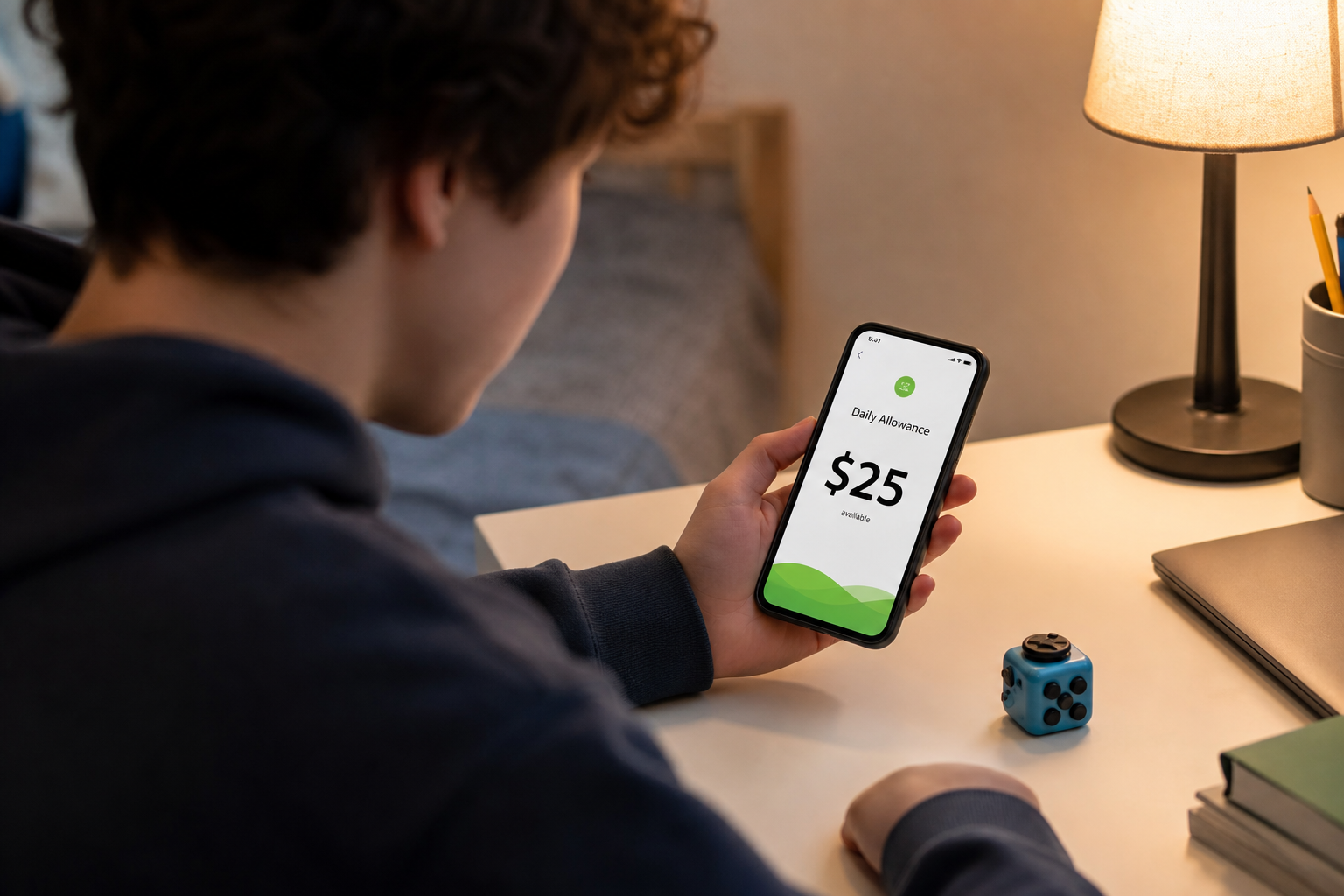
No-spend days interact directly with your daily rollover budget. On a no-spend day, your entire daily allowance carries forward. If your daily allowance is £25 and you have a no-spend day, tomorrow starts at £50, double your usual number.
This creates a powerful immediate reward: the day after a no-spend day, you can spend more. A social Friday feels better when Tuesday and Wednesday were no-spend days. The constraint and the reward are linked and visible.
For monthly savings, the effect compounds:
- 1 no-spend day/week × £25 daily allowance = £100/month minimum additional rollover
- 2 no-spend days/week = £200/month additional rollover
- This rollover either feeds into savings goals or creates headroom for intentional bigger spending
→ How rollover feeds into savings goals: Micro-Savings Goals → How the daily number works with rollover: What Can I Spend Today?
No-Spend Day vs No-Spend Month: Which Is Better?
Shawbrook recommends a 30-day no-spend challenge. Certas Energy suggests "a week without buying coffee" or "a month without online shopping."
The research basis for these longer challenges is sound: extended behavioural interventions produce stronger habit disruption than single-day events. However, the failure rate for first-time participants is also much higher.
Our recommendation:
| Challenge type | Best for | Success rate |
|---|---|---|
| Single no-spend day | First-timers, habit awareness | Very high |
| Weekly no-spend day (repeated) | Building sustainable habit | High |
| No-spend week | Intermediate challengers with strong motivation | Moderate |
| No-spend month | Experienced habit changers, pre-planned | Lower first-time, higher repeat |
For most people: Start with a single weekly no-spend day and build from there. The streak mechanic in Spendaily makes the progression visible and motivating without requiring a 30-day commitment that might collapse on day 12.
FAQ
What is a no-spend day challenge? A no-spend day challenge is a commitment to make zero discretionary purchases on a given day. Fixed bills and essential pre-planned grocery shops do not count. The goal is to interrupt automatic spending habits and build financial awareness, not just to save the amount you would otherwise have spent.
What can I spend on a no-spend day? Fixed essential costs (rent, bills, mortgage payments) are fine. A pre-planned essential grocery shop is fine. Discretionary purchases, coffee, snacks, takeaway, online orders, entertainment, break the no-spend day.
How much money can you save with no-spend days? At a daily discretionary allowance of £25, one no-spend day per week adds £100/month to your rollover surplus. Two no-spend days per week adds £200/month. The money does not disappear, it rolls forward, feeding your daily allowance for the days that follow and building toward savings goals.
How do I build a no-spend streak? Start with one no-spend day on a naturally low-spend day (Monday or Tuesday). The following week, aim for the same day again. In week 3, add a second day on a non-consecutive weekday. Use Spendaily's streak tracker to make consecutive no-spend days visible, the streak mechanic creates its own motivation to continue.
Does a no-spend day have to be perfect? No. If a genuine emergency arises or you face an unavoidable essential cost, use your judgement rather than abandoning the day entirely. The goal is to interrupt habitual discretionary spending, not to impose a rigid rule that creates anxiety when it cannot be followed exactly.
How is a no-spend day different from just budgeting carefully? Careful budgeting manages spending; a no-spend day stops it entirely for one day. The stopping is what creates awareness, it makes habitual spending visible by forcing you to notice every impulse you would normally act on automatically. This awareness persists beyond the no-spend day and improves all subsequent spending decisions.
Ready for the bigger version? Here is how to plan a full no-spend month and what it really saves. And to keep the reset going afterwards, set a daily limit with daily budgeting.