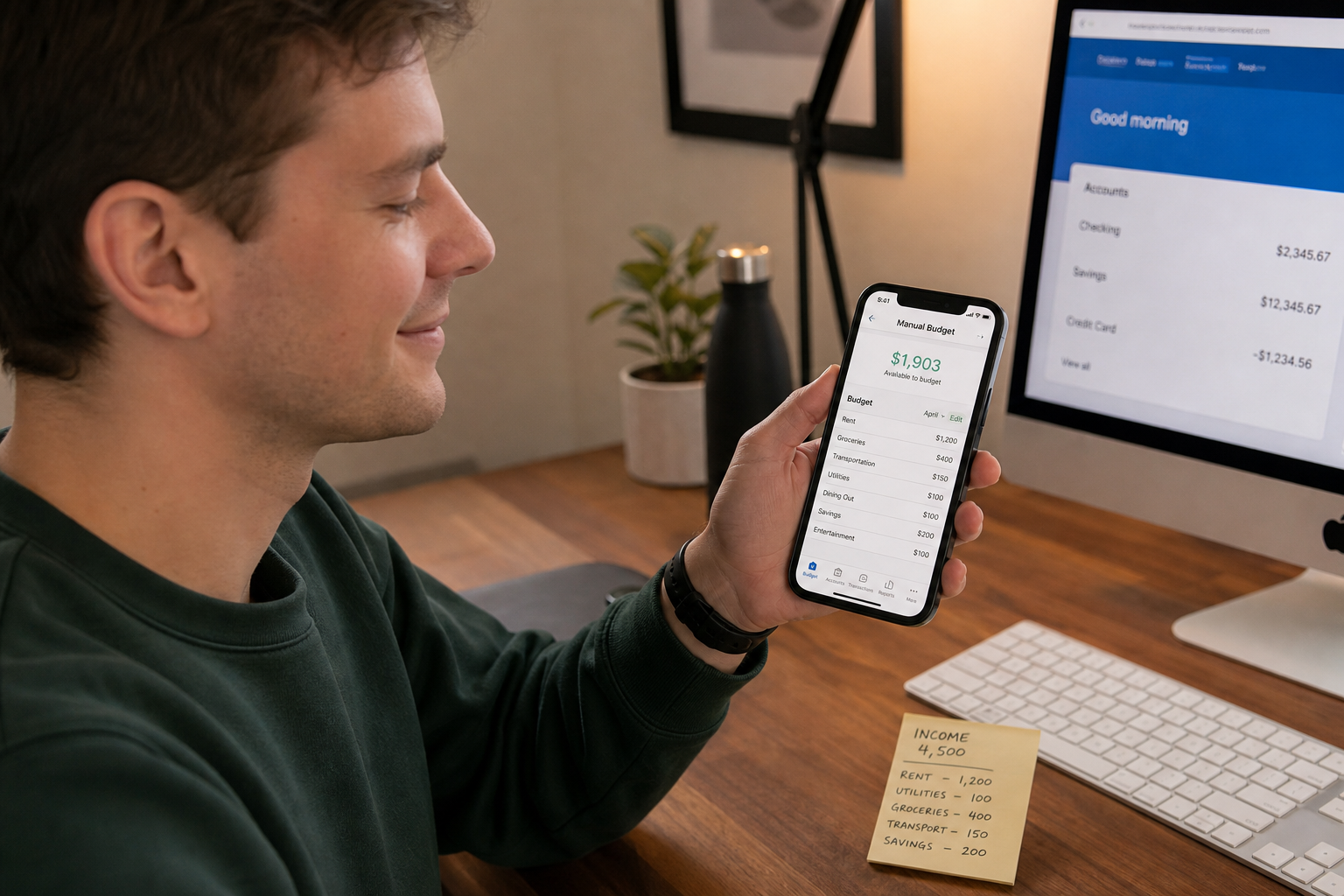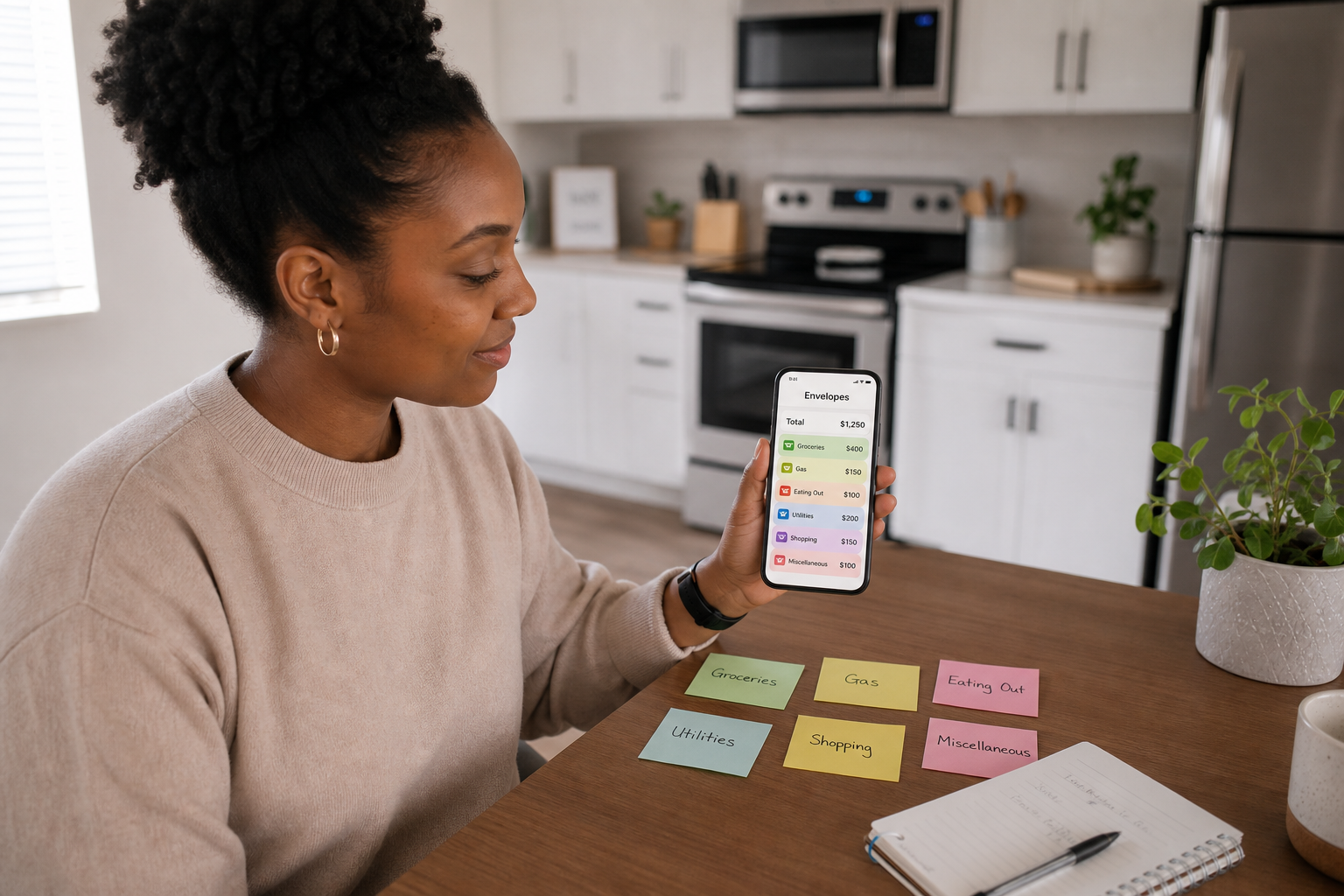
"What can I spend today?" is the most useful money question you can ask, and most people cannot answer it accurately. Your bank balance tells you what you have in total, not what is safe to spend today after rent and bills are accounted for. The framework: calculate your daily allowance once, use rollover to let it update automatically, and check it every morning. That single number answers the question instantly.
👉 Spendaily answers "what can I spend today?" automatically. Your live daily allowance, updated as you spend, with rollover built in. Download free on iOS →
Why Your Bank Balance Is the Wrong Number to Check
Most people, when they want to know if they can afford something, open their banking app and look at their balance.
This is the wrong number.
Your bank balance includes money that is already spoken for, rent due next week, a direct debit going out on the 28th, a subscription renewing on the 15th, a council tax payment at the end of the month. Seeing £740 in your account when £600 of it is committed to outgoings does not tell you that you have £740 to spend. It tells you nothing useful about today.
The number that actually answers "what can I spend today?" is your daily discretionary allowance: your income after fixed costs, divided by days until payday, updated for whatever you have already spent today.
The 3-Step Framework: Know What You Can Spend Today
Step 1, Calculate your daily allowance
(Monthly take-home − Fixed monthly costs) ÷ Days in pay cycle = Daily allowance
Do this once. It takes 10 minutes. The result is your baseline daily number.
Example: Take-home £1,800 − Fixed costs £950 = £850 discretionary ÷ 30 days = £28.33/day
→ Full calculator with worked UK examples: Daily Budget Calculator
Step 2, Apply rollover
Your daily allowance is not a rigid limit that resets at midnight. It rolls forward.
- Underspend today → tomorrow's allowance increases by the surplus
- Overspend today → the excess is distributed across remaining days, reducing them slightly
- Saving for something → consistent underspending builds a higher daily number for when you need it
This means your daily number is not fixed, it reflects your actual spending position. A good run of Monday to Thursday increases what you have available for Friday. A big Saturday reduces what you can spend on Sunday.
Step 3, Check your number before you spend
Once your daily allowance is set and rollover is running, the daily habit is simple: check your number before you spend, not after.
This one behavioural shift, from reactive balance-checking to proactive allowance-checking, changes spending decisions at the point of purchase. Instead of estimating whether a purchase is affordable against a total balance full of committed money, you compare it against a number that has already accounted for everything.
The question changes from "do I have enough?" to "does this fit today?"
The Three Questions to Ask at Any Spending Decision
Use this decision framework whenever you are about to spend:
Question 1: Does it fit my daily number? Check your daily allowance. If the purchase is less than what remains, it fits. If it is more, it will draw from tomorrow's allowance, which is fine, as long as you are aware of it.
Question 2: Is this today's priority or can it wait? If you have £18 left today and you are considering a £22 purchase, ask: is this the most important thing I want from today's budget? If yes, make a conscious choice to draw slightly from tomorrow. If no, the daily number creates a natural reason to wait.
Question 3: Is this planned or reactive? Planned purchases (a grocery shop, a birthday dinner, a transport top-up) are expected and budgeted. Reactive purchases (an impulse buy, a convenience snack, a spontaneous round) are where daily awareness creates the most savings. The daily number makes the difference visible.
What "Rollover" Actually Means in Practice
Rollover is the most powerful feature of daily budgeting and the one that makes it sustainable long-term.
Here is a week in the life of a daily budget in action:
| Day | Starting allowance | Spent | Surplus/Deficit | Next day starts |
|---|---|---|---|---|
| Monday | £28 | £14 | +£14 | £42 |
| Tuesday | £42 | £38 | +£4 | £32 |
| Wednesday | £32 | £28 | +£4 | £36 |
| Thursday | £36 | £45 | −£9 | £27 |
| Friday | £27 | £55 (night out) | −£28 | Remainder shared across weekend |
| Saturday | £14 | £14 | £0 | £14 |
| Sunday | £14 | £8 | +£6 | New week starts fresh |
The Friday night out did not break the budget. It simply redistributed across the weekend. The good run from Monday to Thursday funded it.
This is the answer to "can I afford this?", not a yes/no based on your total balance, but a live, updating number that shows you exactly what you have to work with right now.
How to Know If You Are On Track: The 3-3-3 Check
A simple weekly check keeps your daily number accurate over time. Use the 3-3-3 check: three numbers, three minutes, once a week.
Number 1, Your daily allowance Is the number still accurate? Have any fixed costs changed? Did a subscription renew that you had not accounted for?
Number 2, Your average daily spend this week Add up the week and divide by 7. Is this above or below your daily allowance? If consistently above, identify which day is driving the overspend.
Number 3, Days remaining to payday Multiply days remaining by your daily allowance. Does the result roughly match your actual remaining discretionary balance? If they are misaligned, your fixed costs may need updating.
This check catches drift before it becomes a problem.
"What Can I Spend Today?" vs "What's My Balance?"
| Question | What it tells you | How useful at checkout |
|---|---|---|
| "What's my balance?" | Total money in account, including committed funds | ❌ Misleading, includes rent, bills, etc. |
| "What can I spend today?" | Discretionary allowance for today, adjusted for rollover | ✅ Immediately actionable |
| "What did I spend this month?" | Historical data | ❌ Useful for review, not decisions |
| "Am I on budget?" | Vague, depends on framing | ⚠️ Only useful with a clear reference point |
The daily allowance wins at the point of purchase because it is the only number that accounts for both your committed costs and your current spending position simultaneously.
Setting Up Your Daily Allowance: Quick-Start Guide
If you have not already set up a daily allowance, here is how to get started in under 10 minutes:
- Find your monthly take-home pay (net, after tax)
- List every fixed monthly cost: rent, bills, contracts, subscriptions, debt repayments
- Subtract fixed costs from take-home
- Divide by 30 (or your actual pay cycle length)
- That number is your daily allowance, check it every morning
Or: download Spendaily, enter those numbers, and the app does all of this automatically, including updating your daily number in real time as you spend, with rollover built in.
→ Full step-by-step: How to Budget Daily, A Beginner-Friendly Guide → Real UK salary examples: How to Work Out How Much You Can Spend per Day
FAQ
What can I spend today without going over budget? Check your daily discretionary allowance, your income after fixed costs divided by days in your pay cycle. This number, updated by rollover from previous days' spending, tells you exactly what is safe to spend today without affecting your budget for the rest of the month.
Why should I check my daily allowance instead of my bank balance? Your bank balance includes money already committed to rent, bills, and other fixed costs. It tells you what you have in total, not what is safe to spend today. Your daily allowance is calculated after all fixed costs, so it shows only genuinely available money.
Is there an app that tells me what I can spend today? Yes, Spendaily is built specifically to answer this question. It gives you a live daily spending allowance, updated as you log each purchase, with automatic rollover so underspending one day improves the next.
How do I know if a purchase fits my daily budget? Check your daily allowance before buying. If the purchase is within your remaining allowance, it fits. If it exceeds it, it will draw from future days, which is fine as a conscious choice, but better to make intentionally than by accident.
What is rollover in daily budgeting? Rollover means unspent money from one day carries forward to increase the next day's allowance. Overspending on one day reduces future days by a proportional amount. Rollover makes daily budgeting flexible: one expensive day does not break the system, it just recalibrates.