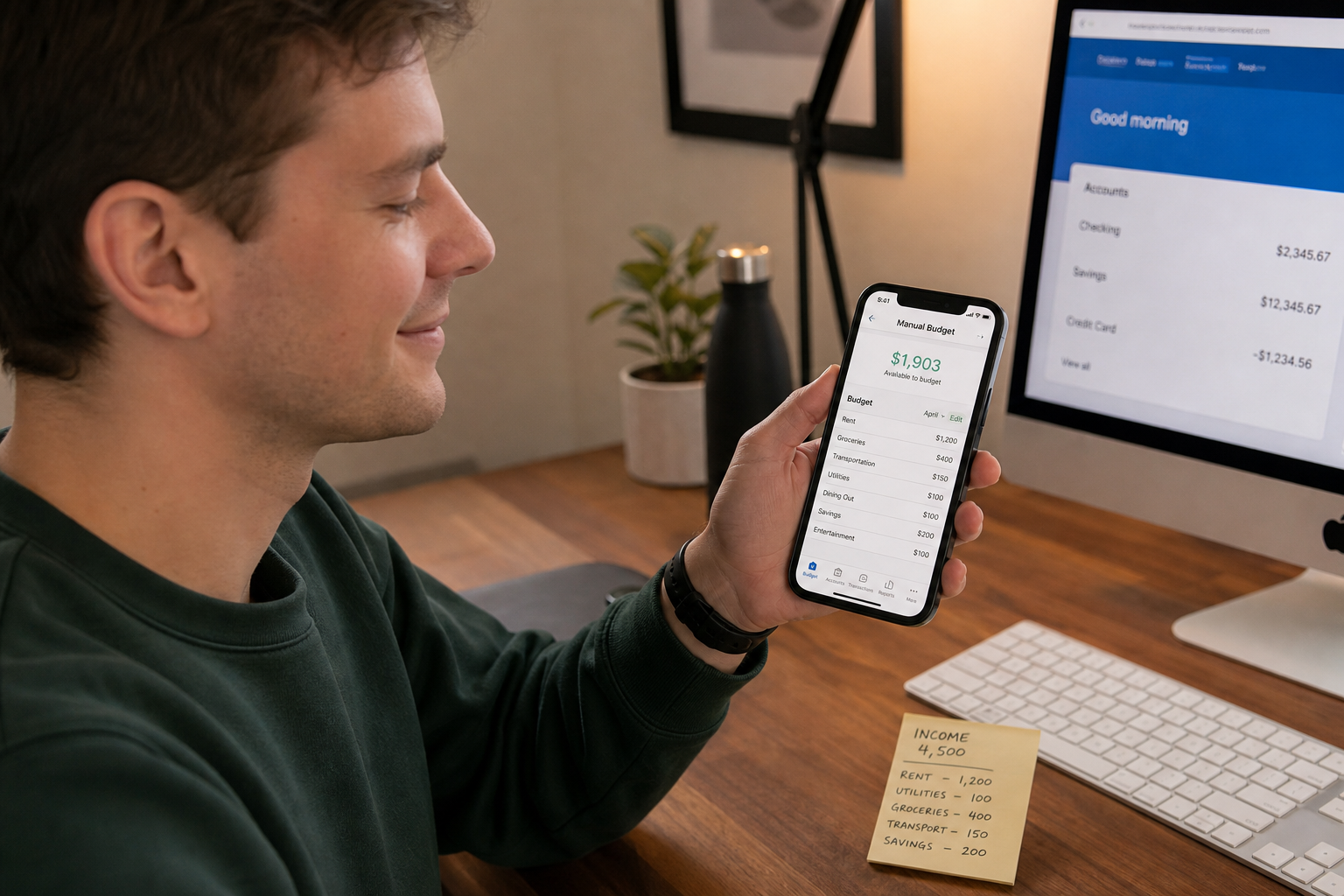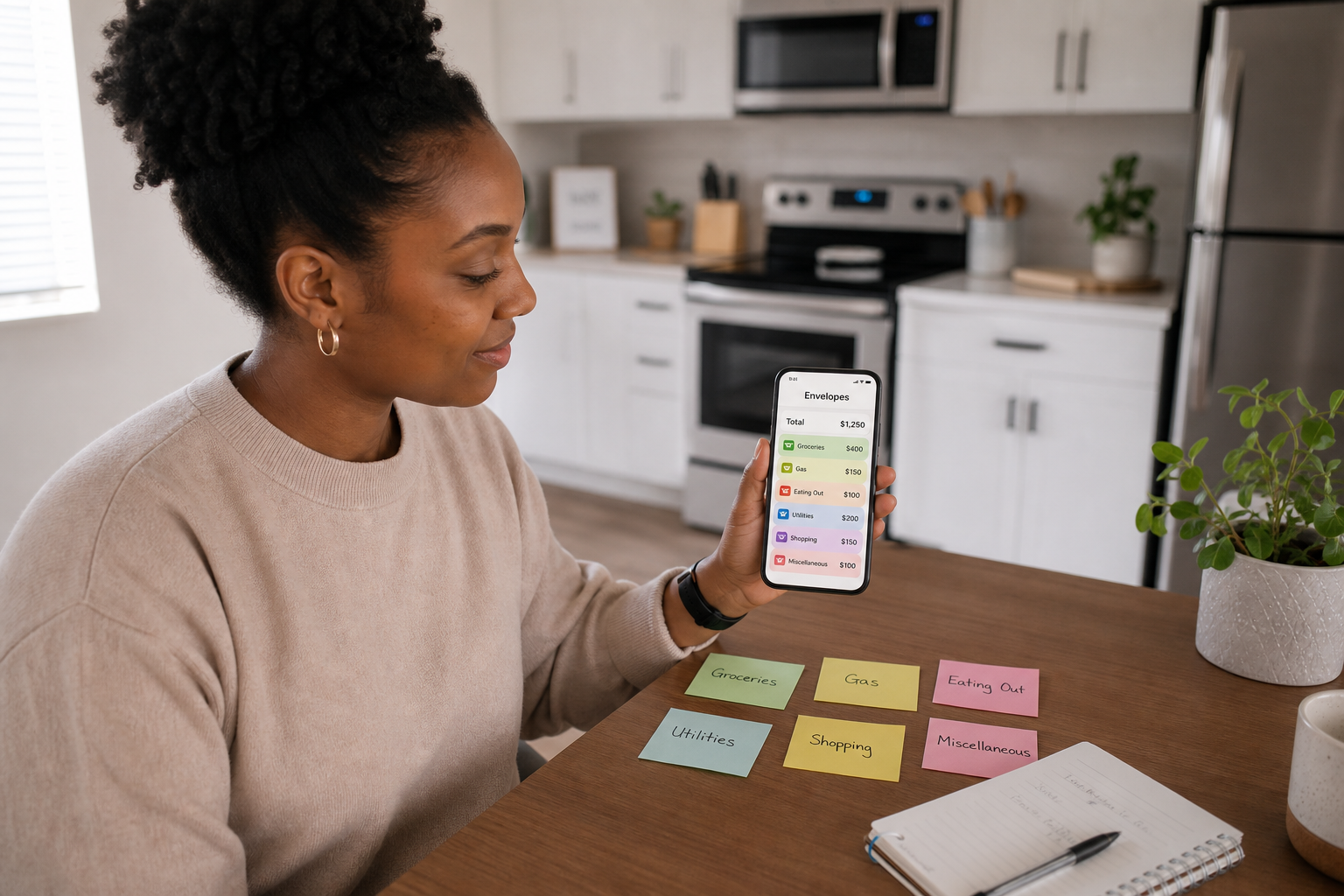
To work out how much you can spend per day, subtract your fixed monthly costs from your take-home pay, then divide what is left by the number of days in your pay cycle. The result is your daily discretionary allowance, the number that tells you whether today's spend fits your real budget, not just your gut feeling.
👉 Spendaily calculates this for you automatically. Enter your income and fixed costs once; get a live daily number with rollover every morning. Download free on iOS →
The Formula
(Monthly take-home pay − Fixed monthly costs) ÷ Days in pay cycle = Daily spending allowance
This is the only calculation you need. Everything else is just filling in the right numbers.
Step 1, Find Your Monthly Take-Home Pay
Use the figure that hits your bank account after tax and National Insurance, not your gross salary.
- Employed monthly: Use your last payslip net pay figure
- Employed weekly: Multiply your weekly net pay by 52, then divide by 12
- Irregular income: Use your average over the last 3 months as a baseline, then adjust each month as income comes in
- Student: Add your maintenance loan instalment + any part-time work income for that period
Step 2, List Your Fixed Monthly Costs
Fixed costs are non-negotiable, recurring payments that leave your account automatically. Do not include food, transport, or social spending here, those are discretionary and are what your daily number covers.
Common fixed costs:
- Rent or mortgage
- Energy bills (gas, electricity)
- Water bill
- Council tax (if applicable)
- Broadband and phone contract
- Subscriptions (Netflix, Spotify, gym, etc.)
- Insurance (car, contents, health)
- Debt repayments (credit card minimums, student loan, car finance)
- Any regular transfers to savings (treat this as a fixed cost to protect it)
Add them up. This is your committed monthly spend.
Step 3, Divide by Your Pay Cycle
- Paid on the 1st of the month: Divide by the number of days in that month (28-31)
- Paid every 4 weeks: Divide by 28
- Paid weekly: Divide by 7 per week, or calculate monthly and divide by days
- Student loan instalments: Divide by the number of days until your next payment
Three Worked Examples: Real UK Numbers
Example 1, Full-Time Worker, £28,000/yr Salary
| Item | Monthly Amount |
|---|---|
| Take-home pay (after tax + NI) | £1,867 |
| Rent (shared flat, Manchester) | £650 |
| Bills (energy, water, broadband) | £110 |
| Phone contract | £35 |
| Subscriptions (Netflix, Spotify, gym) | £48 |
| Debt minimum payment | £75 |
| Total fixed costs | £918 |
| Discretionary budget | £949 |
| ÷ 30 days | |
| ✅ Daily allowance | £31.63 |
Example 2, Part-Time Worker, £14,000/yr Salary
| Item | Monthly Amount |
|---|---|
| Take-home pay | £1,085 |
| Rent (room in shared house, Leeds) | £500 |
| Bills (included in rent) | £0 |
| Phone (SIM-only) | £12 |
| Subscriptions | £15 |
| Total fixed costs | £527 |
| Discretionary budget | £558 |
| ÷ 30 days | |
| ✅ Daily allowance | £18.60 |
Example 3, University Student, Maintenance Loan + Part-Time Work
| Item | Per Term (91 days) |
|---|---|
| Maintenance loan (outside London, 2025/26) | £3,235 |
| Part-time earnings (10 hrs/week × £12/hr × 13 weeks) | £1,560 |
| Total income | £4,795 |
| Rent | £1,820 (£140/week × 13 weeks) |
| Phone | £130 (£10/month) |
| Subscriptions | £52 |
| Total fixed costs | £2,002 |
| Discretionary budget | £2,793 |
| ÷ 91 days | |
| ✅ Daily allowance | £30.69 |
Note: Student figures use 2025/26 maintenance loan rates for students studying outside London. Rent figures are approximate averages for UK university cities. → Full student budgeting guide with city-by-city breakdown
What Your Daily Number Actually Covers
Your daily allowance is for all discretionary spending, everything that is not a fixed cost locked into your budget. This includes:
- Groceries and food shopping
- Eating out, takeaways, coffee
- Transport (bus, tube, petrol beyond a monthly pass)
- Clothing and personal care
- Entertainment, nights out, subscriptions you pay for spontaneously
- Any impulse purchases
It does not need to cover rent, bills, contracts, or debt repayments, those are already subtracted from your fixed costs.
What Counts as a "Good" Daily Budget?
There is no universal answer, but here are useful UK benchmarks for discretionary spending after fixed costs:
| Situation | Typical daily discretionary range |
|---|---|
| Student outside London | £15 to £25 |
| Graduate, entry-level job | £25 to £40 |
| Mid-level salary, shared living | £30 to £55 |
| High cost of living (London) | add £8-£15 to the above |
| Living with parents (reduced rent) | £35 to £65 |
These are spending benchmarks, not savings targets. If your number is lower than these ranges, reducing fixed costs (cheaper phone contract, removing unused subscriptions) will have a bigger impact than cutting discretionary spending.
How Rollover Makes the Daily Number More Flexible
Your daily number is not a rigid limit that resets at midnight. If you use a rollover system:
- Spend £20 on a £31 day → tomorrow's allowance increases by £11
- Spend £45 on a £31 day → the £14 overspend reduces future days proportionally
- Plan a big purchase → underspend for several days to build up a higher daily number for when you need it
This makes the daily budget genuinely flexible, and removes the guilt of overspending on one day, because you can see exactly how it adjusts going forward.
→ How to set up daily budgeting with rollover: Daily Budgeting, The Complete Guide → Use Spendaily's built-in calculator: Daily Budget Calculator
When Your Daily Number Does Not Feel Right
It feels too low:
- Check your fixed costs for unused subscriptions or services that could be reduced
- Consider whether your rent is disproportionate to your income
- Look at whether any debt repayments could be restructured
It varies month to month:
- Irregular income is common, recalculate at the start of each pay cycle
- For gig workers or freelancers, use a conservative baseline (your lowest average month) and update upward when income is confirmed
You consistently overspend:
- Track for one week without changing behaviour, the data will show where discretionary spending is actually going
- Prioritise essential discretionary spending (food, transport) and identify the category driving overspend
FAQ
How do I calculate my daily spending allowance? Subtract your total fixed monthly costs (rent, bills, subscriptions, debt repayments) from your monthly take-home pay. Divide the result by the number of days in your pay cycle. That is your daily spending allowance.
How much should I spend per day in the UK? For most UK young adults after fixed costs, a realistic discretionary daily budget ranges from £18 to £45 depending on income, location, and lifestyle. Graduates in shared accommodation typically sit between £25 and £40/day.
What counts as a fixed cost in my daily budget calculation? Fixed costs are recurring, non-negotiable payments: rent, energy bills, phone contracts, insurance, subscriptions, and debt repayments. Food, transport, and social spending are discretionary and come out of your daily allowance.
What if my income changes every month? Use the average of your last three months' income as your baseline. Recalculate at the start of each pay cycle using your actual income for that period. Daily budgeting handles variable income better than monthly budgeting because you recalculate from your real position each cycle.
Is there an app that tells me what I can spend today? Yes, Spendaily is built specifically for this. You enter your income and fixed costs once, and the app shows your live daily allowance with automatic rollover. No bank connection required.
How often should I recalculate my daily budget? Recalculate at the start of every new pay cycle. If your fixed costs change (new rent, cancelled subscription, new debt repayment), update them immediately so your daily number stays accurate.