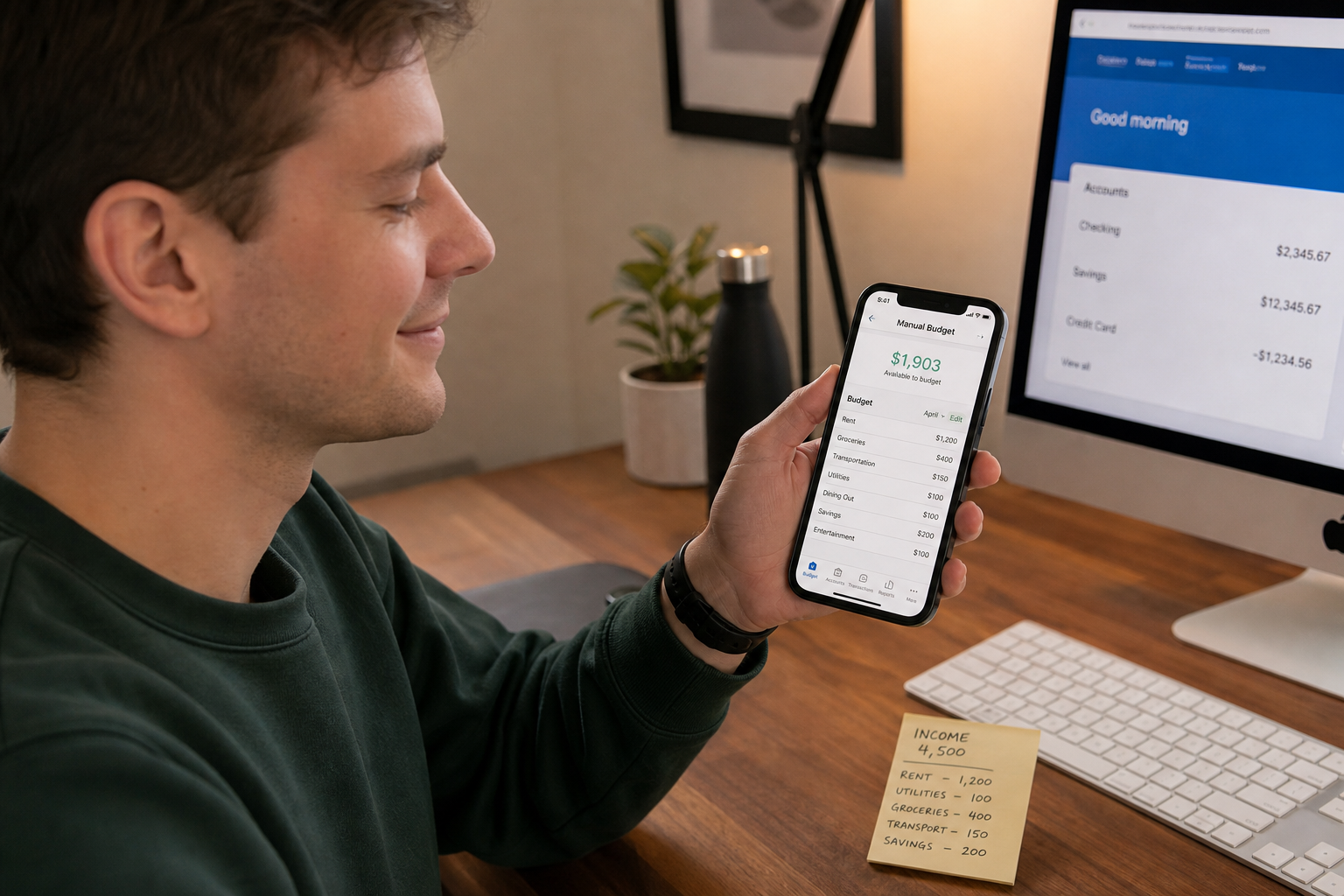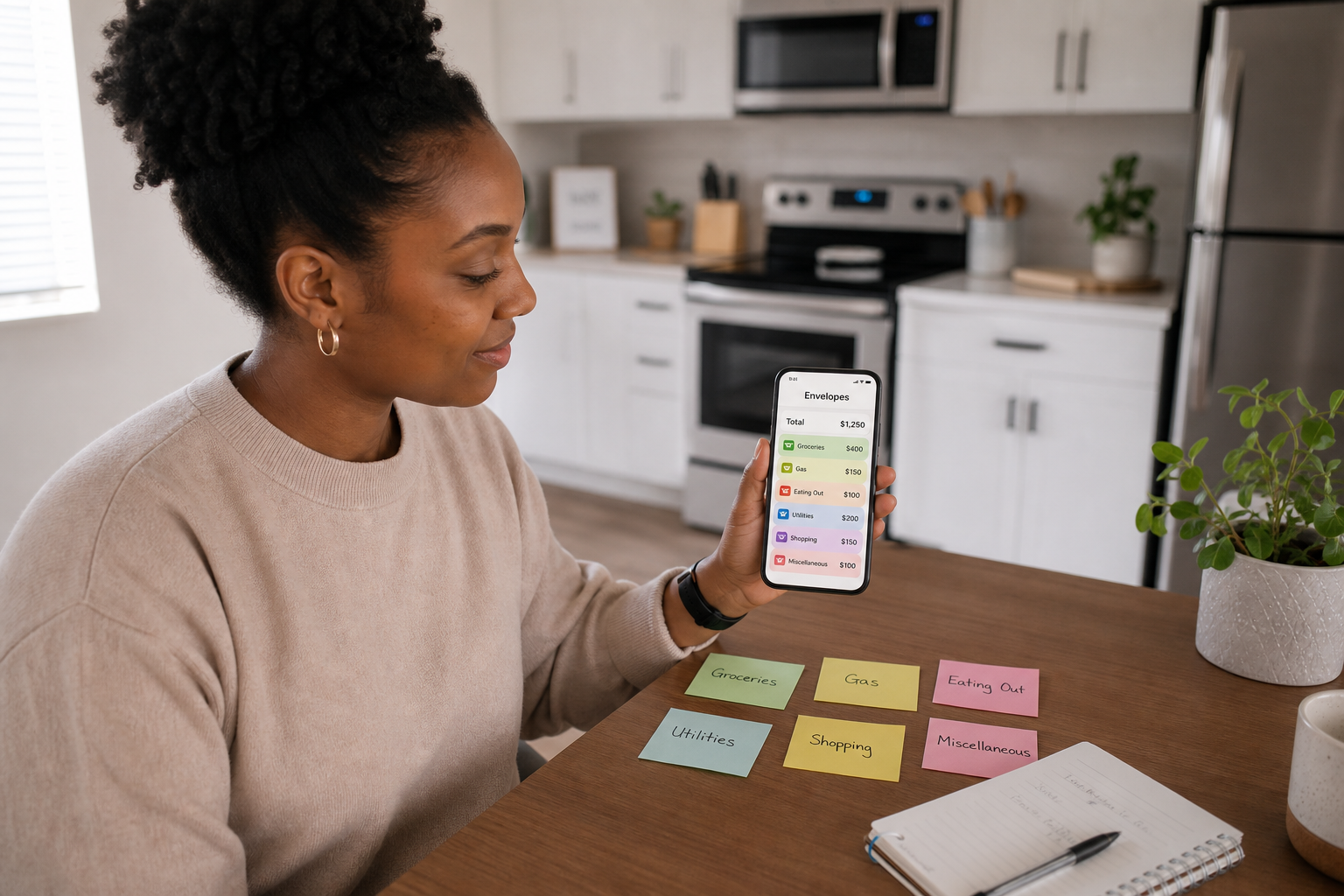
To budget daily, subtract your fixed monthly costs from your take-home pay, divide what remains by the number of days in your pay cycle, and use that number as your daily spending limit. Any underspend rolls forward to the next day; any overspend reduces the days that follow. The result is a live, flexible budget that takes under 10 minutes to set up and under 2 minutes per day to maintain.
👉 Spendaily handles all of this automatically. Set your income and fixed costs once; get a live daily number every morning. Download free on iOS →
What You Will Need
Before starting, have the following to hand:
- Your most recent payslip or the net pay figure from your last bank deposit
- A list of your fixed monthly outgoings (rent, bills, contracts, subscriptions, debt repayments)
- A calculator or your phone notes
- 10 minutes
That is everything. No spreadsheet required. No financial expertise needed.
How to Budget Daily: Step-by-Step
Step 1, Find your monthly take-home pay
Use the figure deposited into your bank account after tax and National Insurance, not your gross salary.
- Employed, paid monthly: use your last payslip net pay
- Employed, paid weekly: multiply weekly net pay × 52 ÷ 12
- Irregular income: use your average over the last 3 months as a starting estimate
- Student: add your term maintenance loan instalment to any expected part-time income for the period
Step 2, List every fixed cost
Fixed costs are non-negotiable recurring payments. Write them all down:
- Rent or mortgage
- Energy bills (gas, electricity, water)
- Broadband and mobile phone contract
- Council tax (where applicable)
- All subscriptions (streaming, gym, software, etc.)
- Insurance payments
- Debt minimum repayments
- Regular savings transfers (treat this as a fixed cost to protect it)
Add them up to get your total fixed monthly commitment.
Step 3, Calculate your discretionary budget
Monthly take-home − Total fixed costs = Monthly discretionary budget
This is the pool of money available for day-to-day spending, food, transport, eating out, clothes, entertainment, and everything else that is not a fixed outgoing.
Step 4, Divide by your pay cycle
Monthly discretionary budget ÷ Days in pay cycle = Daily allowance
Use 30 for a calendar month. Use the exact number of days between paydays if your cycle differs.
Example: £1,800 take-home − £995 fixed costs = £805 discretionary ÷ 30 = £26.83/day
Step 5, Set your daily number as your spending reference
Write it in your phone notes, set it as a widget, or enter it into a daily budgeting app. This is the number you check before spending, not your bank balance.
Your bank balance includes committed money. Your daily allowance does not.
Step 6, Log spending as you go
Every time you spend something discretionary, coffee, lunch, a top-up, anything, subtract it from today's allowance or log it in your app.
- Remaining allowance is what you still have for the day
- Any surplus at midnight rolls forward to tomorrow
- Any overspend reduces the next day proportionally
You do not need to categorise anything. Just: amount spent, daily number updated.
Step 7, Review once per week and reset at payday
Spend 5 minutes at the end of each week reviewing:
- Did the daily number feel accurate?
- Were any fixed costs missed or changed?
- Is the daily allowance sustainable?
On payday, recalculate using your new actual income. If any fixed costs have changed, update them before dividing.
Worked Example: Full Monthly Setup
| Item | Amount |
|---|---|
| Monthly take-home | £2,100 |
| Rent | £800 |
| Energy bills | £110 |
| Broadband | £28 |
| Phone contract | £22 |
| Gym + Netflix + Spotify | £40 |
| Car insurance | £55 |
| Debt repayment | £80 |
| Savings transfer | £100 |
| Total fixed costs | £1,235 |
| Discretionary budget | £865 |
| ÷ 30 days | |
| ✅ Daily allowance | £28.83 |
This person has £28.83/day for everything discretionary, food, transport, social spending, clothing, and everything else. When they underspend on Tuesday (£15 spent), Wednesday's allowance rises to £41.83. When they overspend on Saturday (£60 spent), the following days adjust slightly downward.
Common Beginner Mistakes to Avoid
Mistake 1, Including rent and bills in daily spending Fixed costs should be subtracted before calculating the daily allowance, not tracked alongside discretionary spending. Mixing them confuses the picture and makes the daily number feel too low.
Mistake 2, Using gross salary instead of net pay Your gross salary is before tax. Use the figure that actually hits your bank account, this is the only money you have to work with.
Mistake 3, Forgetting irregular annual costs Car MOT, TV licence, annual insurance renewals, and holiday costs do not show up in monthly fixed costs but should be divided by 12 and added to your monthly fixed cost list. Otherwise they appear as "surprises" that break the budget.
Mistake 4, Setting the daily number and never checking it The daily number only works if you look at it before spending. Build the morning check habit in week one, it takes 10 seconds and is the single most impactful thing you can do to make daily budgeting work.
Mistake 5, Abandoning the system after one overspend One overspend does not break daily budgeting. The rollover system adjusts for it automatically. The only way to break daily budgeting is to stop checking your number entirely.
How Daily Budgeting Compares to Other Approaches
| Daily Budgeting | Monthly Budgeting | No Budget | |
|---|---|---|---|
| -- | -- | -- | -- |
| Setup time | 10 minutes | 20-30 minutes | 0 |
| Daily effort | 2 minutes | Weekly review | 0 |
| Point-of-purchase usefulness | ✅ Immediate | ❌ Too vague | ❌ None |
| Handles irregular income | ✅ Yes | ❌ Difficult | N/A |
| Typical outcome | Consistent awareness, gradual saving | Good for planners, poor for impulse spenders | Variable, often overdraft-adjacent |
→ Compare all three major budgeting methods: Daily vs Envelope vs Zero-Based → Get the daily budget calculator template
FAQ
How do I start budgeting daily? Calculate your monthly take-home pay, subtract all fixed costs (rent, bills, subscriptions, debt repayments), then divide the result by the number of days in your pay cycle. The result is your daily allowance. Check it every morning and log spending throughout the day.
Is daily budgeting hard to maintain? No. Once set up, daily budgeting requires about 2 minutes per day: a 10-second morning check and 10-15 seconds to log each purchase. The main habit to build is checking your number before spending, rather than after.
How long does it take to set up daily budgeting? Under 10 minutes for the initial calculation. If you use Spendaily, the app runs the calculation automatically, you enter your income and fixed costs and the daily number appears instantly.
What if I overspend on one day? Your daily budget adjusts via rollover: the overspend is distributed across remaining days, slightly reducing future allowances. One overspend does not break the system, it simply recalibrates the days that follow.
How often should I recalculate my daily budget? Recalculate at the start of every new pay cycle, and immediately whenever a fixed cost changes (new rent, cancelled subscription, new debt repayment). An out-of-date daily number gives you false confidence about what you can spend.