Daily budgeting, envelope budgeting, and zero-based budgeting all help you control spending, but they work very differently. Daily budgeting gives you one live number for today. Envelope budgeting separates money into category pots. Zero-based budgeting assigns every pound a job before the month begins. The right method is whichever one you will still be using three months from now.
👉 Spendaily uses daily budgeting. One number, automatic rollover, no bank connection. Try it free on iOS →
How the Three Methods Work
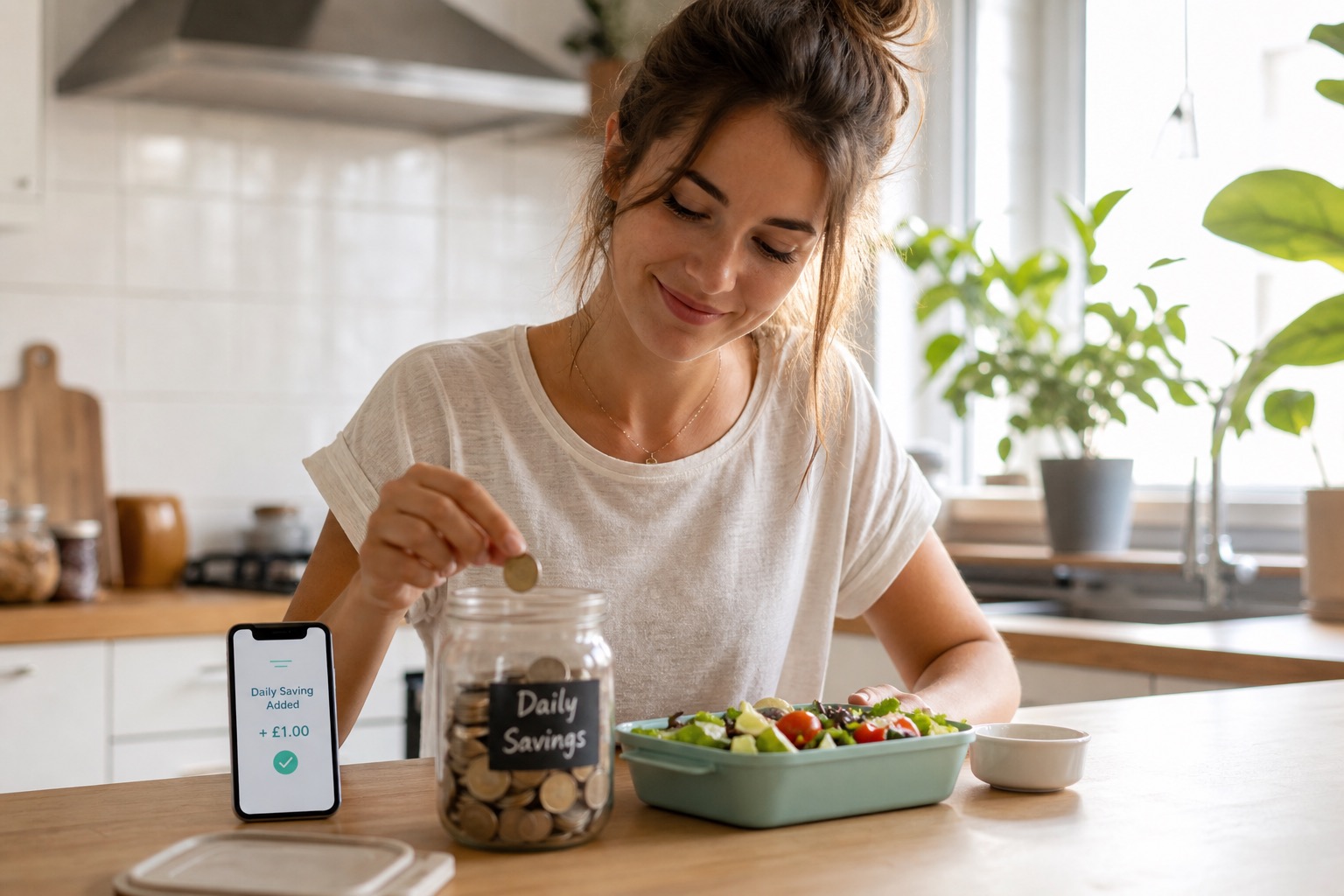
Daily budgeting converts your monthly discretionary income into a single daily allowance. Underspend today and the surplus rolls forward. Overspend and future days adjust. There are no categories, just one number that answers "can I afford this right now?"
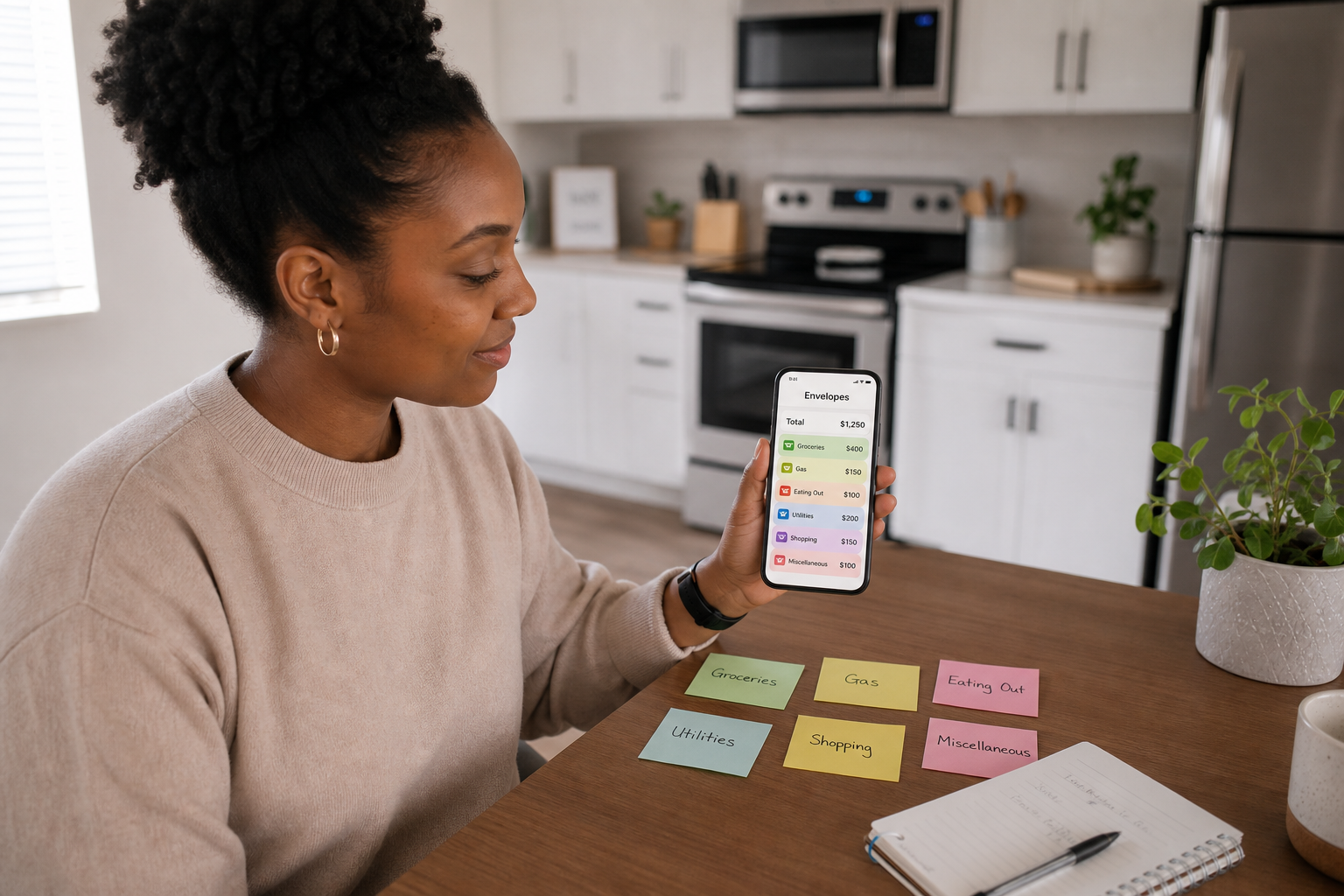
Envelope budgeting divides your monthly income into named spending categories, groceries, eating out, transport, entertainment, before the month begins. Each category has a fixed pot. When a pot is empty, that category is done for the month. Originally used with physical cash envelopes; now replicated in apps like Goodbudget.
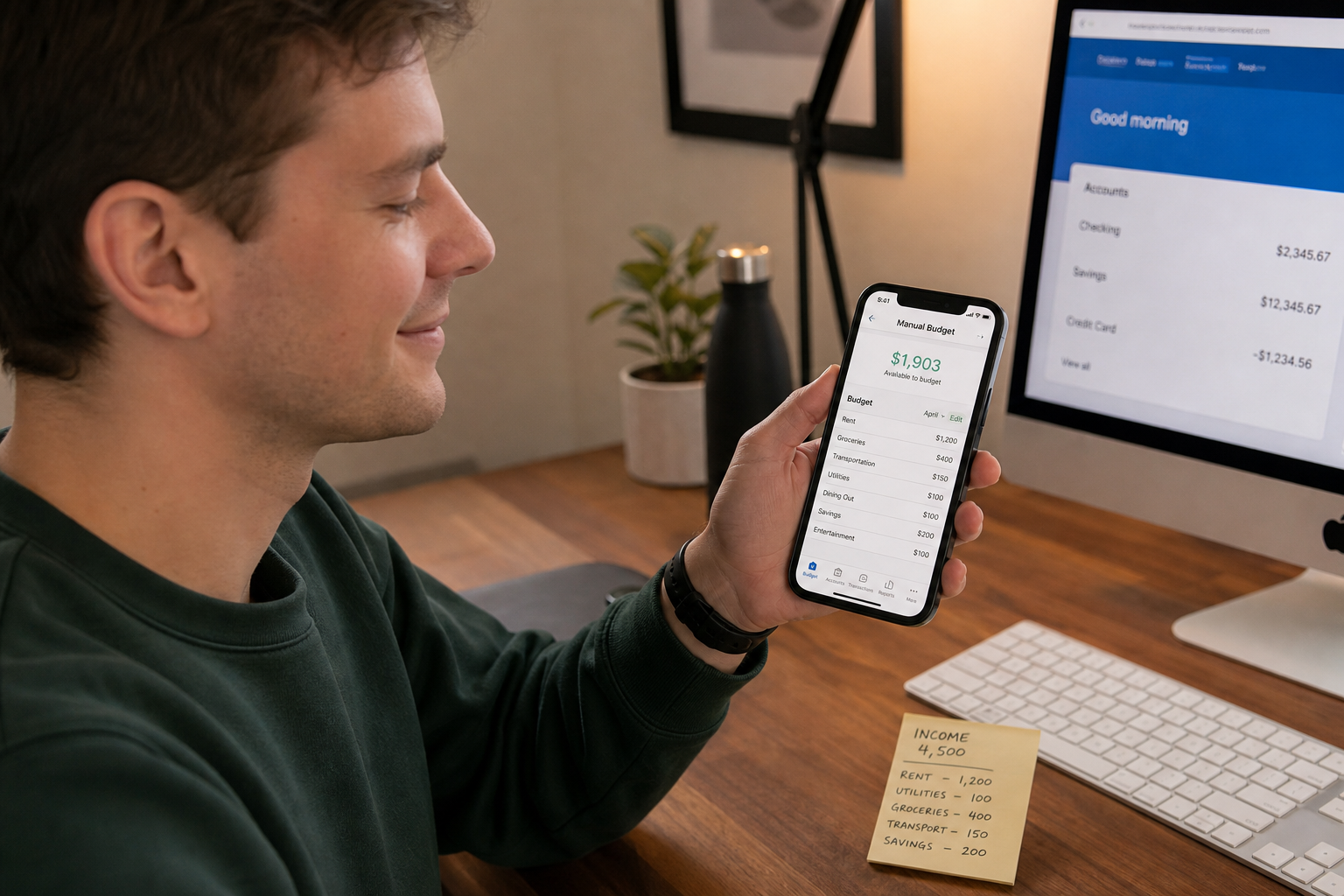
Zero-based budgeting requires you to account for every single pound of income at the start of each month. Income minus all spending, saving, and debt allocations must equal zero. YNAB is the most popular zero-based budgeting app. It provides the most detailed picture of your finances but requires the most setup and ongoing maintenance.
The Same £1,800 Budget Under All Three Methods
Here is how a person with £1,800/month take-home and £950 in fixed costs (leaving £850 discretionary) would manage the same money under each system:
Daily budgeting: £850 ÷ 30 = £28.33/day That is the only number needed. No categories, no monthly plan. On a busy Friday (£50 spent), Monday's number adjusts down slightly. On a quiet Tuesday (£12 spent), Wednesday's number increases.
Envelope budgeting:
| Envelope | Monthly allocation |
|---|---|
| Groceries | £200 |
| Eating out | £120 |
| Transport | £100 |
| Entertainment | £80 |
| Clothing | £60 |
| Personal care | £50 |
| Buffer/misc | £240 |
| Total | £850 |
Every transaction is sorted into a category. When Eating Out hits £120, no more restaurants until next month, regardless of how much remains in other envelopes.
Zero-based budgeting: On top of the £850 discretionary allocation above, zero-based budgeting also pre-allocates the £950 fixed costs explicitly (rent, bills, etc.), savings contributions, emergency fund deposits, and any debt extra payments, ensuring every single pound of the £1,800 has been assigned before spending begins.
Side-by-Side Comparison
| Daily Budgeting | Envelope Budgeting | Zero-Based Budgeting | |
|---|---|---|---|
| -- | -- | -- | -- |
| Main unit | One daily number | Category pots | Full monthly plan |
| Setup time | Under 5 minutes | 20-30 minutes | 45-90 minutes |
| Daily effort | Very fast (one check) | Moderate | Moderate to high |
| Handles irregular income | ✅ Recalculates dynamically | ❌ Requires monthly reset | ❌ Requires monthly reset |
| Bank connection needed | ❌ Never | ❌ No | Optional |
| Works for impulse spenders | ✅ Strong | ⚠️ If categories are right | ❌ Too much setup friction |
| Category visibility | ❌ Not built in | ✅ Core feature | ✅ Fully detailed |
| Point-of-purchase usefulness | ✅ Immediate answer | ⚠️ Need to check category | ❌ Requires app review |
| Best for | Quick decisions, busy lives | Category lovers, couples | Detailed planners, debt payoff |
| App example | Spendaily | Goodbudget | YNAB |
What the Research Says About Sustainability
The most common reason budgets fail is not a lack of willpower, it is a lack of consistency. And consistency drops sharply when a system requires daily maintenance that feels like effort.
Studies in behavioural finance consistently find that simpler systems with lower friction are used more consistently and produce better long-term outcomes than more detailed systems that require effort to maintain. This is the primary argument for daily budgeting over zero-based budgeting for most people: the system you actually use is more effective than the system that is theoretically optimal.
Envelope budgeting sits in the middle: more structure than daily budgeting, but less maintenance than zero-based. It works best for people who genuinely think in categories and have consistent, predictable monthly spending.
How to Choose Based on Your Situation
Choose daily budgeting if:
- You find category tracking tedious or overwhelming
- You mainly want to control discretionary overspending
- Your income is irregular (freelance, shifts, gig work, student loans)
- You want an answer you can use at the point of purchase
- You have tried monthly budgeting before and abandoned it
Choose envelope budgeting if:
- You prefer thinking in spending categories
- You share a budget with a partner or housemate
- You have specific areas of consistent overspending (e.g., eating out) you want to cap
- You like the psychological clarity of a pot that visibly empties
Choose zero-based budgeting if:
- You are paying off debt and need full control over every pound
- You enjoy financial planning and find detailed systems satisfying rather than draining
- Your income is stable and predictable month to month
- You are willing to invest 60-90 minutes per month in budget maintenance
The Hybrid Approach: Daily + Envelopes
Many people find a hybrid works better than any single method.
The most effective combination: use envelope budgeting for the two or three categories where you consistently overspend (for most people: eating out and online shopping), and daily budgeting for everything else.
This gives you targeted category brakes where they are most needed, without the overhead of managing 8-12 categories across your entire discretionary budget.
In practice:
- Set a monthly cap of £120 for eating out (envelope)
- Set a monthly cap of £80 for online shopping (envelope)
- Everything else runs on a daily allowance (daily budgeting)
Result: focused friction where it is needed; maximum simplicity everywhere else.
→ How to calculate your daily allowance: Daily Budgeting, The Complete Guide → How to use the daily budget calculator
FAQ
What is the difference between daily budgeting and envelope budgeting? Daily budgeting gives you one spending number per day, which adjusts via rollover. Envelope budgeting divides money into named categories before the month begins. Daily budgeting requires less setup and works better for variable income; envelope budgeting provides stronger category-level control.
Is envelope budgeting or daily budgeting better for beginners? Daily budgeting is generally better for beginners because it requires less setup, fewer daily decisions, and only one number to track. Envelope budgeting is better for people who already think in spending categories and want category-level visibility.
What is zero-based budgeting? Zero-based budgeting assigns every pound of your income a specific purpose, spending, saving, or debt repayment, so that income minus allocations equals zero. It is the most detailed budgeting method and works best for people focused on debt payoff or who want comprehensive financial control. YNAB is the most popular zero-based budgeting app.
Can you combine daily budgeting and envelope budgeting? Yes. A common hybrid is to use envelope budgeting for one or two categories where you consistently overspend (like eating out or online shopping) while using a daily allowance for all other discretionary spending. This gives targeted control without full category overhead.
What budgeting method works best for variable income? Daily budgeting handles variable income most effectively because it recalculates from your actual income each pay cycle rather than requiring a fixed monthly plan. Envelope budgeting and zero-based budgeting both assume stable, predictable monthly income.