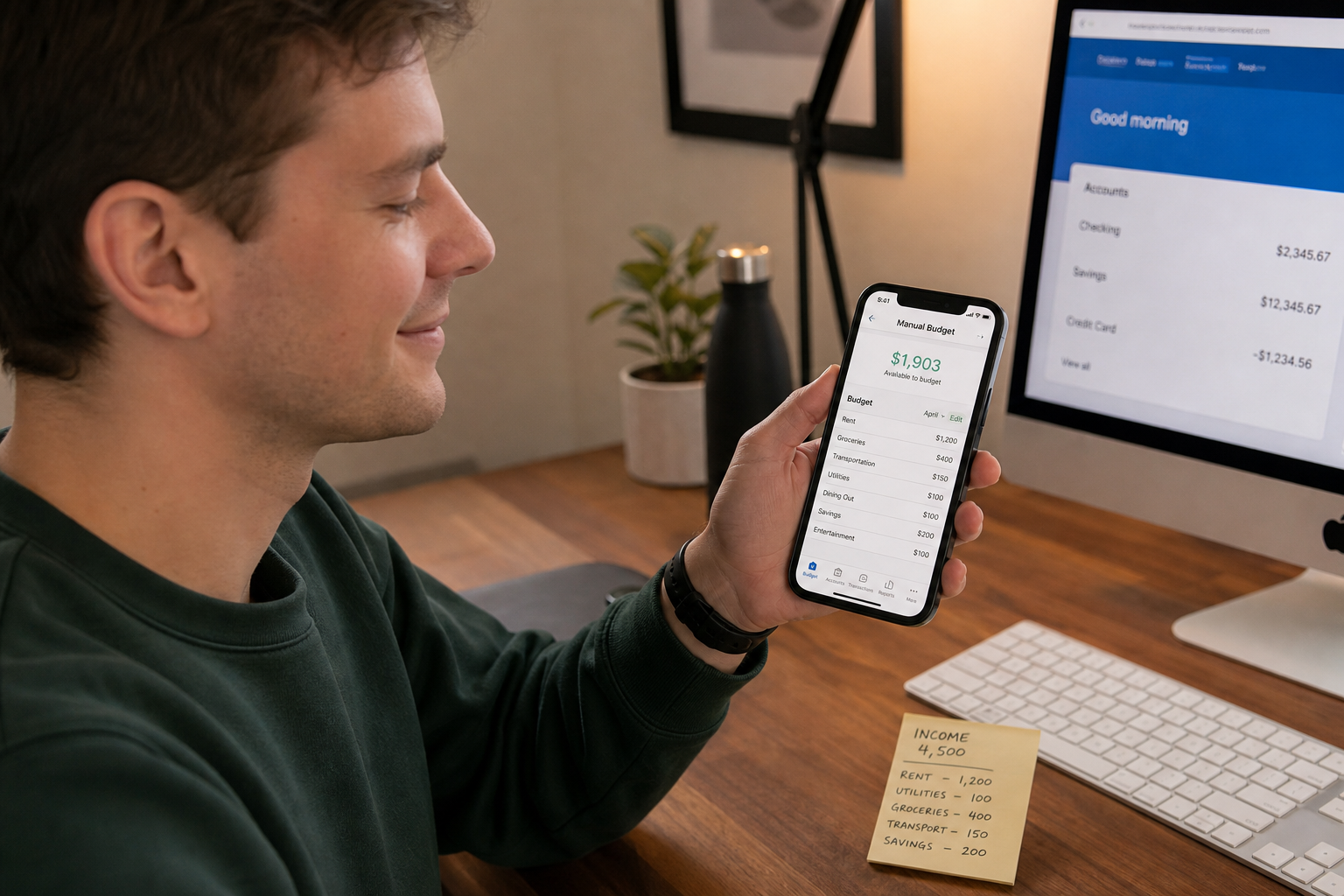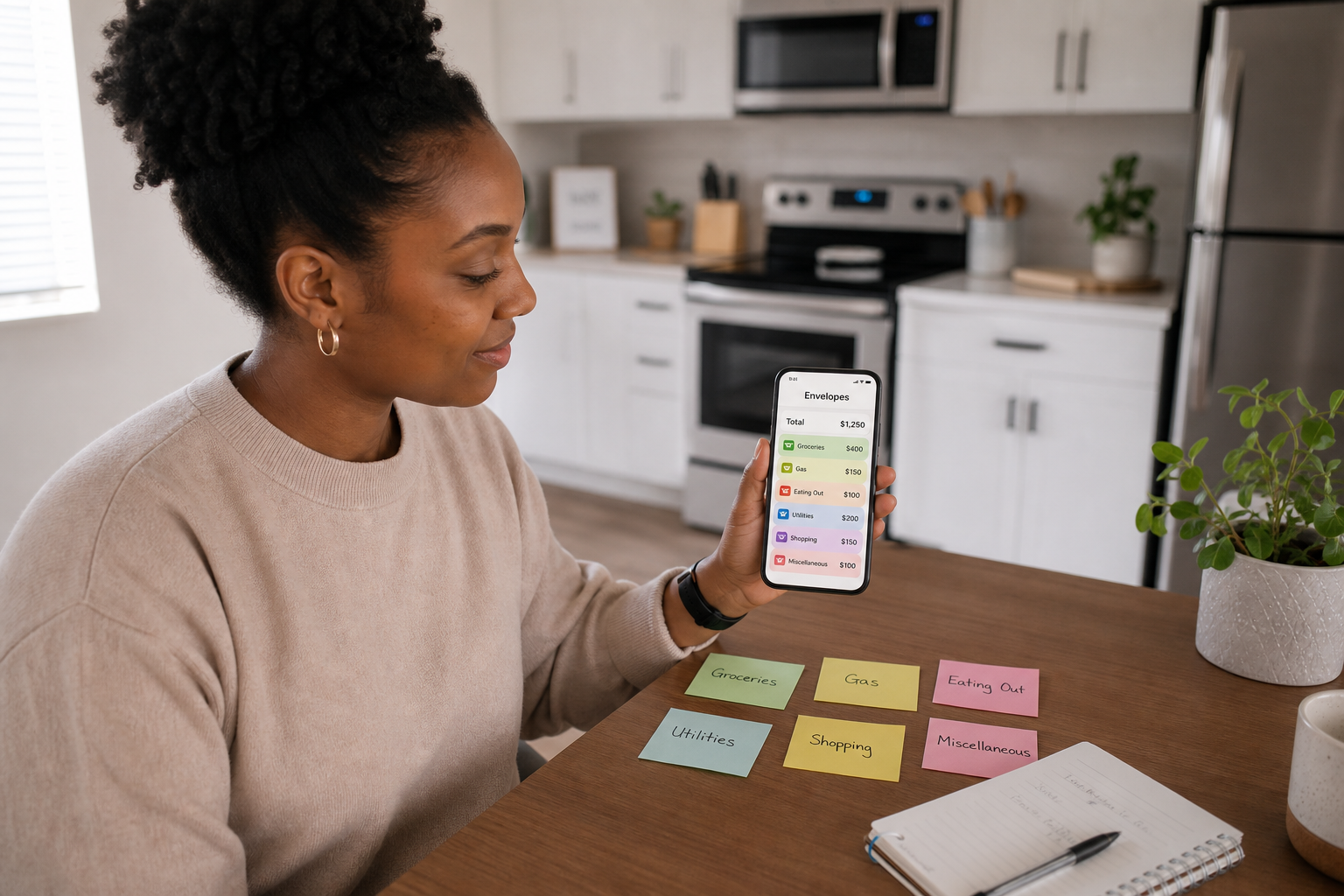
The best budgeting app for students without a bank account, or without wanting to link one, is Spendaily. It is free on iOS, requires no bank connection, works with maintenance loans paid in termly instalments, and handles the irregular income patterns that make standard monthly budgeting difficult for students. For students who prefer envelope-style category tracking, Goodbudget is the best no-bank alternative.
👉 Download Spendaily free on iOS → Get it here
Why Bank-Linked Apps Do Not Work Well for Most Students
Every major student budgeting guide recommends Monzo, Emma, or Starling. They are popular, they are free to open, and they sync transactions automatically.
But for a large proportion of students, bank-linked budgeting apps create more problems than they solve:
Termly income does not match monthly budgeting. Maintenance loans in England arrive three times a year, not monthly. Apps designed around monthly income cannot handle a £3,000+ lump sum that needs to cover 13 weeks of spending. A daily budgeting app, by contrast, simply divides the available money by the number of days in the term.
Part-time and zero-hours income is irregular. Many students work shifts or zero-hours contracts with variable weekly pay. Bank-synced apps that expect a regular salary deposit produce inaccurate and confusing budget calculations when income varies week to week.
Some students do not have a standard UK bank account. International students, students on prepaid cards, or those managing budgets across cash and card payments may not have a compatible bank account for open banking APIs.
Privacy matters more at this life stage. Students sharing accommodation, managing finances for the first time, or uncertain about financial app data policies are understandably hesitant to connect banking credentials to a third-party app.
Real UK Student Budgets for 2026: What You Actually Have Per Day
The 2025/26 maintenance loan rates in England are:
| Student situation | Annual maintenance loan | Per 3-term year |
|---|---|---|
| Living away from home, outside London | £9,706 | £3,235 / term |
| Living away from home, in London | £12,382 | £4,127 / term |
| Living at home | £6,732 | £2,244 / term |
Note: Loan amounts are means-tested. Figures above are maximum rates for 2025/26.
Here is what a realistic student budget looks like per day, across four major UK cities:
| City | Monthly rent (avg) | Term rent (13 wks) | Maintenance loan (term) | After rent | ÷ 91 days | Daily allowance |
|---|---|---|---|---|---|---|
| Manchester | £680 | £1,870 | £3,235 | £1,365 | ÷91 | £15.00 |
| Leeds | £630 | £1,733 | £3,235 | £1,502 | ÷91 | £16.50 |
| Birmingham | £650 | £1,788 | £3,235 | £1,447 | ÷91 | £15.90 |
| London | £1,100 | £3,025 | £4,127 | £1,102 | ÷91 | £12.11 |
| Cardiff | £580 | £1,595 | £3,235 | £1,640 | ÷91 | £18.02 |
| Edinburgh | £720 | £1,980 | £3,235 | £1,255 | ÷91 | £13.79 |
Rent figures are approximate averages for student accommodation, shared houses, 2026. Daily allowance covers all discretionary spending including food, transport, and social spending. Part-time income not included, add this to your available pot before dividing.
The key takeaway: London students are working with as little as £12/day after rent alone. Every other fixed cost, phone, subscriptions, transport, reduces this further. A daily budgeting app with rollover is not a nice-to-have for London students, it is essential.
Best Budget Apps for Students Without Bank Linking
1. Spendaily, Best Overall for Students
Free · iOS · No bank connection
Spendaily is the only app designed specifically around the daily budgeting method with rollover, which makes it uniquely suited to student budgeting.
Why it works for students:
- Termly budgeting: Set your loan instalment as the income figure and your term length as the period. The app divides by days automatically
- Part-time income: Update your income figure whenever a shift payment arrives, the daily number recalculates from your actual position
- No bank account needed: Works entirely without bank access, suitable for international students, prepaid card users, and anyone not ready to connect banking apps
- Zero setup friction: Under 5 minutes to configure; no category decisions, no bank authorisation
- Rollover rewards: Underspend on a quiet Tuesday and Wednesday's number increases, the system accommodates the natural peaks and troughs of student social spending
Best for: Students who want the simplest possible daily spending guide with no financial data sharing.
2. Goodbudget, Best for Students Who Like Categories
Free (10 envelopes) · iOS and Android · No bank connection
Goodbudget uses the envelope budgeting method, you divide your loan instalment into named spending pots at the start of each term (Food, Rent, Social, Books, etc.) and track how each pot depletes. No bank connection required.
It suits students who want granular category visibility rather than a single daily number. The free tier covers 10 envelopes across 2 devices, enough for most student budgets.
Best for: Students who want detailed category control without bank linking; couples or housemates managing a shared budget.
3. Monzo, Best for Students Who Want Bank + Budgeting Together
Free current account · iOS and Android
Monzo is the most popular financial app among UK students and for good reason. It is a full digital bank, you get a current account, a debit card, and strong budgeting features built in. Because Monzo is your bank, there is no separate open banking authorisation required.
The budgeting features include automatic transaction categorisation, savings Pots, salary sorting, and round-up savings. The free account comes with no monthly fee and no overseas transaction fees up to £200/month, useful for students travelling or studying abroad.
Important caveat: Monzo's budgeting works best when all spending flows through Monzo. Students who use cash regularly, receive money in multiple accounts, or have a mix of card providers will find the picture incomplete. A manual daily budgeting app captures everything; Monzo only captures Monzo transactions.
Best for: Students happy to use Monzo as their primary bank and wanting banking and budgeting in one app.
4. Emma, Best for Students with Multiple Accounts
Free tier · iOS and Android · Bank connection required
Emma connects multiple bank accounts, credit cards, and student overdrafts in one view via open banking. It is most useful for students managing money across a student current account, a savings account, and possibly a part-time work account at a different bank.
Emma's free tier includes subscription tracking (valuable for identifying forgotten recurring charges) and a basic spending summary. The premium tiers add cashback and savings rates.
Best for: Students with accounts at multiple banks who want a single unified view; students who want subscription tracking.
How to Budget a Student Maintenance Loan with a Daily App
The maintenance loan payment cycle does not match monthly budgeting. Here is how to use Spendaily (or any daily budget app) with termly income:
Step 1, When your loan arrives Note the total loan amount deposited. Add any part-time income you expect to receive this term (estimate conservatively).
Step 2, Subtract term fixed costs
- Term rent (weekly rent × 13 weeks)
- Term phone contract (monthly cost × 3)
- Any subscriptions for the term
- Travel (season ticket or average weekly transport cost × 13)
Step 3, Divide by term days A standard UK university term is approximately 10-13 weeks (70-91 days). Divide your remaining discretionary budget by the number of days until the next loan instalment or your term end date.
Step 4, Set this as your daily allowance in Spendaily Update it each time part-time income arrives. Recalculate at the start of each new term.
Example (Manchester student, no part-time work):
| Item | Amount |
|---|---|
| Maintenance loan (term) | £3,235 |
| Term rent (£680/mo × 3) | £2,040 |
| Phone (£12/mo × 3) | £36 |
| Subscriptions (£18/mo × 3) | £54 |
| Travel (£15/wk × 13) | £195 |
| Total fixed costs | £2,325 |
| Discretionary budget | £910 |
| ÷ 91 days | |
| ✅ Daily allowance | £10.00 |
At £10/day, every spending decision matters. A daily budgeting app with rollover turns that constraint into a clear, manageable system rather than a source of anxiety.
Student-Specific Money Tips Alongside Daily Budgeting
1. Treat your maintenance loan as a salary, not a windfall The lump sum feels large when it arrives. Divide it by 91 days immediately and hold that number in mind. Do not adjust upward because the balance looks healthy, it has to last the full term.
2. Build a small buffer in week 1 Aim to underspend slightly in the first week of term. This creates a rollover buffer that covers the higher social spending that typically arrives in weeks 2-3.
3. Separate food from social spending Food is essential; socialising is discretionary. Some students find it useful to mentally ring-fence £5-7/day for food and treat the remainder as their social + everything-else allowance.
4. Add part-time earnings as they arrive Do not wait until payday to update your daily number. When a shift payment arrives, recalculate immediately. The daily allowance goes up, which is a genuinely satisfying moment.
5. Apply for your full entitlement The National Student Money Survey 2026 found that students who use a budgeting app save an average of £150 more per month than those who do not track. But if you have not applied for your full maintenance loan entitlement, no app can compensate for the shortfall. Check your entitlement at Student Finance England before budgeting.
→ Full daily budgeting guide for students: Daily Budgeting for Students and Young Adults → Privacy-first budgeting explained: Budgeting Apps Without Bank Connections
FAQ
What is the best free budgeting app for UK students? Spendaily is the best free budgeting app for UK students who want daily spending control without bank linking. It works with termly maintenance loan payments, handles irregular part-time income, and requires no bank account connection.
Can I use a budgeting app without a bank account? Yes. Spendaily and Goodbudget both work without any bank account connection. You enter your income and expenses manually. No bank credentials are required, making these apps suitable for international students, prepaid card users, and students who prefer not to share banking data.
How do students budget a maintenance loan? Subtract your term fixed costs (rent, bills, phone, transport) from your maintenance loan amount. Divide the remainder by the number of days until your next instalment (typically 91 days per term). The result is your daily discretionary allowance. Update it when part-time pay arrives.
How much should a student spend per day in the UK? After rent and essential fixed costs, most UK students have between £10 and £18 per day for discretionary spending. London students typically have the least (around £12/day) due to higher rent. Students living at home or in lower-rent cities can have £20+/day.
Is Monzo good for student budgeting? Monzo is excellent for students who want banking and budgeting in one app and are happy to use Monzo as their main account. Its built-in spending categories and Pots work well as long as all spending flows through Monzo. For students who use cash, multiple accounts, or prefer privacy, a manual no-bank-link app is more accurate.
Do student budgeting apps actually help? Yes. The National Student Money Survey 2026 found that students who use budgeting apps save an average of £150 more per month than those who do not track their spending. The key is choosing a system with low enough friction to maintain consistently, which is why apps with a single daily number outperform category-heavy trackers for most students.