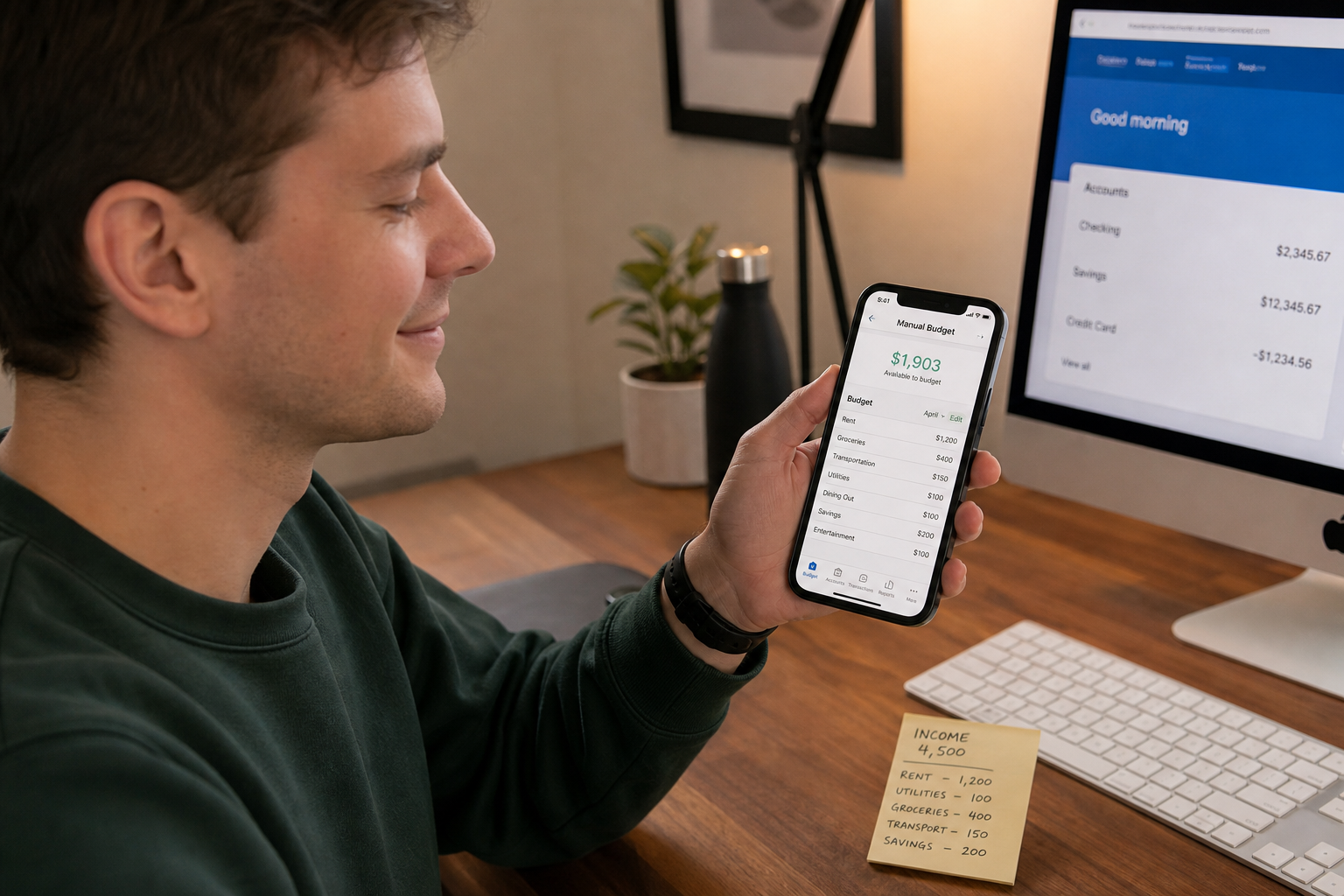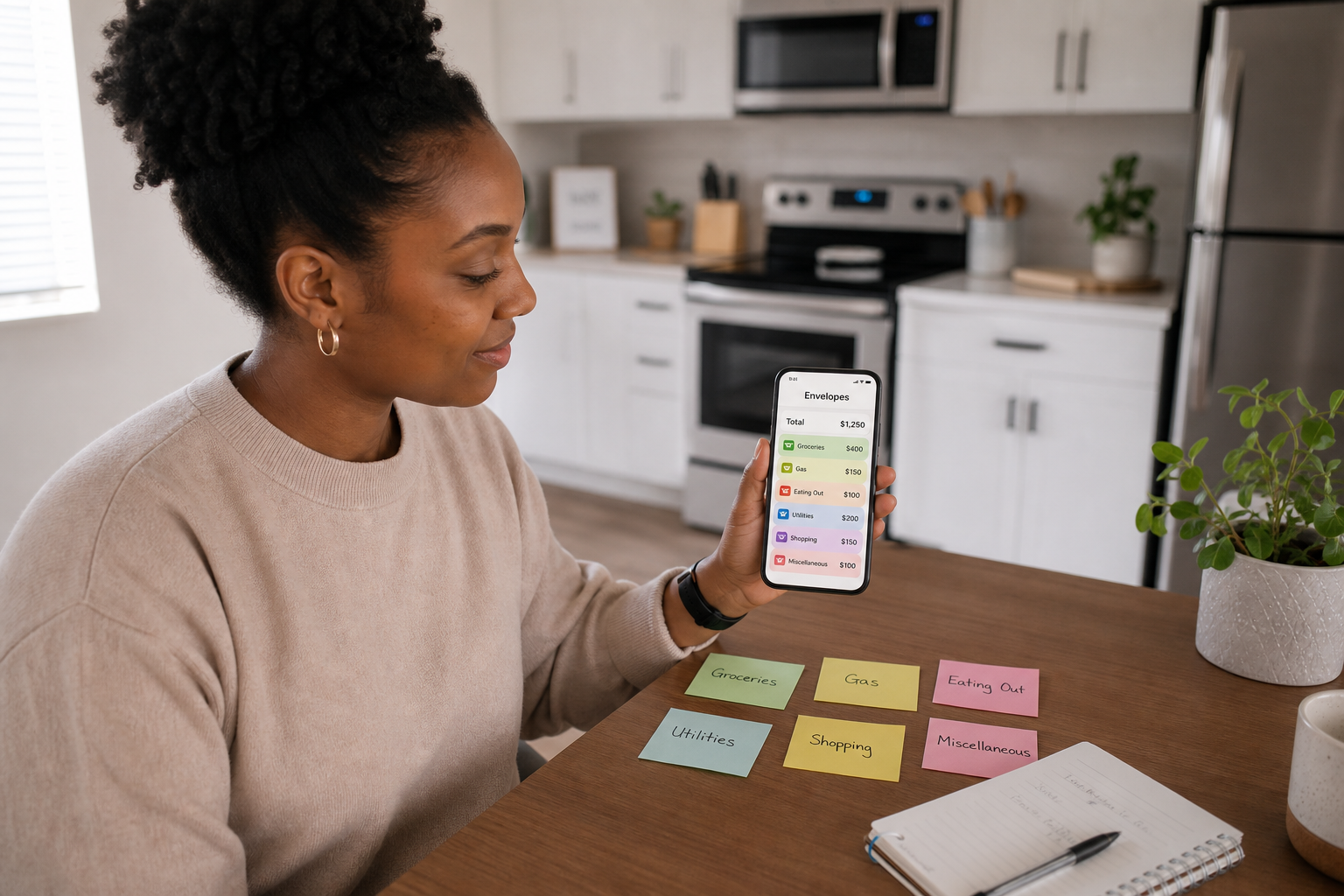
Budgeting irregular income with monthly category totals fails because the foundation, a predictable monthly income, does not exist. The daily budget method works better because it operates from current position: whatever money is available now, divided by the days until the next expected payment. Every income arrival is a recalculation trigger, not a monthly reset, and the daily allowance adjusts immediately to reflect your actual financial position rather than an estimated monthly average.
👉 Spendaily recalculates your daily number every time your income changes. Download free on iOS →
Why Standard Budgeting Advice Fails for Irregular Earners
The most widely shared advice for budgeting irregular income is: calculate your average monthly income over 6-12 months and budget from that average.
This advice is structurally sound but practically problematic:
Problem 1, Low months are dangerous. If your average is £2,200/month but March delivers £1,100, you will overspend your average-based budget without any warning until the deficit appears in your bank statement.
Problem 2, High months feel artificially constrained. If May delivers £3,400, spending at the "average" of £2,200 generates unexplained surplus, which tends to get spent rather than saved.
Problem 3, The average approach is always retrospective. It tells you what you earned on average last year, not what you have available right now.
The daily budget approach solves all three problems by operating from your actual current position rather than a historical estimate.
The Core Principle: Income Arrival = Recalculation Trigger
In daily budgeting for irregular income, you do not calculate a monthly budget. You calculate a forward-looking daily allowance from your current position:
Daily allowance = (Available balance − upcoming fixed commitments) ÷ Days until next expected income
Every time income arrives, you recalculate. The new money extends your daily allowance, either by increasing its amount or by extending the period it covers.
This method handles three types of irregular income:
- Shift workers paid weekly or fortnightly, recalculate on payday
- Freelancers paid per project, recalculate when each invoice clears
- Gig workers paid daily or weekly (Deliveroo, Uber), recalculate weekly
Step-by-Step: Setting Up Daily Budgeting for Irregular Income
Step 1, Identify your fixed commitments for the next 30 days
List everything that will leave your account in the next 30 days regardless of income:
- Rent or mortgage payment
- All direct debits (energy, broadband, phone, subscriptions)
- Any loan or credit card minimum payment
- Transport pass or essential regular travel costs
Total these. This is your non-negotiable outgoing for the period.
Step 2, Determine your available balance
Check your current balance. Subtract any pending transactions. This is your working balance: not your bank account total, but the money you actually control right now.
Step 3, Subtract fixed commitments from working balance
Working balance − Fixed commitments (30 days) = Discretionary budget
Step 4, Divide by days until next expected income
Discretionary budget ÷ Days to next expected income = Daily allowance
If your next expected income is uncertain (typical for freelancers), use a conservative estimate, the minimum you are reasonably confident of receiving, or set a longer "days to next income" window to create safety margin.
Step 5, Recalculate when income arrives
When payment lands, immediately recalculate:
- New working balance (previous balance + new income)
- Update fixed commitments if any new commitments have been added
- New discretionary budget
- New daily allowance (updated ÷ updated days to next income)
Worked Examples by Income Type
Freelance Designer, Monthly Variable
| Month | Expected income | Fixed costs | Discretionary | Days | Daily allowance |
|---|---|---|---|---|---|
| Jan (low) | £1,400 | £900 | £500 | 31 | £16.13 |
| Feb (mid) | £2,100 | £900 | £1,200 | 28 | £42.86 |
| Mar (high) | £3,600 | £900 | £2,700 | 31 | £87.10 |
In March, the daily allowance of £87.10 includes a strong savings opportunity. Rather than spending to that level, a disciplined freelancer would:
- Spend to their "normal" daily pattern (~£30-£40)
- Direct the surplus (£47-£57/day) into a low-month buffer fund: typically held separately, not in the daily budget
- Continue drawing down the buffer fund in January rather than dropping to a £16/day lifestyle
The buffer fund principle: Irregular earners should build a buffer of 1-2 months' fixed costs (£900-£1,800 in the example above) from high-month surplus. This buffer is not a savings goal, it is income smoothing for future low months.
Zero-Hours Shift Worker, Weekly Variable
Marcus, 21, works in hospitality on a zero-hours contract. Shifts vary from 8 to 40 hours/week. He is paid every Friday.
| Week | Hours worked | Net pay (at £12.21/hr) | Fixed costs this week | Discretionary | ÷ 7 days | Daily allowance |
|---|---|---|---|---|---|---|
| Week 1 | 32 hrs | £390 | £160 | £230 | £32.86 | |
| Week 2 | 15 hrs | £183 | £160 | £23 | £3.29 | |
| Week 3 | 38 hrs | £464 | £160 | £304 | £43.43 | |
| Week 4 | 20 hrs | £244 | £160 | £84 | £12.00 |
Week 2 is a serious constraint at £3.29/day, essentially no discretionary spending. Week 3 creates significant surplus.
The key technique: On high-income weeks (Week 3), resist spending to the full daily allowance. Budget at Week 2 levels (£3-£5/day) and build a forward buffer. When Week 2 arrives, your daily allowance is artificially sustained by the buffer rather than dropping to £3.29.
In Spendaily, this is implemented by setting a conservative daily target that does not change with income fluctuations, then managing surplus manually toward a buffer goal.
Gig Worker, Multiple Daily Payments (Deliveroo / Uber)
For gig workers receiving payments multiple times per week, the recalculation trigger is weekly, not per-payment.
Recommended approach:
- Set a weekly budget cycle (Monday to Sunday)
- At the start of each week, estimate expected income for the week (based on planned hours)
- Calculate daily allowance: (estimated weekly income − fixed costs this week) ÷ 7
- On Friday or Saturday, when most payments have cleared, recalculate with actuals and adjust the remaining 2 days accordingly
Attempting to recalculate after every individual Deliveroo payment creates decision fatigue and complexity. A weekly cycle with a mid-week actuals check is more manageable.
Setting Aside Tax for Self-Employed Earners
If you are self-employed or earning outside PAYE, you must set aside a portion of every payment for income tax and National Insurance before calculating your daily allowance.
The standard UK self-employed tax set-aside rate is 25-30% of gross income.
This means the calculation becomes:
Daily allowance = (Net income after tax set-aside − fixed costs) ÷ days to next payment
Example: £1,500 freelance payment arrives.
- Tax set-aside (28%): £420 → transferred to a separate account immediately
- Available income: £1,080
- Fixed costs this period: £600
- Discretionary: £480
- Days to next payment: 14
- ✅ Daily allowance: £34.29
Never include the tax set-aside in your daily budget calculation. It is not available to spend.
→ General daily budgeting method: Daily Budgeting → Daily budgeting for students with irregular income: Daily Budgeting for Students and Young Adults
Common Mistakes When Budgeting Irregular Income
| Mistake | Why it happens | The fix |
|---|---|---|
| Spending to a high-month allowance as normal | High daily number feels like the baseline | Budget at a conservative fixed rate; treat excess as buffer |
| Using bank balance instead of daily allowance | No budget system, balance feels like available money | Calculate daily allowance from current position, not total balance |
| Forgetting upcoming fixed costs on low months | No calendar for outgoings | List all direct debits with dates; subtract 30-day total before calculating allowance |
| Not setting aside tax on self-employed income | The money is in the account so it "feels" available | Separate tax account; transfer set-aside amount on the day income arrives |
| Averaging income and finding the average is always wrong | Average includes months that don't represent current reality | Use current position, not historical average |
FAQ
How do you budget when your income is irregular? Use the daily allowance method: available balance minus fixed upcoming commitments, divided by days until next expected income. Recalculate every time income arrives. This operates from your actual current position rather than an estimated monthly average, which makes it structurally better suited to irregular income than category-based monthly budgeting.
What is the best budgeting method for freelancers? Daily allowance budgeting with a buffer fund is the most effective method for freelancers. Calculate a daily allowance from current position on every invoice payment. In high-income months, budget at a conservative rate and direct surplus into a buffer fund of 1-2 months' fixed costs. Draw down the buffer in low-income months.
How much should a self-employed person set aside for tax in the UK? The standard guidance for UK self-employed earners is to set aside 25-30% of gross income for income tax and National Insurance. Transfer this to a separate account on the day payment arrives so it is never counted as available spending money in your daily budget calculation.
How do shift workers budget variable weekly income? Calculate a weekly budget cycle. At the start of each week, estimate expected income based on planned hours. Calculate daily allowance: (estimated weekly income − that week's fixed costs) ÷ 7. Recalculate on payday with actual figures and adjust the remaining days. In high-income weeks, resist spending to the full allowance, build a buffer for low-income weeks.
Can Spendaily handle irregular income? Yes. Spendaily works for irregular income by allowing you to update your income figure at any time during the budget period. When a payment arrives, you update the income, and the app recalculates your daily allowance from the new position forward. You can also set a custom budget period end date to match your personal payday cycle rather than a calendar month.