A no-spend month is a full calendar month where you stop all non-essential spending: no takeaways, no impulse buys, no “it was only a fiver” purchases. You still pay rent, bills, groceries and transport. Done well, most people free up between £150 and £400 in a single month, and the habit reset often outlasts the challenge itself.
How Does a No-Spend Month Work?
The rules are simple: for one month, you only spend on essentials.
Essential spending usually includes:
- Rent, bills and debt payments.
- Basic groceries and toiletries.
- Necessary transport and medication.
Non-essential spending is paused:
- Eating out, takeaways and coffee runs.
- Clothing, homeware and gadgets.
- Most entertainment and hobby purchases.
Banks and personal finance writers describe the no-spend month as the fastest legal way to see where your money really goes. When you cannot default to spending, every old habit becomes visible.
How to Do a No-Spend Month, Step by Step
Step 1: Set your rules before day one
Decide in advance:
- What counts as essential for your life, not someone else's.
- What is completely banned.
- Any planned exceptions (a birthday dinner, a pre-booked trip).
- What the saved money will do at the end.
Some people allow one small “emergency treat” buffer so a single slip does not end the whole month.
Step 2: Plan alternatives, not just restrictions
Saying “don't spend” is not a plan. Decide what you will do instead:
- Free entertainment: walks, podcasts, library books, game nights.
- Cooking from your cupboards and freezer before buying more.
- Decluttering and selling unused items, which earns instead of spends.
Step 3: Track every no-spend day visibly
Use a tracker you can see: a printed calendar on the fridge, a habit app, or the streak view in your budgeting app. Each ticked day makes the next one easier. This is the same psychology behind spending streaks, and it is surprisingly powerful.
Step 4: Give the saved money a job
Without a destination, no-spend savings quietly leak back into normal spending the following month. Common destinations:
- An emergency fund.
- Debt repayment.
- A named goal: a trip, a course, new tech. Here is how to turn leftover budget into goal progress.
What Does a No-Spend Month Actually Save?
It depends on what your non-essential spending normally looks like, which is exactly what the month reveals. As a rough guide:
- Cutting two takeaways a week saves £60 to £100 a month.
- Pausing coffee shop visits saves £40 to £80.
- A clothing and gadget freeze commonly saves £50 to £200.
Writers who have documented month-long challenges report benefits beyond the cash: better awareness, less clutter, and a reset relationship with spending that persists after the month ends.
Not Ready for a Full Month? Start Smaller
Scattered no-spend days
Choose 4 to 8 no-spend days in the month and mark them on a calendar. This is the gentlest entry point and still delivers real savings. If that sounds more your speed, start with our guide to the no-spend challenge, which covers day and week formats in detail.
A no-spend week
One intense week teaches you most of what a month would. Stock up on groceries in advance, plan free activities, and tell friends so they suggest low-cost plans.
After the Month: Keep the Reset with a Daily Number
The biggest risk after a no-spend month is the rebound: a binge of deferred purchases that wipes out the savings. The fix is to return to spending with a clear daily limit instead of no limit.
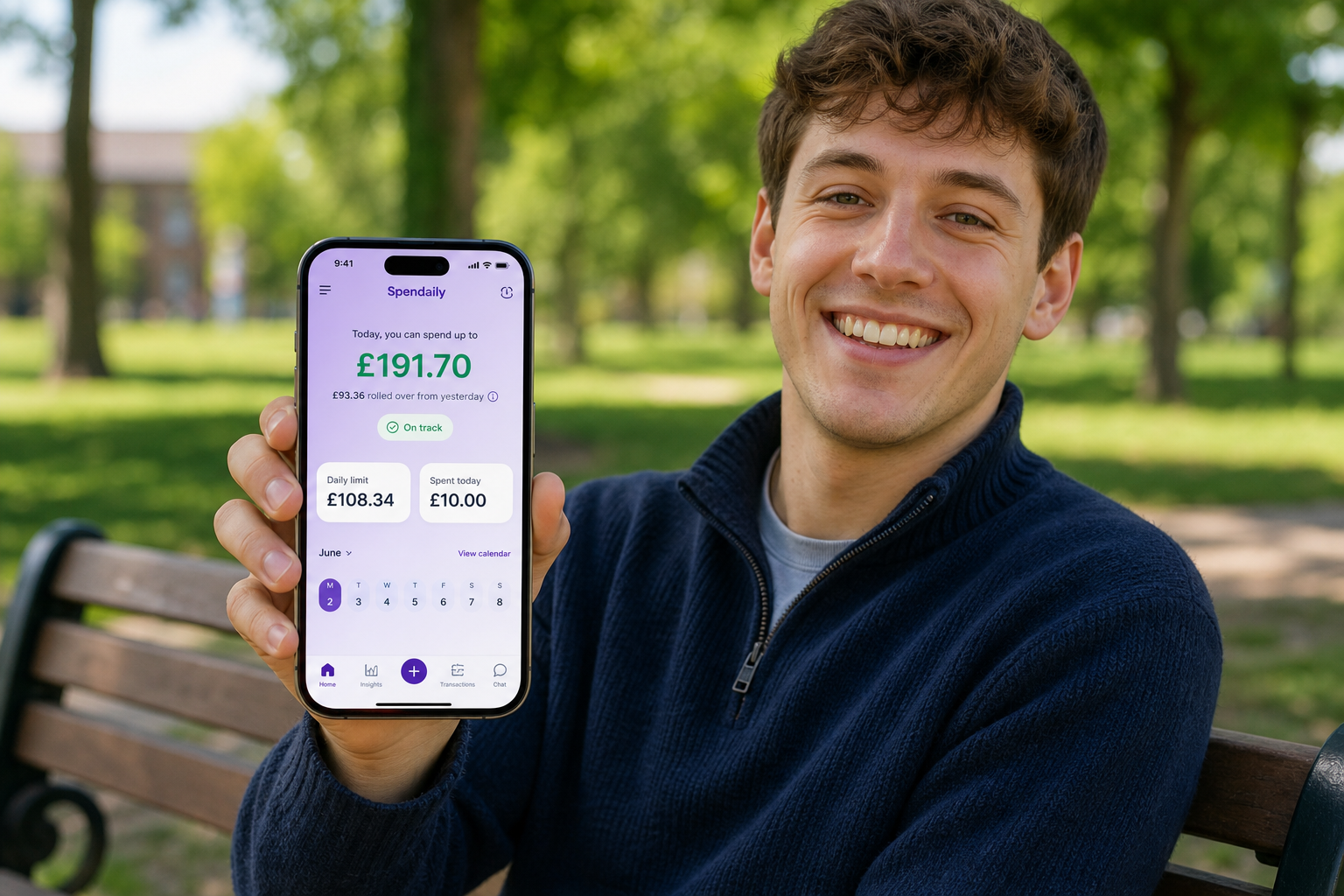
This is where daily budgeting takes over. Spendaily turns your monthly budget into one daily allowance, so post-challenge spending has a boundary from day one:
- On no-spend days, your allowance simply rolls over untouched.
- Underspending is visible immediately, not at the end of the month.
- Saved amounts can go straight into a named goal.
No-Spend Month FAQ
How many no-spend days per month is a good target?
If you are not doing a full month, 4 to 8 no-spend days is a realistic starting target. People who track consistently often settle around 10 to 12.
What if I slip and spend mid-month?
It is not failure. Note the trigger, count the days you did manage, and restart the next morning. A month with 25 no-spend days still beats a normal month by miles.
Can a no-spend month backfire?
Yes, if the rules are too extreme. Some people binge-spend afterwards. Keep essentials genuinely essential, allow planned exceptions, and plan a gradual return to normal spending with a daily limit.
Is a no-spend year realistic?
Some people extend the idea to a no-spend year for specific categories, like clothing or gadgets, rather than all non-essentials. A full year of zero non-essential spending is rarely sustainable, but a one-category year works well after a successful month.
Should I do a no-spend month in January?
“No-Spend January” is popular because December usually overshoots. Any month works, but avoid months with birthdays, weddings or travel already booked.