Impulse spending happens when an emotional trigger, boredom, stress, a feeling of reward, combines with easy access to buying. It's not a character flaw; it's a predictable response to how modern shopping is designed. You can reduce it with three daily tools: a clear spending limit, a 24-hour pause rule, and small environmental changes that add friction to unplanned purchases.
What Is Impulse Spending?
Impulse spending is buying something you didn't plan to buy, often driven by emotion rather than need.
Common triggers:
- Stress or anxiety.
- Boredom or procrastination.
- Feeling of reward after a hard day.
- Sale alerts, limited-time offers and "recommended for you" feeds.
A 2025 study found over 80% of shoppers admit to making impulse purchases, often when emotional or exposed to targeted marketing.
Why Modern Shopping Is Designed for Impulse
Online retail is deliberately engineered around impulse:
- One-click purchase buttons.
- Saved card details.
- Push notifications.
- Flash sales and countdown timers.
- Personalised "you might like" recommendations.
Every one of these features is designed to reduce friction and accelerate the moment between wanting and buying. Understanding this is liberating: your impulse spending isn't weakness; it's an expected response to a well-designed system.
Step 1, Identify Your Personal Triggers
Before you can change the pattern, you need to recognise it.
Keep a short note for one week:
- When did you buy something unplanned?
- What were you feeling just before?
- Where did you come across it (in-store, online, social media)?
Common patterns people discover:
- Late-night browsing after a tough day.
- Lunchtime scrolling.
- App notifications from shopping platforms.
Once you know your triggers, you can target them specifically.
Step 2, Use a 24-Hour Rule for Non-Essential Purchases
The single most effective habit for impulse spending is the 24-hour rule.
When you want to buy something non-essential, wait 24 hours first.
Why it works:
- The dopamine response to finding an item fades quickly.
- After 24 hours, most impulse urges have passed.
- You can evaluate the purchase rationally rather than emotionally.
Psychology articles and consumer behaviour research consistently confirm that a cooling-off period is one of the most effective anti-impulse strategies.
Step 3, Add Friction to Easy Buying
Impulse spending relies on frictionless access. Add a bit of friction and you create space for a decision.
Practical steps:
- Remove saved card details from online stores.
- Delete shopping apps from your home screen.
- Unsubscribe from sale and promo emails.
- Add items to a wishlist instead of a basket.
None of these prevent buying, they just slow it down, which is enough.
Step 4, Use Your Daily Budget as a Reality Check
A daily allowance gives you a concrete way to evaluate impulse purchases.
Instead of asking "Do I want this?", ask:
- "If I buy this, what's left of my daily allowance?"
- "Is this how I want to use today's spending?"
This shifts the question from emotional to financial, and that shift usually reduces impulse buying.
Step 5, Find Non-Spending Alternatives for Emotional Triggers
Impulse buying is often a coping mechanism.
Build a small "coping menu" of free or low-cost alternatives:
- Go for a walk.
- Make a drink and watch something you already own.
- Call or message a friend.
- Write down what you're feeling.
The goal isn't to suppress the emotion; it's to give it somewhere else to go that doesn't cost money.
Step 6, Review Impulse Spending Patterns Weekly
At your weekly money review, look at:
- Were there impulse purchases this week?
- What triggered them?
- Did they fit your daily allowance or push you over?
This isn't about shame. It's about data. Over weeks, patterns become clear and you can target specific triggers more precisely.
Where Spendaily Fits In
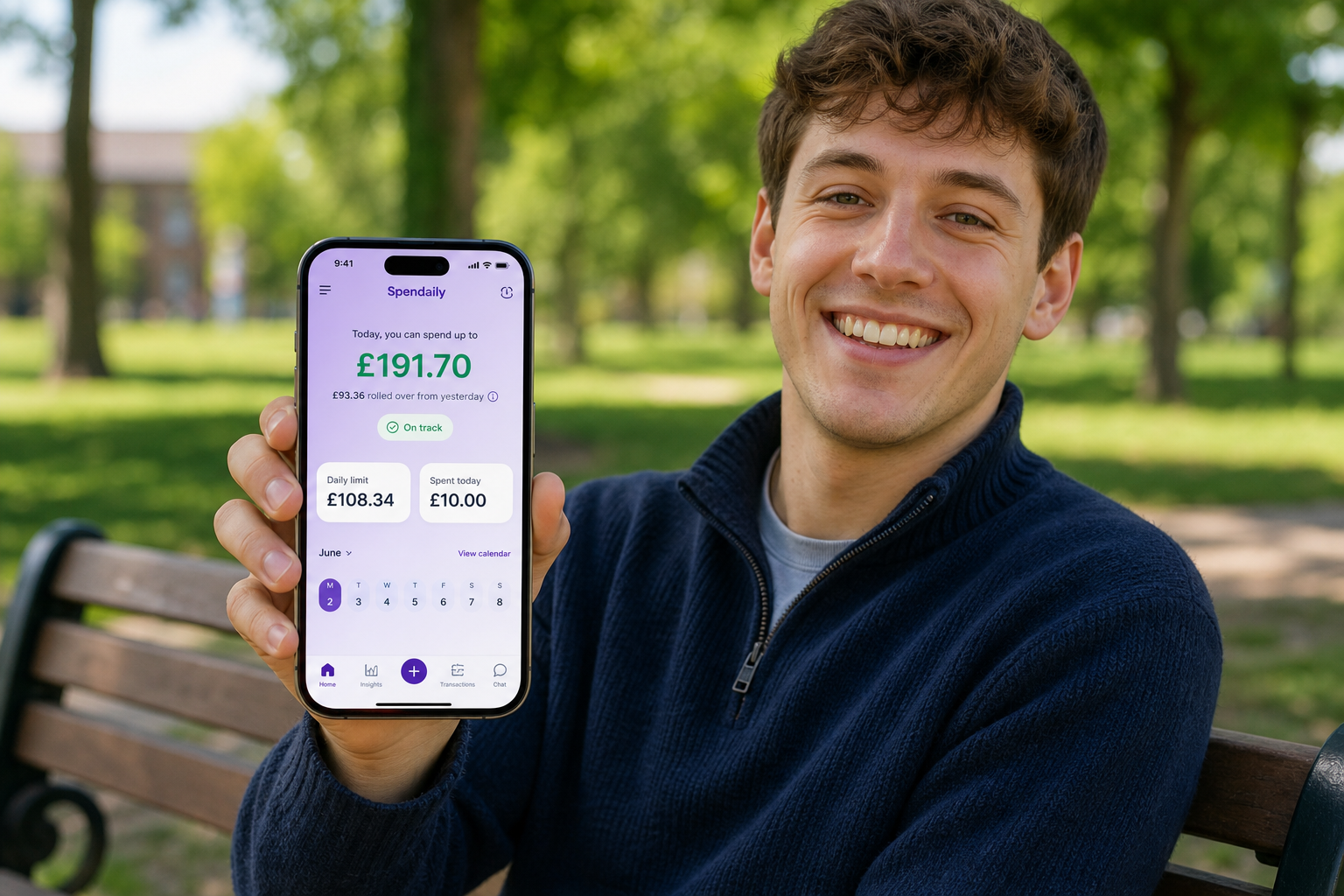
Spendaily helps by making the daily reality check immediate.
Every time you open the app, you see exactly what's left today. That visible number makes "Can I afford this?" a clear question rather than a vague anxiety.
When you combine that with a 24-hour rule and a few friction points, you have a practical, daily system for reducing impulse spending without willpower alone.
Keep reading: No-Spend Challenge: Rules, Streaks and How to Stick to It, Spending Habits: 9 Daily Changes That Save Real Money and Impulse Spending: Why You Do It and How to Break It.
FAQ
Is impulse spending a sign of poor discipline?
No. It's a normal human response to emotional states and deliberate marketing techniques. Treating it as a character flaw is both inaccurate and unhelpful.
What's the most common impulse spending trigger?
Stress is one of the most frequently cited triggers, followed by boredom and "deserving a treat" after effort or difficulty.
Does the 24-hour rule work for in-store shopping too?
Yes. If you see something in a shop, take a photo and decide tomorrow. Most in-store impulse items are still available the next day, and most urges are not.
Can I ever impulse buy without guilt?
If it fits within your daily allowance and doesn't affect your goals, yes. The point isn't to eliminate spontaneity; it's to make sure unplanned purchases don't quietly wreck your budget.
Does managing impulse spending get easier over time?
Yes. The habits, pausing, checking your allowance, adding friction, become automatic. Over weeks and months, the urge to buy on impulse tends to reduce as the habit of awareness grows.