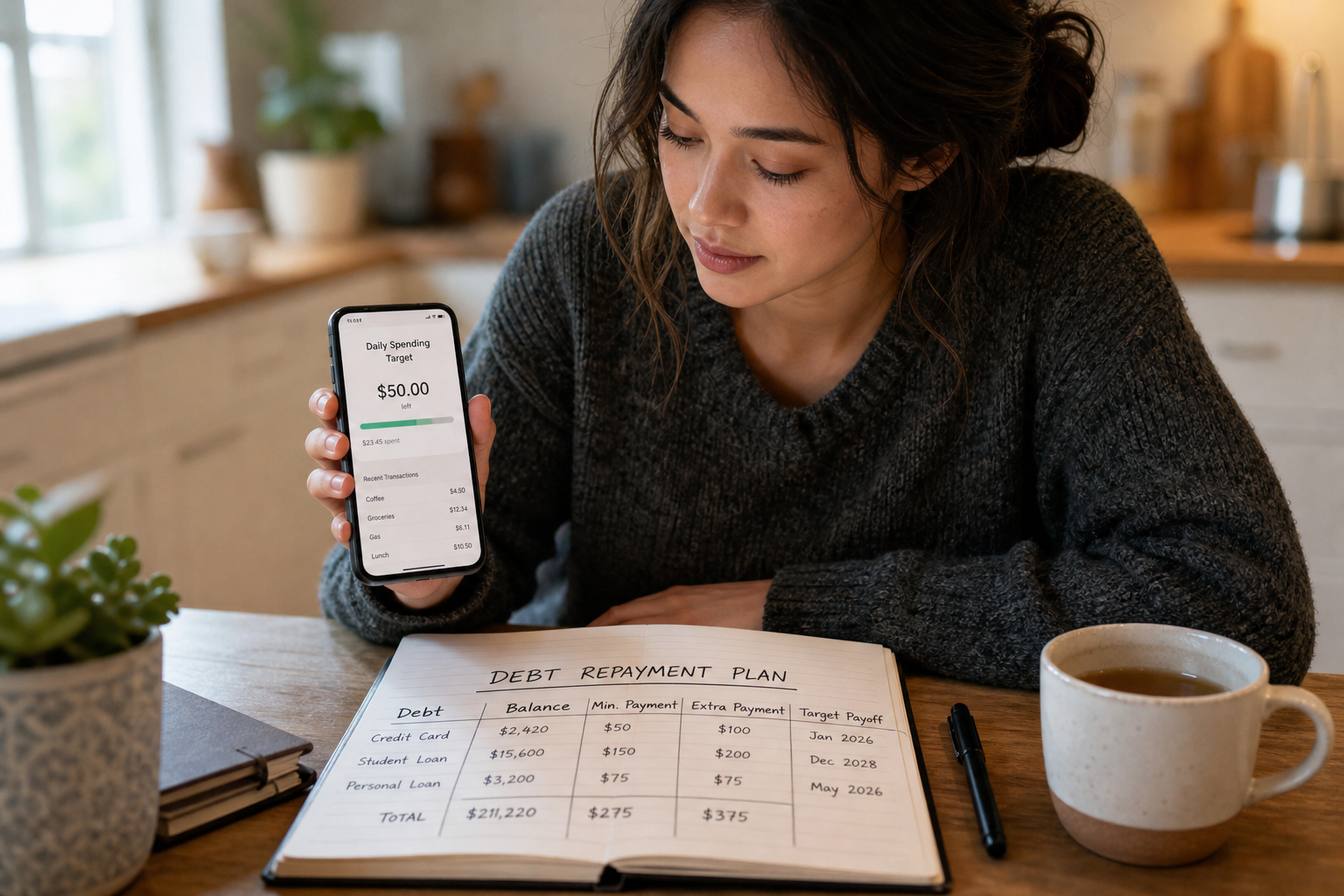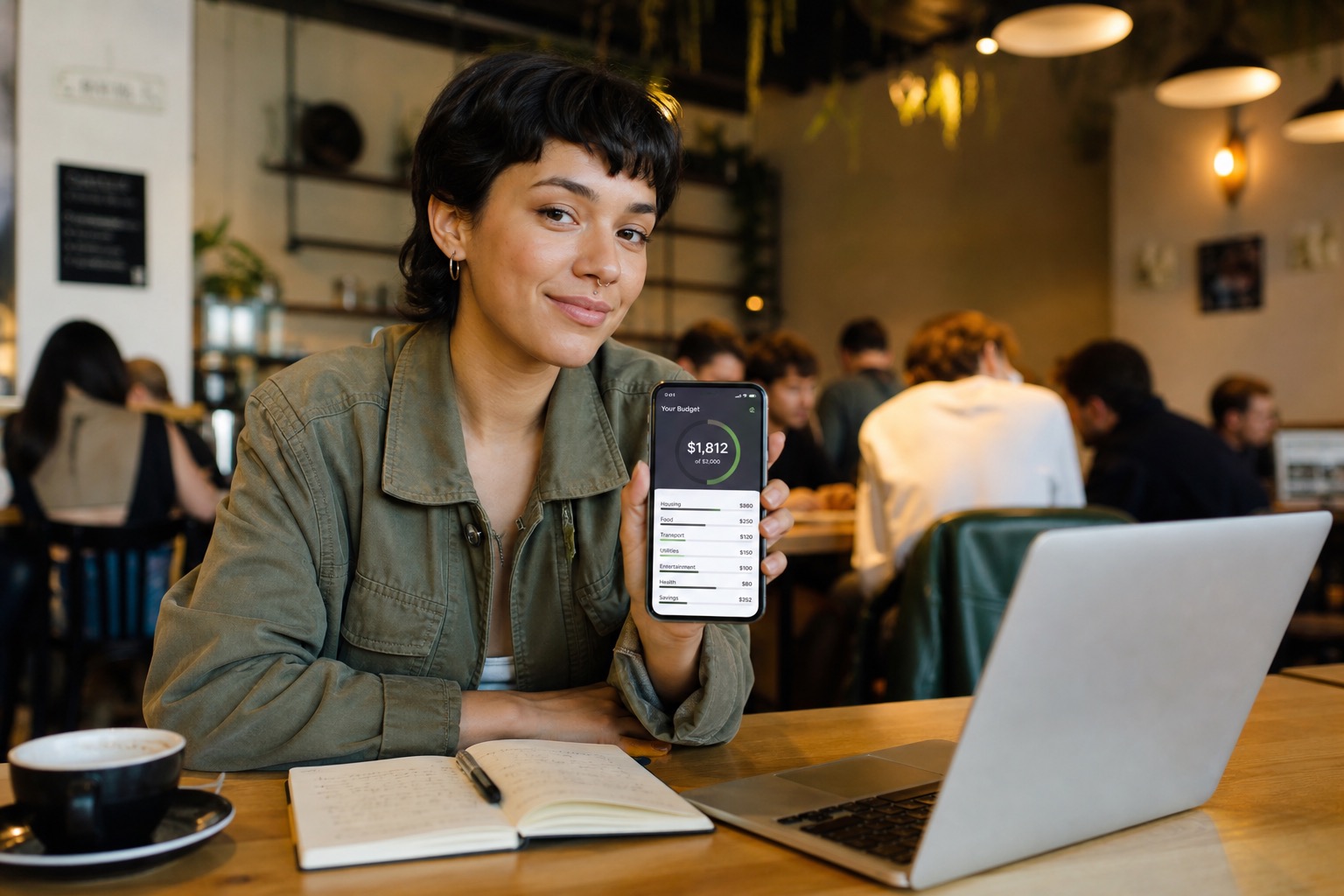
Money worries and poor sleep feed each other in a vicious cycle. Financial stress makes it hard to fall asleep, and lack of sleep makes it harder to think clearly about money. A simple daily budget and a short evening routine can break this loop by giving your brain a clear, "good enough" picture of your finances before bed, so it has fewer reasons to spiral at night.
How Money Worries Steal Your Sleep
Surveys from banks and sleep researchers show that a large majority of adults lose sleep over money, often for years at a time. Money stress triggers your body's stress response: racing thoughts, a tight chest, a knot in your stomach.
Common night-time money thoughts include:
- "What if I can't pay that bill?"
- "What if I lose my job?"
- "What if this debt never goes away?"
The NHS and other health organisations note that worries about finances can lead to ongoing anxiety and sleep problems, especially during cost-of-living pressures. The more you lie awake thinking about what might happen, the more your brain learns to associate bedtime with stress.
Why a Budget Can Help You Sleep, If It’s the Right Kind
A budget on its own won’t fix insomnia. But the right kind of budget can reduce one of the main drivers of financial insomnia: uncertainty.
When you don’t know how much you owe, what’s coming in, or how you’ll make it to payday, your brain fills the gaps with worst-case scenarios. A simple budget gives you facts instead of fears.
The key is to choose a budgeting style that reduces stress instead of increasing it:
- Simple, not complex.
- Focused on the near future (days and weeks), not just long-term goals.
- Easy to update when you’re tired.
Daily budgeting fits this brief better than detailed monthly spreadsheets for many people.
Step 1, Create a Calm, Simple Daily Budget
You don’t need a perfect master plan to sleep better. You need a basic, believable daily number.
During the day, not right before bed, do this:
- Work out your monthly income after tax.
- Subtract essential costs: rent/mortgage, utilities, food, transport, minimum debt payments.
- Whatever is left is your discretionary pot.
- Divide it by the days in your pay period to get a daily spending allowance.
This number doesn’t have to be precise. It just has to be honest enough that you can trust it.
Step 2, Add a Short Evening Money Wind-Down
Instead of letting money thoughts ambush you in bed, give them a safe place to go earlier in the evening.
15-60 minutes before bedtime, try this 5-minute routine:
- Open your budget tool. Notebook, spreadsheet or app.
- Look at today’s number and what you actually spent.
- Log any spends you haven’t recorded yet. Rounded amounts are fine.
- Glance at tomorrow. Any known bills or plans that will cost money?
- Write down one small action for tomorrow, if needed.
Then close your money tools and move on to a relaxing activity.
This tells your brain:
"We’ve looked at this. There’s a plan. We can let it go for tonight."
Step 3, Keep the Routine Emotionally Neutral
Financial insomnia often comes with a lot of self-criticism. To make your evening routine sleep-friendly:
- Treat it like checking the weather, not a test.
- Stick to facts: numbers, dates, simple notes.
- Avoid replaying old decisions; focus on what’s next.
If you share finances with a partner, consider doing your own brief check-in first so you feel stable before any joint conversations.
Step 4, Use a Daily Budget App to Reduce Friction
An app can make this evening routine easier, as long as it simplifies rather than complicates things.
Ideal features for sleep-friendly budgeting:
- One main number (today’s allowance), visible at a glance.
- Simple logging for today’s spending.
- Clear view of how today affects tomorrow.
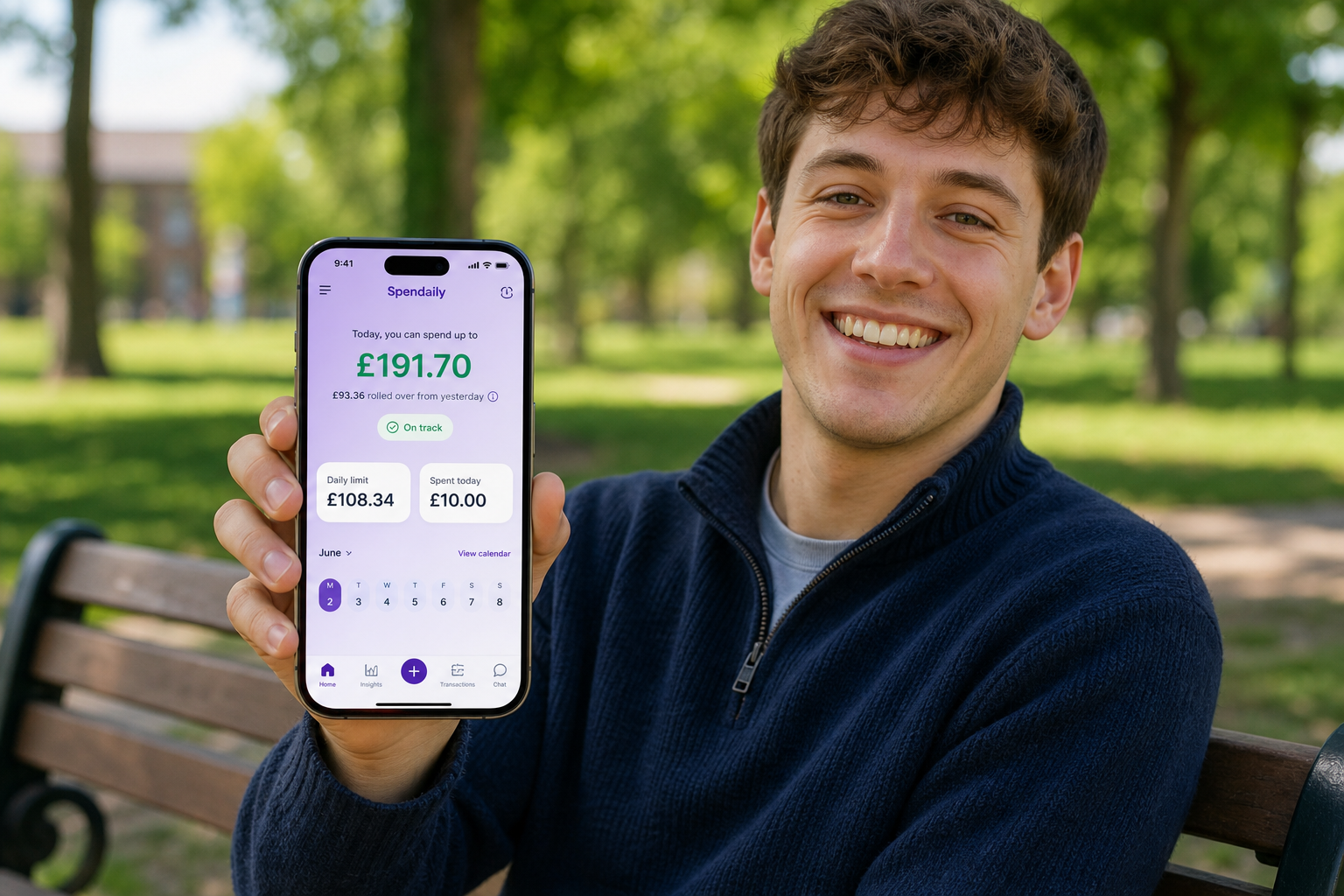
Spendaily is an example of this style: it turns your discretionary budget into a daily allowance, tracks rollover when you underspend or overspend, and shows tomorrow’s number automatically.
That means your evening routine can be as simple as: open the app, log any remaining spends, see tomorrow’s number, and close it.
Step 5, Pair the Money Routine With a Sleep Routine
A daily budget won’t help your sleep if you go straight from staring at numbers to staring at your phone in bed.
After your evening money check-in:
- Put away money tools and screens.
- Do something calming: read, stretch, listen to music, take a warm shower.
- Keep your bedtime roughly consistent.
This helps your brain build a new association: money thoughts happen earlier in the evening alongside problem-solving, not at 1 a.m. when you’re alone with your worries.
Step 6, When to Seek Extra Help
If money worries and sleep problems have been going on for months, or if you’re having thoughts of harming yourself, it’s important to reach out.
You can:
- Talk to your GP about anxiety, depression or insomnia.
- Contact a mental health helpline or talking therapies service.
- Speak to a free debt advice charity or Citizens Advice about your finances.
Your daily budget and evening routine can give you clear numbers to bring to those conversations, but you don’t have to carry the stress by yourself.
Keep reading: Financial Anxiety: Calm Money Stress with a Daily Check-In, Budgeting with Anxiety or Depression: Gentle Daily Steps and The 5-Minute Daily Money Check-In That Actually Sticks.
FAQ
How can a budget help me sleep better?
A simple budget reduces uncertainty about your finances, which is a major driver of money-related insomnia. Knowing roughly what you can spend each day and seeing that you have a plan makes it easier for your brain to switch off at night.
Should I check my bank account right before bed?
It’s better to check your finances earlier in the evening, then give yourself at least 30-60 minutes to wind down before sleep. Looking at money right in bed can make it harder to relax, especially if you see something stressful.
What if my budget shows I’m in trouble?
Seeing a difficult situation is hard, but it’s also the first step to getting help. Use that information to contact debt advice services, benefits advisers or support organisations. A clear picture makes it easier for them to suggest practical options.
How long does it take for a daily budget routine to help my sleep?
You may feel a small sense of relief after the first few evenings because you’re facing your finances instead of avoiding them. For bigger changes in sleep, it can take a few weeks of consistent routines and, in some cases, support from healthcare professionals.
Do I need a fancy app to do this?
No. You can use pen and paper or a simple spreadsheet. An app built around a daily allowance can make the process faster and easier, but it’s not essential. The most important part is having a clear daily number and a short evening check-in.