Budgeting with anxiety or depression works best when you treat it as a series of very small steps, not a single big task. Instead of forcing yourself through intense monthly budgeting sessions, you break things into short, gentle actions: getting a clear picture of essentials, creating one simple daily or weekly spending limit, and checking in briefly most days. This protects your energy while still moving you toward more control and less money stress.
Why Anxiety and Depression Make Budgeting So Hard
If you live with anxiety or depression, you’re not just “bad with money”. Your mental health directly affects how you handle finances.
Money and mental health organisations list common patterns:
- Avoidance: leaving bills unopened, ignoring bank messages, putting off asking for help.
- Spending to cope: buying things to temporarily lift your mood.
- Exhaustion: low energy makes admin tasks like budgeting feel impossible.
- Sleep problems: money worries keep you up at night, making the next day even harder.
The NHS notes that feeling low or anxious when you’re in debt or worried about work is normal, and that worries about money and mental health often form a “vicious cycle” where each one makes the other worse.
Breaking that cycle starts with shrinking the size of the money tasks you’re asking yourself to do.
Principle 1, Safety First, Not Perfection
When your mental health is fragile, the goal isn’t to become a budgeting expert. The goal is:
- Keep a roof over your head.
- Keep food, heating and key bills covered.
- Reduce nasty surprises as much as possible.
Everything beyond that can come later.
That means your first budgeting steps should focus on clarity about essentials, not perfect spreadsheets or app setups.
Step 1, Make a Calm List of Essentials (When You Have Capacity)
Pick a time of day when you feel relatively okay, not first thing in the morning or late at night. Give yourself 10-15 minutes.
On paper or in a notes app, list:
- Your monthly income (wages, benefits, regular support).
- Your essential costs:
- Rent or mortgage
- Council tax and utilities
- Food
- Transport to work or appointments
- Minimum debt repayments
- Essential medication and health costs
You don’t need exact numbers yet. A rough estimate is enough for now.
If this feels overwhelming, you can do it over several short sessions, for example, “today I’ll just write down the names of my bills; tomorrow I’ll add the amounts”.
Step 2, Separate Survival Spending from Everything Else
Once you have a rough list, draw a line through the page.
Above the line: survival spending: the things that keep you housed, fed and functioning. Below the line: everything else.
This separation gives you a simple rule:
Survival spending must be protected first.
Even if you can’t change anything immediately, seeing which costs are truly essential helps you make decisions later.
Step 3, Create a Gentle Daily or Weekly Limit
Traditional budgets often jump straight into detailed categories. When you’re dealing with anxiety or depression, that level of detail can be too much.
Instead, start with one of these:
- A weekly spending limit for everything that isn’t survival spending.
- A daily spending allowance if you prefer smaller, more frequent check-ins.
To find a starting point:
- Take your income.
- Subtract your survival spending.
- Divide what’s left by the number of weeks or days in your pay period.
This gives you a Good-Enough Limit: a rough number you can adjust over time.
Step 4, Use a 5-Minute Daily Check-In (Only When You Can)
A daily money check-in can lower anxiety by replacing scary unknowns with clear facts. But it must stay small and gentle.
On days when you have the capacity:
- Look at your current balance or daily/weekly limit.
- Note any money that came in.
- Note roughly what went out.
- Decide if tomorrow looks “normal”, “tight” or “comfortable”.
If this feels like too much, shrink it further:
- Just look at one number (your balance or daily allowance) and write it down.
The aim is to slowly teach your brain that looking at money is safe, not to do a perfect budget every day.
Step 5, Automate Where You Can
When your mood is low, relying on willpower is risky. Automation can take some strain off your mental health.
Where possible:
- Set up direct debits for essential bills so they’re paid automatically.
- Arrange minimum debt payments so you don’t miss them by accident.
- If you can, send a small, automatic amount to a savings pot on payday.
Automation doesn’t replace awareness, but it does add a safety net for bad days and bad weeks.
Step 6, Use Tools That Reduce, Not Increase, Overwhelm
Some money tools make anxiety and depression worse by throwing lots of charts and categories at you.
Look for tools that:
- Show one main number (e.g. daily or weekly limit).
- Are easy to open and understand when you’re exhausted.
- Don’t nag you with aggressive alerts.
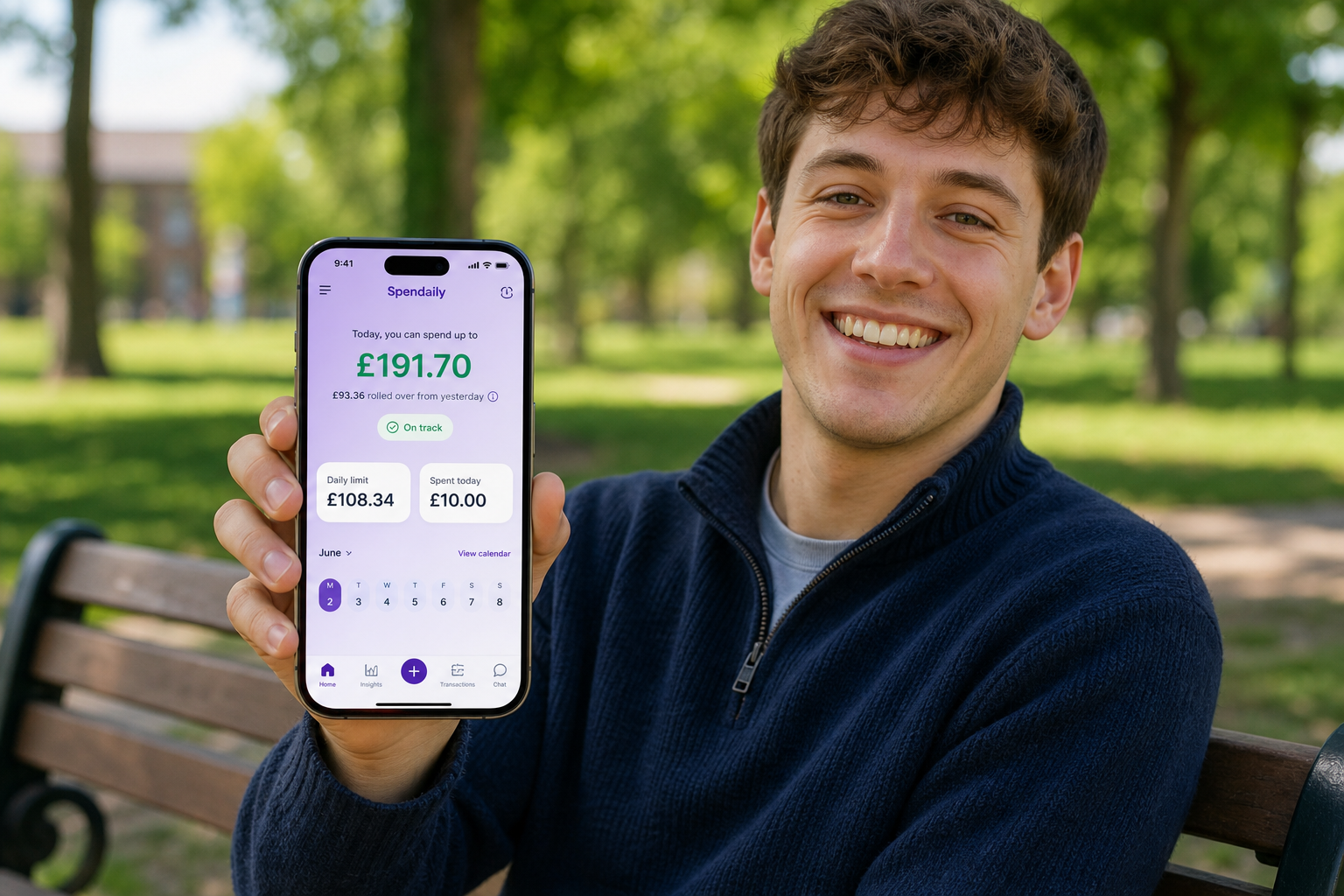
Apps like Spendaily are designed around a single daily allowance, quick logging and gentle visual feedback. For many people with mental health challenges, that is easier to face than a full spreadsheet or multi-account dashboard.
Step 7, Ask for Help Early
You do not have to handle money and mental health alone.
If your budget shows that you cannot cover essentials, or if you’re using credit to get through most months, reach out:
- Debt advice charities
- Citizens Advice or equivalent local services
- Mental health support services
- Trusted friends or family
Having a rough list of your income, essential costs and debts will make those conversations easier.
Budgeting Boundaries to Protect Your Mental Health
A few practical boundaries can make budgeting less triggering:
- No late-night money sessions. Your brain is more vulnerable to spirals when you’re tired.
- Time limits. Set a timer for 10-20 minutes; stop when it goes off.
- After-care. Plan a small, calming activity after any money task, a walk, a hot drink, a favourite show.
Treat money admin like any other emotionally demanding task: something you prepare for and recover from.
Keep reading: Financial Anxiety: Calm Money Stress with a Daily Check-In, The 5-Minute Daily Money Check-In That Actually Sticks and Money Worries Keeping You Awake? A Daily Budget Helps.
FAQ
How do I budget when I can barely get out of bed?
Shrink the task as much as possible. Start with a single list of essential bills and income, created over several short sessions. Once that exists, aim for a very small daily or weekly check-in rather than a full budget overhaul.
Will budgeting make my anxiety worse?
The first few sessions may feel uncomfortable, especially if you’ve been avoiding your finances. Over time, however, most people find that having clear information and a simple plan reduces anxiety because there are fewer unknowns.
Should I use budgeting apps if I have depression?
Apps can help if they simplify things, for example, by showing one daily or weekly limit instead of dozens of categories. If an app feels overwhelming or judgmental, it may be better to use a simpler tool like a notebook or a daily-allowance app.
What if my numbers don’t add up?
If your essential costs are higher than your income, that’s a sign you need external help, not that you’ve failed. Use your rough budget to talk to debt advisers, benefits specialists or support services who can help you explore options.
How often should I review my budget with anxiety or depression?
A light daily or weekly check-in is usually enough. A deeper review once a month can be helpful if you have the capacity, but it’s better to do small, regular check-ins than to force yourself into long, infrequent sessions that you dread.