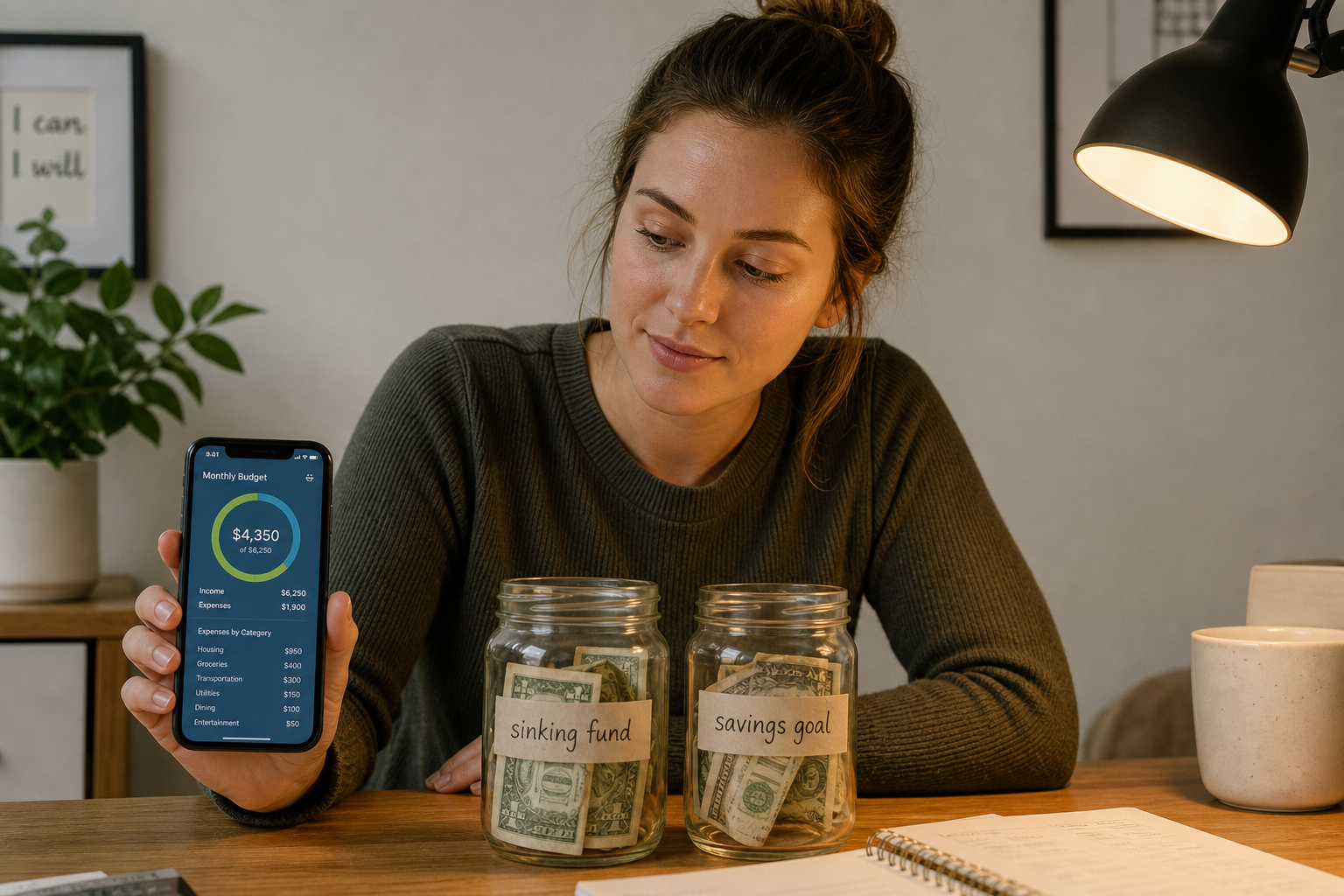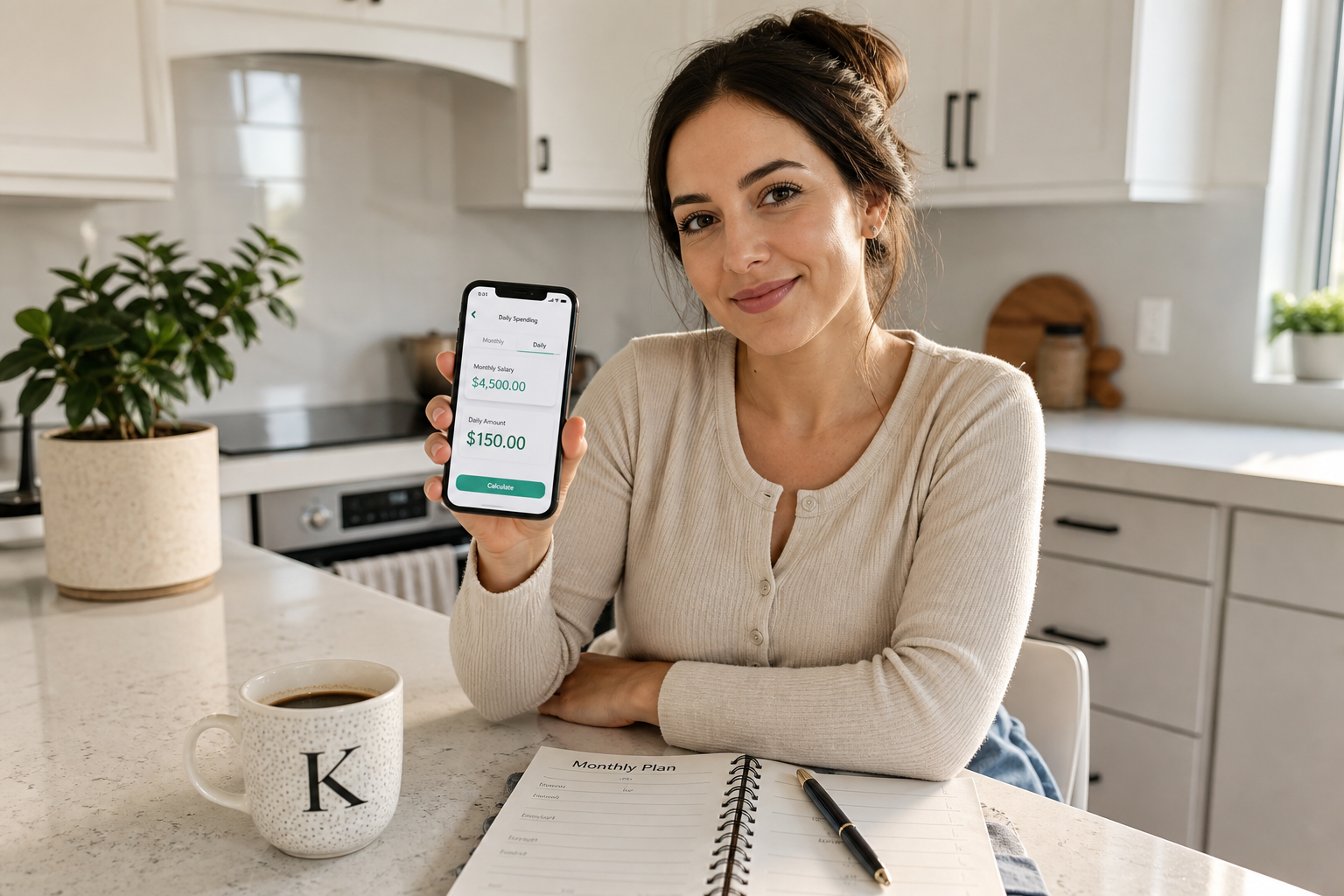
Daily budgeting, envelope budgeting and zero-based budgeting are three different ways to organise your money. Daily budgeting divides your discretionary money by days, envelope budgeting divides by categories, and zero-based budgeting gives every pound a job on paper before the month starts. The best method is the one that matches how you think and how often you’re willing to check in with your money.
Method 1, Daily Budgeting in a Nutshell
Daily budgeting:
- Starts from your income, bills and savings.
- Calculates a daily discretionary spending limit.
- Uses rollover to handle good and bad days.
You mainly pay attention to one number: “What can I spend today?”
Strengths:
- Simple, time-based focus.
- Easy to use in day-to-day decisions.
- Works well with irregular or impulse spending.
Weaknesses:
- Less detailed category tracking by default.
- Needs a quick check-in most days.
Method 2, Envelope Budgeting in a Nutshell
Envelope budgeting:
- Splits money into categories (envelopes).
- Gives each envelope a set amount for the month.
- Stops spending when an envelope is empty.
Originally done with physical cash envelopes, now often virtual.
Strengths:
- Very clear limits for each category.
- Great for controlling problem areas (like groceries or eating out).
Weaknesses:
- Can involve many categories to manage.
- Less natural for people who think in days or weeks rather than categories.
Method 3, Zero-Based Budgeting in a Nutshell
Zero-based budgeting:
- Lists all income for the month.
- Assigns every pound to a purpose (spending, saving, debt) until nothing is “unassigned”.
- Often paired with detailed categories and tracking.
The goal is that income − outgoings = 0 on paper.
Strengths:
- Very intentional; nothing is left floating.
- Great for debt payoff and aggressive saving.
Weaknesses:
- Can be time-consuming.
- Overly detailed for people who just want broad guardrails.
Side-by-Side Comparison
| Feature | Daily Budgeting | Envelope Budgeting | Zero-Based Budgeting |
|---|---|---|---|
| Main focus | Time (per day) | Categories (per envelope) | Full monthly plan |
| Key question | “What can I spend today?” | “Is there money left in this category?” | “Have I assigned every pound a job?” |
| Typical users | People who want simple, daily guidance | People with specific spending hotspots | People who like detailed planning |
| Check-in frequency | Daily or near-daily | When spending in a category | Weekly/monthly planning, plus tracking |
| Suits irregular income? | Yes, with rolling adjustments | Can work but needs frequent tweaks | Works if you adjust each month |
When Daily Budgeting Works Best
Daily budgeting shines if you:
- Struggle with impulsive, everyday spending.
- Feel overwhelmed by long lists of categories.
- Prefer quick, frequent check-ins over long planning sessions.
It’s particularly helpful under cost-of-living pressure, where the main challenge is managing day-to-day choices rather than optimising every category.
When Envelope Budgeting Works Best
Choose envelope budgeting if you:
- Have a couple of categories that regularly blow up your budget (like groceries or eating out).
- Prefer tangible limits per spending area.
- Don’t mind a bit of admin dividing money between envelopes or pots.
You can also combine envelopes with a daily view by converting your total “discretionary envelopes” into a daily allowance.
When Zero-Based Budgeting Works Best
Zero-based budgeting is powerful if you:
- Are highly motivated to pay off debt or hit big savings goals.
- Enjoy detailed planning and categorisation.
- Are willing to spend more time on your budget each month.
It gives you a very intentional plan, but you’ll still need a day-to-day system for making small decisions.
How to Combine Methods Without Overcomplicating Things
You don’t have to choose one method forever. Many people use a hybrid approach:
- Use zero-based or a simple monthly budget to plan income, bills and savings.
- Use envelopes for 1-3 categories where you need strict limits.
- Use a daily budget to guide everyday decisions.
The aim is to have one clear way to answer “Can I afford this?” in the moment, supported by a broader monthly plan.
Where Spendaily Fits In
Spendaily focuses on the daily layer.
You can:
- Bring your monthly or envelope-based plan.
- Let the app turn your discretionary pot into a daily allowance.
- Use rollover to smooth good and bad days.
- Attach leftover money to specific goals.
It doesn’t replace your entire budgeting philosophy, it makes the day-to-day execution easier.
Keep reading: Cash Stuffing: How It Works, and When Daily Budgeting Wins, Envelope Budgeting Apps: Cash Stuffing Without the Cash and Cash Envelope Categories and Daily Amounts That Work.
FAQ
Do I have to pick one method forever?
No. You can experiment. Try daily budgeting for a few months, then add envelopes for tricky categories if needed. The right mix is the one you can maintain.
Is daily budgeting enough on its own?
For many people, yes. As long as your starting budget is realistic and you recalculate when things change, a daily allowance can keep your finances on track.
Are envelope and zero-based budgeting outdated?
Not at all. They’re still used widely. What’s changed is that apps now make it easier to layer a daily view on top of them.
Can I use daily budgeting if I’m already doing zero-based budgeting?
Yes. You can treat your “spending money” line in a zero-based budget as your discretionary pot and divide it by days to create a daily allowance.
What if I’ve tried all three and nothing sticks?
The issue might be complexity or expectations. Start with the simplest version of daily budgeting, one daily number, 5-minute check-ins, and focus on building the habit before optimising the method.