Daily budgeting is a method that turns your monthly budget into one clear daily spending number. You start with your after-tax income, subtract fixed costs and savings, and divide what’s left by the days in your pay period. Instead of constantly asking “how much have I spent this month?”, you only need to ask “what can I spend today?” and compare it to your daily allowance.
Why Monthly Budgets Often Fail in Practice
On paper, monthly budgets look straightforward. You list income, subtract bills and split the rest into categories.
In real life, problems appear quickly:
- Most spending decisions happen day to day, not once a month.
- It’s hard to know if you’re “on track” halfway through the month.
- A few expensive days can quietly wreck your plan.
Many people find that they only realise they’ve blown the budget when they check their account near the end of the month. Daily budgeting fixes this by giving you a live signal every day instead of a vague monthly target.
Step 1, Build a Simple Monthly Budget
You don’t need a perfect budget to start. You need a reasonable estimate based on your real numbers.
- List your monthly income after tax.
- Salary.
- Benefits.
- Regular side income.
- List your fixed monthly costs.
- Rent or mortgage.
- Utilities and council tax.
- Phone and internet.
- Subscriptions you definitely want to keep.
- Minimum debt payments.
- Decide on a small monthly amount for savings and sinking funds.
- Even £20-£50/month is a valid starting point.
- Subtract fixed costs and savings from income.
The result is your discretionary pot: the money you can use on food, travel, entertainment, clothes and everything else.
Step 2, Turn the Discretionary Pot into a Daily Number
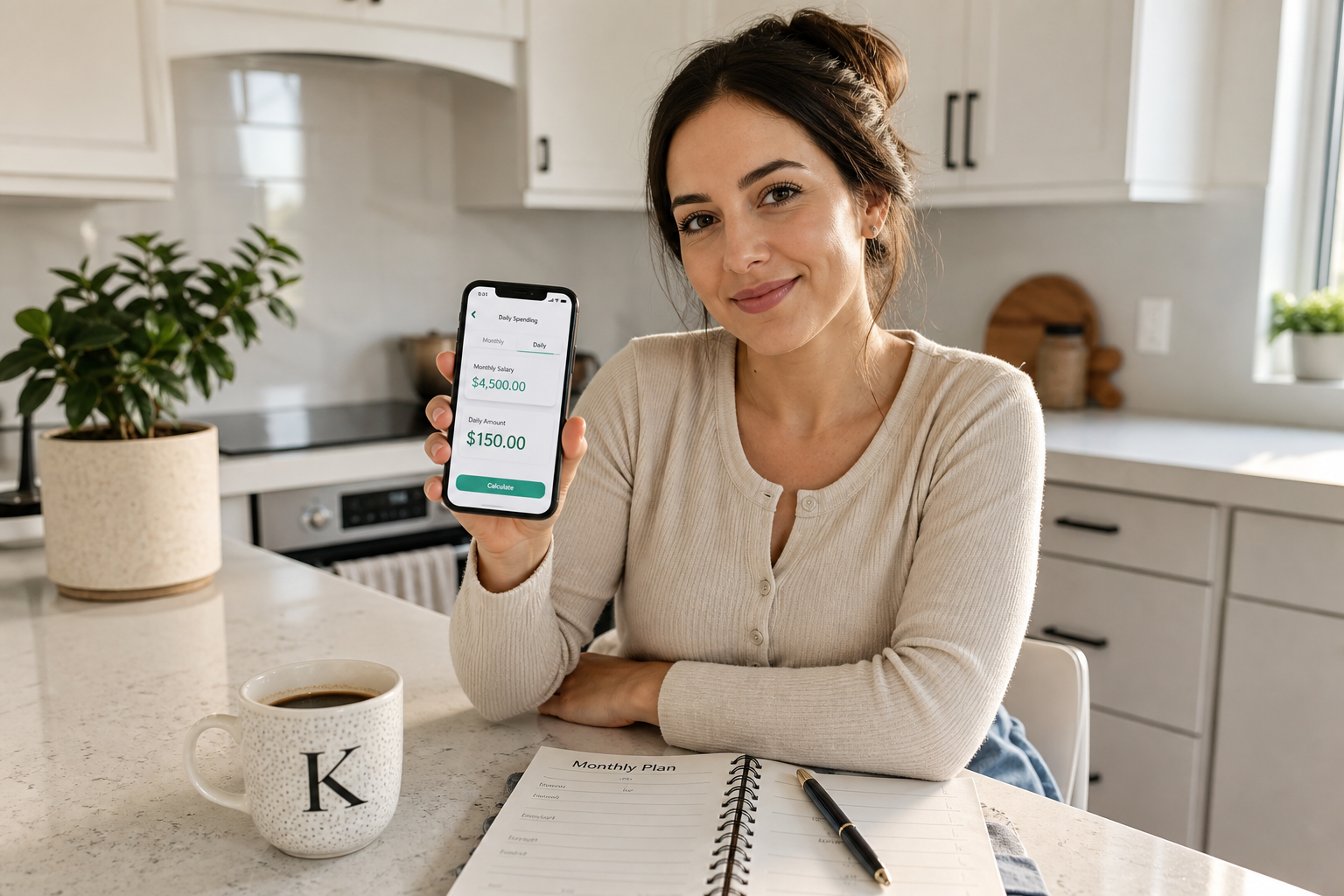
Now convert that monthly pot into a daily allowance.
If you’re paid monthly:
- Divide by the number of days in the month (28-31) or use a standard 30-day estimate.
If you’re paid weekly or fortnightly:
- Divide by 7 or 14 to get a weekly or fortnightly pot, then divide again by 7 or 14 for the daily figure.
Example (Monthly Pay)
- Take-home income: £2,000.
- Fixed costs and savings: £1,400.
- Discretionary pot: £600.
- Days in month: 30.
Daily allowance ≈ £600 ÷ 30 = £20/day.
That £20 covers all non-essential spending, coffees, lunches out, clothes, small treats, while your bills and savings are already taken care of.
Step 3, Use Rollover to Handle Real Life
Life doesn’t happen in neat £20 slices. Some days you’ll spend £5, others £35.
Rollover is how daily budgeting copes with this:
- If you spend less than your allowance, the leftover rolls forward and increases tomorrow’s number.
- If you spend more, tomorrow’s number shrinks slightly.
Over the whole month, you still stay within the £600 pot, you just move flexibility between days to match your real life.
Step 4, Make Daily Budgeting a 5-Minute Habit
The method only works if it’s easy to maintain.
A simple routine:
Morning (1-2 minutes):
- Look at today’s allowance.
- Check your calendar: any events or plans that will cost money?
Evening (3-4 minutes):
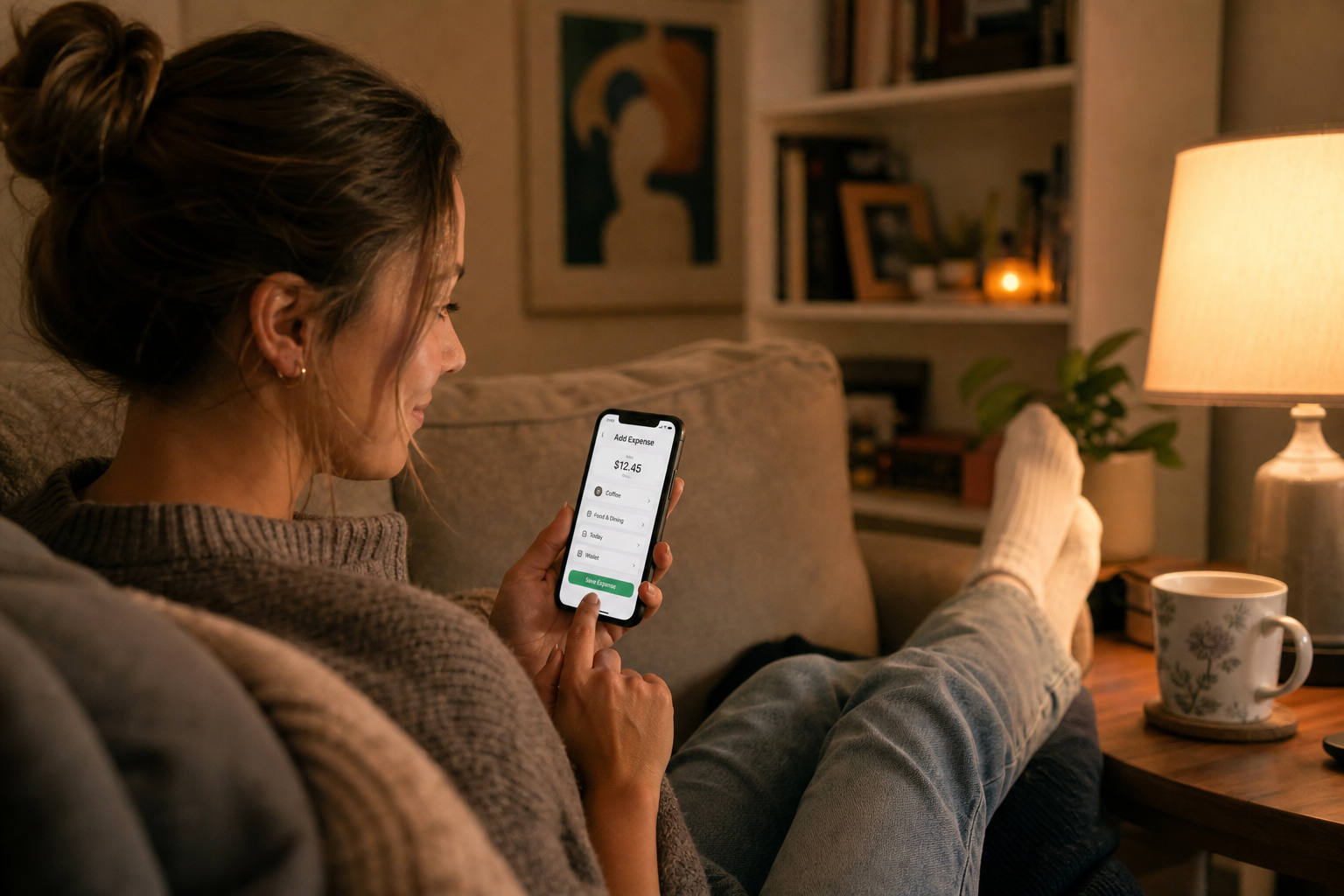
- Log what you spent.
- See how much is left.
- Let rollover update tomorrow’s allowance.
You don’t have to analyse categories every day. The point is to stay aware of your “speed”, your daily spending, so you don’t drift off course.
Step 5, Daily Budgeting vs Traditional Monthly Budgets
Daily budgeting doesn’t replace monthly budgets; it sits on top of them.
You still:
- Review your income and fixed costs monthly.
- Adjust for new bills or pay changes.
But instead of trying to micromanage a whole month, you:
- Make decisions using one daily number.
- See quickly when a few expensive days are starting to squeeze the rest of the month.
This combination gives you the clarity of a monthly view with the practicality of daily guidance.
Step 6, What Happens When You Underspend or Overspend
With daily budgeting, “good” and “bad” days both feed into the system.
- On underspend days, you have a choice:
- Keep all the surplus to boost tomorrow’s allowance, or
- Move part of it into a savings goal.
- On overspend days, you:
- Accept that tomorrow’s allowance will shrink, and
- Adjust your plans for the next few days.
This removes all-or-nothing thinking. You’re never “off the budget”, you’re just borrowing from future days or paying back from good days.
Step 7, Tools That Support Daily Budgeting
You can run a daily budget with:
- A notebook.
- A simple spreadsheet.
- A dedicated daily budgeting app.
Apps like Spendaily are built specifically for this method:
- They turn your monthly budget into a daily allowance automatically.
- They handle rollover maths for you.
- They let you attach leftover money to specific goals.
That removes friction and reduces how often you need to touch spreadsheets.
Keep reading: Daily Budgeting: The Complete Guide to One Simple Number, How to Budget Daily: 7 Simple Steps and Daily Budget Calculator: Find Your Daily Spending Limit.
FAQ
Is daily budgeting more work than monthly budgeting?
Daily budgeting involves more frequent, smaller check-ins. In practice, 5 minutes a day is easier to stick with than a 2-hour monthly session that you dread and then avoid.
What if my income isn’t the same every month?
Base your daily budget on a conservative average of the last 3-6 months. Update it when your income changes significantly and use an emergency fund or buffer to handle unusually low months.
Can daily budgeting work if I use cash and cards?
Yes. Simply log the amount you spend, regardless of payment method. Your daily allowance doesn’t care how you paid; it just tracks how much left your pocket.
Should I have different daily budgets for weekdays and weekends?
You can. Some people prefer a lower weekday number and a higher weekend number as long as the overall monthly pot still adds up. The key is that the total fits your budget.
How is daily budgeting different from envelope budgeting?
Envelope budgeting divides money into categories (groceries, fuel, etc.). Daily budgeting divides by time instead. You can combine both, but a pure daily method focuses on one number per day instead of many category balances.