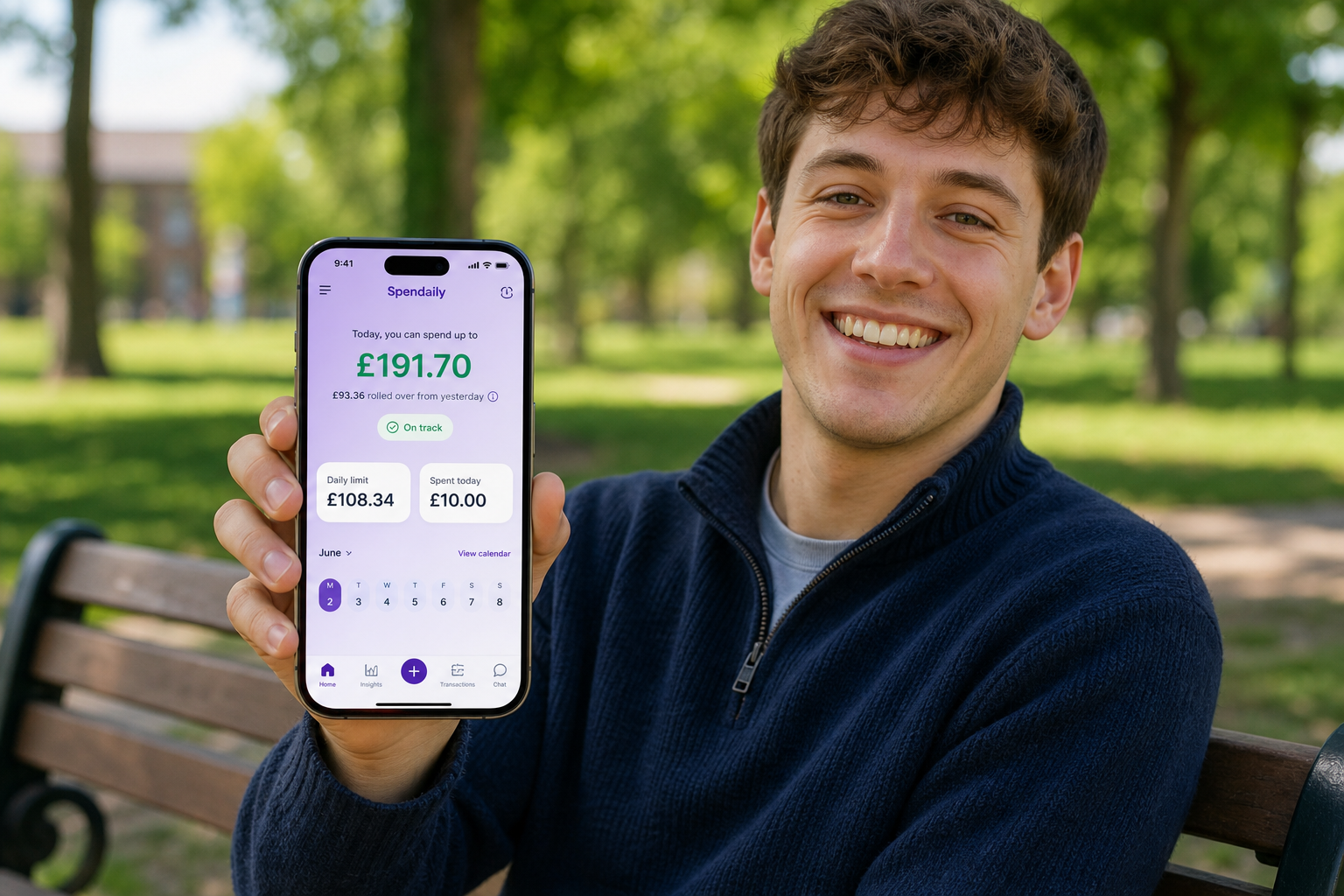
Most debt payoff advice asks you to think in months or years, which can be hard to stick with. Daily budgeting turns your plan into one simple target: a daily spending limit that protects a fixed amount for debt repayment every month. By deciding how much extra you’ll send to debt first, then dividing what’s left into a daily allowance, you get a clear number to follow each day without constantly redoing your budget.
Why Monthly Debt Plans Are Hard to Follow
Debt payoff guides often start with big-picture questions:
- Should you use the snowball or avalanche method?
- How much can you send to debt each month?
- How many years will it take to be debt-free?
Those questions matter, but they don’t help much at 2 p.m. in a supermarket queue when you’re deciding whether to buy something.
In real life, debt payoff fails when:
- You underestimate how much you spend between paydays.
- You rely on “what’s left in the account” instead of a plan.
- You feel deprived and give up after a few strict weeks.
A daily budget fixes part of this by turning your long-term plan into a concrete daily decision: Can I afford this today and still hit my debt payment this month?
Step 1, Decide Your Monthly Debt Payment First
Before you work out your daily number, choose a realistic monthly debt payment.
- List your debts:
- Balances
- Interest rates
- Minimum payments
- Decide your payoff approach:
- Snowball: focus extra money on the smallest balance first.
- Avalanche: focus extra money on the highest interest rate.
- Choose a fixed monthly amount for debt:
- Minimums on all debts
- Plus an extra amount you can realistically commit
This “debt line” is non-negotiable in your budget. Your daily allowance has to live around it.
Step 2, Build a Basic Monthly Budget Around Your Debt Line
Next, create a simple monthly budget that makes space for that payment.
- Start with your take-home income.
- Subtract essential costs:
- Housing and utilities
- Food
- Transport
- Essential insurance and medication
- Subtract your minimum debt payments and extra payoff amount.
What’s left over is your discretionary spending pot: the money you can use for everything else without slowing down your debt plan.
If the number is negative or tiny, that’s valuable information:
- You may need to reduce some essentials (where safe), increase income, or get support from a debt charity.
Step 3, Turn the Remainder Into a Daily Allowance
Take your discretionary pot and divide it by the number of days in your budget period.
Example:
- Take-home income: £2,000
- Essentials (rent, bills, food, transport): £1,300
- Debt payments (minimums + extra): £300
- Discretionary pot: £400
- Days in month: 30
Daily allowance = £400 ÷ 30 ≈ £13/day
That £13 is your daily target. It covers coffees, lunches out, small treats, subscriptions, non-essential shopping, everything that isn’t rent, bills, food basics or debt payments.
Step 4, Use Rollover to Handle Real Life
Real life doesn’t fit into equal days. Some days you’ll spend nothing; others you’ll need more than your allowance.
Rollover is what keeps your daily budget honest:
- If you spend less than £13, the leftover rolls forward and increases tomorrow’s number.
- If you spend more than £13, tomorrow’s number shrinks slightly.
Over a month, you still stay within your £400 discretionary pot, which means your £300 debt payment stays safe.
Example over three days:
- Day 1: Allowance £13, you spend £8 → £5 leftover → Day 2 allowance = £18.
- Day 2: Allowance £18, you spend £20 → £2 overspend → Day 3 allowance = £11.
- Day 3: Allowance £11, you spend £10 → £1 leftover → Day 4 allowance = £14.
Your debt plan never changes; only today’s number moves.
Step 5, Make the Daily Routine as Light as Possible
To make this work long-term, your daily routine has to be tiny.
Morning (1 minute):
- Check today’s allowance.
- Note any plans that might make it a “big” spending day.
Evening (2-4 minutes):
- Log what you spent.
- See what’s left versus your allowance.
- Let the rollover update tomorrow’s number.
You don’t need to analyse categories every day. You just need to keep the debt line protected and your daily spending container intact.
Step 6, Use Micro-Goals to Stay Motivated
Big debt-free dates can feel far away. Micro-goals keep you moving:
- Pay off one card or loan under £500.
- Reduce your monthly interest cost by £20.
- Hit a streak of 10 days where you stayed within your daily allowance.
Tie these goals to small celebrations that don’t cost much, a favourite takeaway, a nicer coffee, a day trip you planned for.
How Spendaily Helps You Follow a Daily Debt Plan
You can run this system manually, but an app built around a daily allowance can make it easier.
Spendaily:
- Calculates your daily allowance from your budget.
- Shows today’s number on the home screen.
- Handles rollover automatically when you under or overspend.
- Lets you attach surplus to small savings goals once your debt is under control.
That means your debt plan becomes a simple daily habit: check today’s number, log what you spent, and let the app handle the maths.
Keep reading: Sinking Funds: What They Are and How to Set Them Up, Micro-Savings Goals: Save for Anything from £50 to £500 and Can a Daily Spending Cap Speed Up Credit Card Payoff?.
FAQ
Can a daily budget really help me pay off debt faster?
Yes. By protecting your monthly debt payment first and limiting discretionary spending with a daily allowance, you’re less likely to leak money on small, forgettable purchases. Over months and years, that consistency matters more than one-off big cuts.
How much should I put toward debt each month?
There’s no single right number. Many guides suggest aiming for 20-30% of take-home pay for savings and debt combined, but the right amount depends on your income, essential costs and mental bandwidth. Start with what you can realistically pay without burning out.
Should I stop all fun spending while paying off debt?
Going “no fun” can backfire and lead to burnout spending. A daily allowance lets you keep some small treats while still prioritising debt, which is usually more sustainable than a strict, short-term crash budget.
Is snowball or avalanche better with a daily budget?
Either method works with a daily allowance. Pick the one that motivates you more: snowball for quick wins on small balances, avalanche for maximum interest savings. Your daily budget just protects the total amount you’ve decided to send to debt.
What if my discretionary pot is basically zero?
If there’s nothing left after essentials and minimum debt payments, that’s a sign you need external support, for example, from a free debt advice charity, Citizens Advice or similar services. A daily budget can’t fix an income shortfall on its own.