Daily budgeting helps young adults cope with UK cost-of-living pressures by turning an overwhelming monthly picture into one daily spending number. You start with your real after-tax income, subtract rent, bills and essentials based on realistic 2026 prices, and divide what’s left by the days in your pay cycle. That daily allowance becomes your reference point for everyday choices, so rising prices hit a number you can actually see and adjust.
What Cost-of-Living Pressure Looks Like in Real Numbers
Recent UK data puts average household spending around the mid-£600s per week, with housing, transport and food taking the biggest slices. Cost-of-living guides for 2026 show that rent and supermarket basics have risen faster than wages for many people, especially in larger cities.
For young adults, this often means:
- A bigger share of pay going on housing.
- Less leftover for discretionary spending.
- More reliance on shared houses, long commutes or side hustles.
A daily budget can’t fix structural problems, but it can give you a clear picture of what’s actually happening and where you have room to manoeuvre.
Step 1, Start From Your Real, After-Tax Income
Before you think about daily numbers, you need an honest monthly figure.
Add up:
- Take-home pay from your main job.
- Regular benefits or support.
- Side income (averaged over a few months).
Don’t use the biggest month you’ve ever had. Use a typical month based on recent bank statements.
Step 2, Price Your Essentials Using Current Costs
Next, list essentials using realistic 2026 prices, not what you wish they were.
Essentials include:
- Rent and council tax.
- Utilities and internet.
- Groceries and basic toiletries.
- Transport to work or study.
- Minimum debt payments.
Use up-to-date cost-of-living tools, supermarket comparisons and local rental listings to sense-check your numbers. If your rent is low compared with typical prices in your city, recognise that as an advantage; if it’s high, adjust other expectations.
Step 3, Decide What You Can Put Toward Savings and Debt
Even in a tight budget, try to protect something for future you:
- A small emergency fund contribution.
- Minimum payments on debts (and extra where possible).
- Sinking funds for predictable costs (like annual subscriptions or travel).
If you truly can’t afford anything here, that’s important information, it might be time to look for extra income, shared accommodation, or external support rather than just pushing harder.
Step 4, Turn What’s Left Into a Daily Allowance
Now, take what’s left after essentials, savings and minimum debt payments.
Example for a young adult renting in a UK city:
- Take-home income: £1,900/month.
- Essentials (rent, bills, food, transport): £1,350.
- Debt payments: £100.
- Savings and sinking funds: £100.
Discretionary pot: £350.
If you’re paid monthly:
- Daily allowance ≈ £350 ÷ 30 ≈ £11-12/day.
That £11-12/day covers all non-essential spending: coffees, lunches out, entertainment, clothes, small treats.
Step 5, Use Rollover to Handle Expensive and Cheap Days
Some days you’ll spend nothing; others you’ll go out with friends or pay for tickets.
Rollover keeps your daily budget honest:
- Underspend today → surplus rolls forward and increases tomorrow’s number.
- Overspend today → tomorrow’s number shrinks slightly.
Over a month, you still stay within your £350 pot, even though individual days vary.
Step 6, Align Your Daily Budget With Your Actual Life
A daily budget isn’t meant to be punishment. It should reflect how you really live.
Ask:
- Which days are naturally more expensive (Friday/Saturday, social events)?
- Where can you swap high-cost habits (daily lunch out) for cheaper ones (batch cooking, taking food from home)?
- What are your non-negotiables, gym, hobbies, occasional takeaway, and what can flex?
You might decide that weekdays are “careful” days and weekends are “normal” or “relaxed”, as long as your average stays around your daily allowance.
Step 7, Use a Daily Budget App to Reduce Mental Load
Doing all this in your head during a cost-of-living squeeze is exhausting.
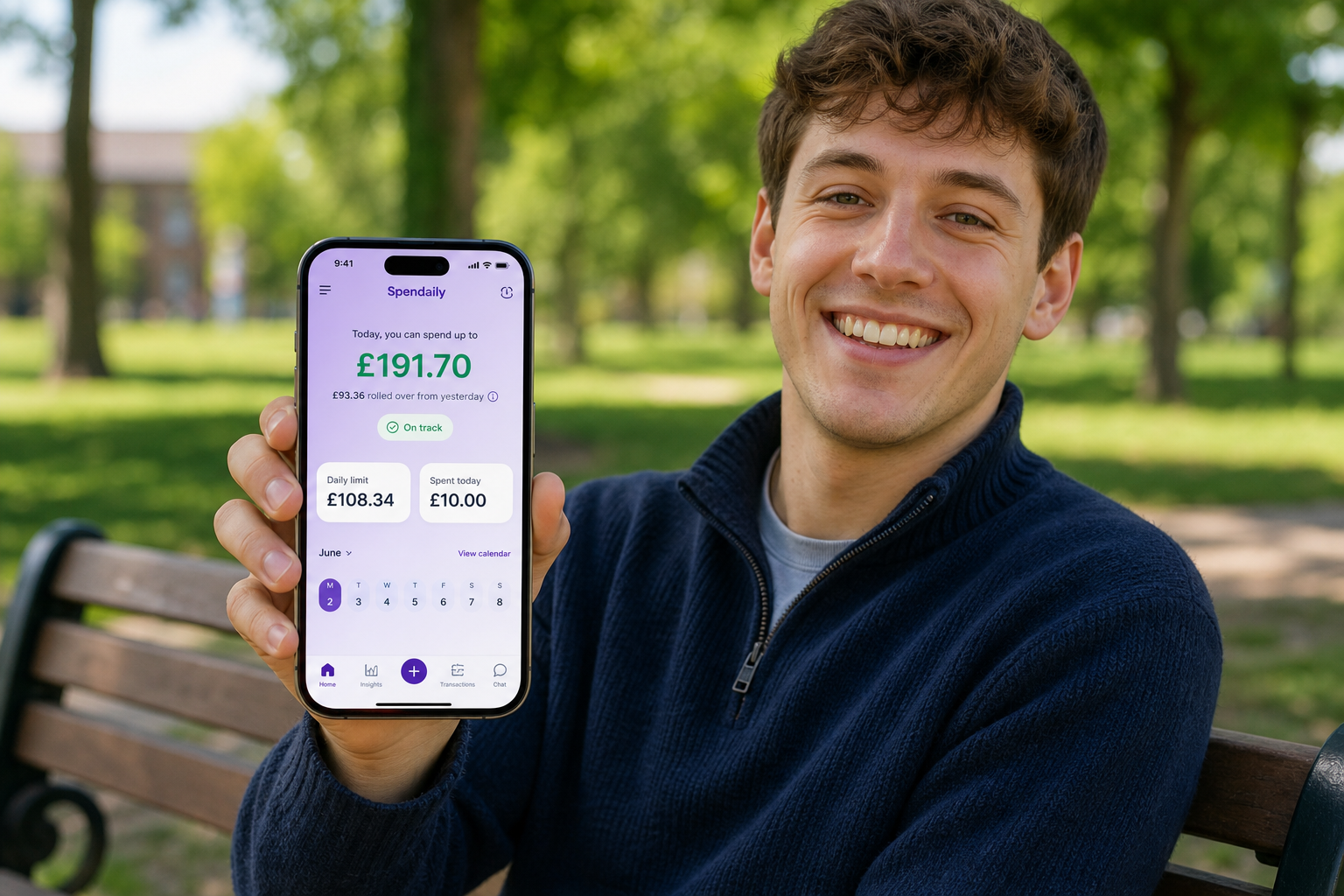
Apps like Spendaily can help by:
- Turning your monthly plan into one daily allowance.
- Handling rollover automatically when you over- or underspend.
- Showing you at a glance what you can spend today.
That frees up your brain for bigger questions like career moves and housing decisions.
Keep reading: How to Budget as a Student: The Daily Method, Student Daily Budgets by UK City: London to Leeds and Budgeting in Your 20s: The Only Advice That Actually Matters.
FAQ
What is a realistic daily budget for a young adult in the UK in 2026?
There’s no single number, but many young adults find that after rent, bills, food and transport, they have £8-£20 per day for discretionary spending. It depends heavily on your city, income and whether you share housing.
How often should I update my daily budget during a cost-of-living crisis?
Review it whenever your rent, income or major bills change. Otherwise, a full refresh every 3-6 months is enough. You can tweak the daily number sooner if it’s clearly too tight or too generous.
What if my daily budget is extremely small?
If your daily allowance feels tiny, that’s a sign your fixed costs are consuming most of your income. Look for options like house shares, cheaper areas, increased income, or checking eligibility for benefits and support.
Is it worth tracking every spend when money is tight?
Tracking helps because it replaces vague anxiety with clear facts. You don’t have to be perfect: rounding amounts and logging once a day is enough to see patterns and make changes.
Can a daily budget actually help with rising prices?
A daily budget doesn’t make prices fall, but it does help you adapt faster. You see quickly when a category is getting more expensive and can decide whether to cut back elsewhere, look for deals, or change your setup.