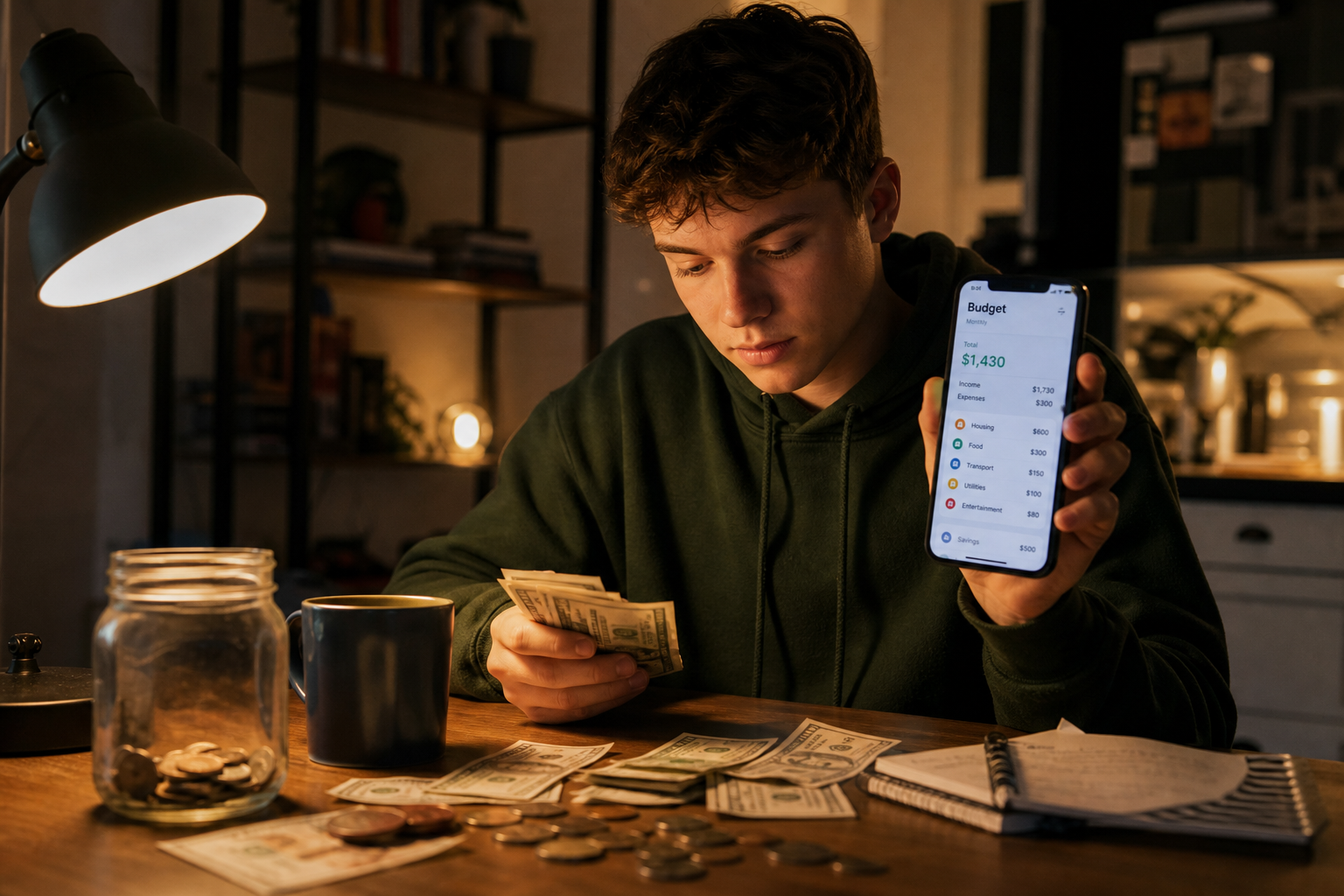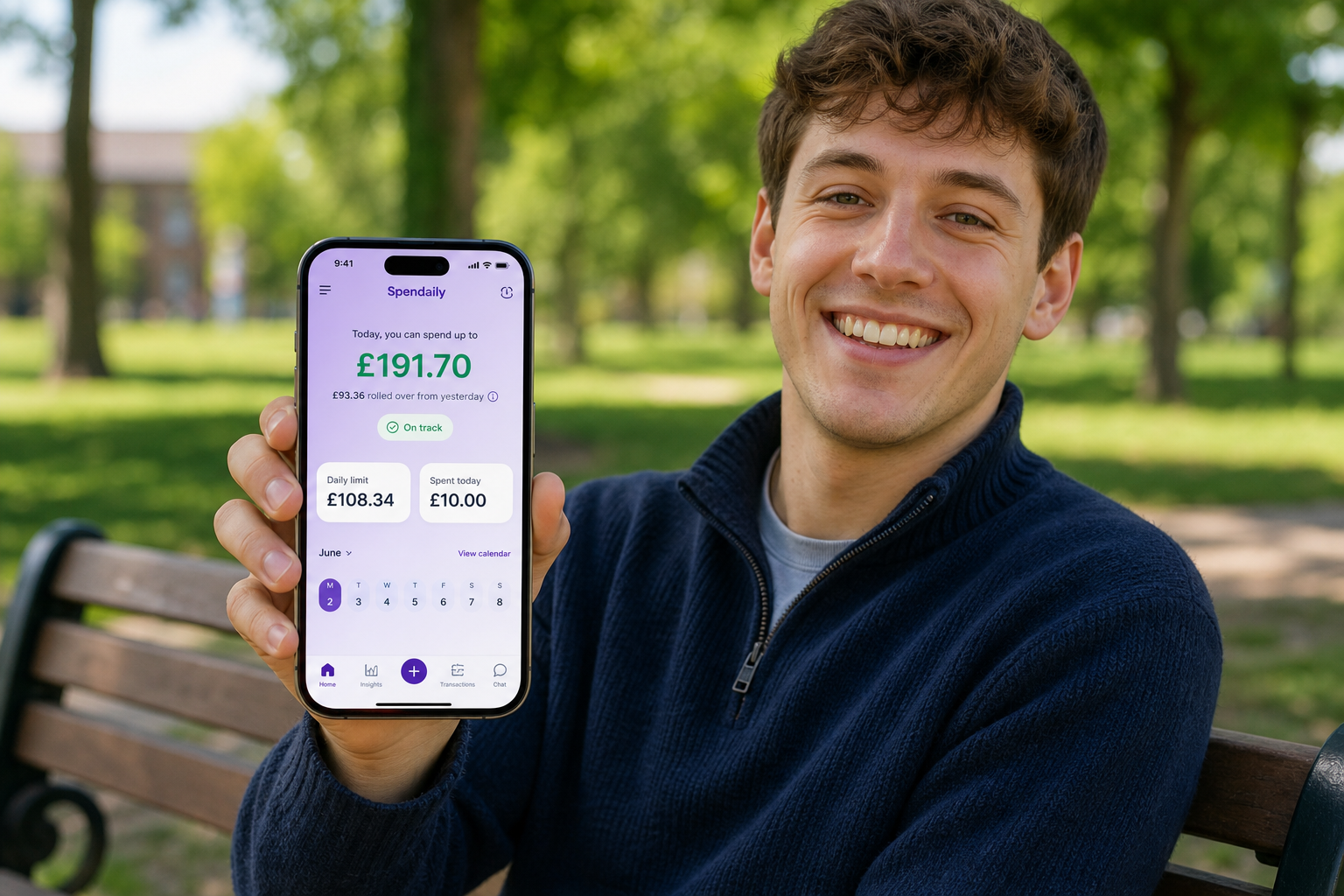
Cash stuffing is the envelope budgeting method gone viral: you withdraw your spending money in cash, divide it into labelled envelopes for each category, and when an envelope is empty, that category is done for the month. It works because it makes limits physical. But it also means ATM runs, no purchase protection, and dozens of envelope decisions. Daily budgeting gets you the same spending control with one number instead of twenty envelopes. Here is how both methods work and which one actually helps you spend less.
What Is Cash Stuffing?
Cash stuffing, also called the envelope budget system or cash envelope method, has been around for decades but surged in popularity on TikTok and YouTube in the last few years.
The basic system is simple:
- Create a monthly budget and decide how much you'll spend in each category.
- Get physical envelopes and label each one: groceries, petrol, eating out, etc.
- Withdraw cash and put the budgeted amount into each envelope.
- Spend only what's in each envelope, using physical cash.
- When an envelope is empty, you stop spending in that category until next month or your next payday.
The physical act of handing over cash and watching envelopes empty creates a strong connection between spending and consequences, which many people find powerful for curbing impulse purchases.
What Is Daily Budgeting?
Daily budgeting takes a different approach: instead of dividing money into categories, you divide it by time.
Here's how it works:
- Calculate your discretionary budget (income minus fixed costs and minimum savings).
- Divide that number by the days in your pay period to get your daily spending allowance.
- Each day, check your daily number and log what you spend.
- When you underspend, the leftover rolls forward to tomorrow or goes into a savings goal.
- When you overspend, tomorrow's allowance shrinks slightly.
Daily budgeting emphasises one clear number, "what can I spend today?", rather than juggling multiple category balances.
Cash Stuffing vs Daily Budgeting: Side-by-Side
| Factor | Cash Stuffing | Daily Budgeting |
|---|---|---|
| Number of decisions | Many (which envelope for each purchase?) | One (am I within today's allowance?) |
| Time horizon | Monthly or per-payday | Daily with rollover |
| Categories | Required (groceries, fuel, etc.) | Optional or none |
| Physical vs digital | Usually physical cash or digital envelopes | Usually digital (app or spreadsheet) |
| Online shopping | Difficult; requires manual tracking | Easy; log the amount |
| Impulse control method | Physical barrier (no cash left) | Visible daily number reduces before your eyes |
| Best for | People who like tangible systems and categories | People who want extreme simplicity and short time frames |
Cash Stuffing: The Pros
1. Physical cash makes spending feel real
Research from MIT and other institutions shows that paying with cash activates more "pain of paying" than swiping a card. When you physically hand over £20, you feel the loss more acutely than tapping a card, which can naturally reduce spending.
2. Hard limits by category
If your "eating out" envelope is empty, you literally can't spend on restaurants unless you break your system. This creates a strong forcing function for people who struggle with impulse dining or shopping.
3. Visual and satisfying
Cash stuffing videos show people filling colourful envelopes, counting notes and watching their system come together. For many, this ritual is motivating and makes budgeting feel like an active, positive habit rather than a chore.
Cash Stuffing: The Cons
1. Inconvenient and time-consuming
You need to visit the bank or ATM regularly to withdraw cash. Carrying multiple envelopes and sorting them by category adds friction to your routine, especially when you're in a hurry.
2. Security risk
Physical cash can be lost, stolen or damaged. Unlike digital money, there's no way to recover it.
3. Doesn't work for online spending
Most modern spending happens online, subscriptions, bills, shopping. Cash stuffing doesn't adapt well to digital transactions, forcing you to track those separately.
4. No interest or rewards
Cash sitting in envelopes earns no interest. If you use credit cards responsibly, you also miss out on cashback or rewards.
5. Category overwhelm
Managing 10+ envelopes (groceries, fuel, eating out, clothes, personal care, gifts, etc.) can become overwhelming, especially for people who already struggle with budgeting complexity.
Daily Budgeting: The Pros
1. Extreme simplicity
You only need to know one number each day: "How much can I spend today?" This eliminates category decisions and reduces cognitive load.
2. Works for all spending types
Whether you're buying something online, in-store with a card, or with cash, the system is the same: log the amount and watch your daily number adjust.
3. Short time horizon helps recovery
If you overspend on Monday, Tuesday's number adjusts slightly and you move on. You don't have to wait until next month to reset; recovery is built into the daily cycle.
4. Rollover motivates underspending
When you spend less than your allowance, the surplus rolls forward or feeds a savings goal. This creates positive reinforcement for good days rather than only punishing bad days.
5. Easy to automate with apps
Apps designed for daily budgeting (like Spendaily) can calculate your daily allowance automatically, track rollover and show progress on goals, all in a couple of taps per day.
Daily Budgeting: The Cons
1. Requires discipline without physical barriers
Unlike empty envelopes, a daily budget number is just information. It won't physically stop you from spending; you have to choose to respect the limit.
2. Less tangible
Some people find digital numbers abstract and less "real" than physical cash. If you respond strongly to tactile systems, daily budgeting might feel too intangible.
3. Logging fatigue
You have to log every expense manually unless you use an automated app. If logging feels boring or easy to forget, the system breaks down.
Which System Saves You More Money?
The honest answer: the one you'll actually stick with.
Cash stuffing can lead to lower spending in the short term because the physical barrier is so strong. But if the inconvenience causes you to abandon the system after a few weeks, you'll save nothing.
Daily budgeting might feel less restrictive, but if you ignore your daily number and keep spending anyway, it won't help either.
Choose cash stuffing if:
- You respond well to physical, tangible systems.
- Most of your spending happens in-store with the option to use cash.
- Categories help you stay organised rather than overwhelm you.
- You're willing to visit the bank regularly and manage multiple envelopes.
Choose daily budgeting if:
- You want the simplest possible system (one number per day).
- You do a lot of online shopping or prefer to pay by card.
- Categories feel overwhelming or add too much friction.
- You like short time horizons and immediate feedback on your spending.
Can You Combine Both Systems?
Yes. Some people use a hybrid approach:
- Use cash envelopes for high-risk categories like eating out or personal spending where impulse control is hardest.
- Use a daily budget for everything else, tracking digitally with one overall daily allowance.
This gives you the physical barrier where you need it most, and the simplicity of one number for the rest.
Digital Cash Stuffing vs Daily Budgeting Apps
If you like the envelope concept but don't want physical cash, several apps offer "digital cash stuffing":
- HyperJar creates digital jars with spending limits and merchant controls.
- RealBudget and Goodbudget offer virtual envelopes with bank sync options.
These apps give you category-based budgeting without the cash withdrawal hassle.
Daily budgeting apps like Spendaily go further: instead of splitting money into jars, they give you one daily allowance with automatic rollover and goal tracking, fully manual (no bank linking required).
If you want the simplest digital option, a daily allowance app cuts out categories entirely.
Want the envelope feel without the cash? See the best envelope budgeting apps for digital cash stuffing, or jump straight to the complete daily budgeting guide.
FAQ
Is cash stuffing better than using a budgeting app?
Cash stuffing can be more effective for impulse control because physically running out of cash creates a hard barrier. However, budgeting apps are more convenient, work for online spending, and can track trends over time. The best system is the one you'll use consistently.
Can I do cash stuffing digitally?
Yes. Digital envelope apps like HyperJar, RealBudget and Goodbudget let you create virtual envelopes or jars with spending limits, giving you the envelope structure without physical cash.
What is the easiest budgeting method?
Daily budgeting is often the easiest because it reduces everything to one daily allowance number, with no categories to manage. Apps like Spendaily automate the daily calculation and rollover, making it even simpler.
Does cash stuffing work for online shopping?
Traditional cash stuffing struggles with online purchases because you can't pay with physical cash. Some people keep a separate digital category or use a prepaid card for online spending, but this adds complexity.
Which saves more money: envelopes or daily budgets?
Both can save money if used consistently. Cash envelopes tend to reduce impulse spending more in the moment due to the physical barrier, but daily budgets help with long-term consistency because they're easier to maintain.